Neighborhood
Monumentale and Porta Nuova
Beyond the ramparts, between the cemetery of the great and Italy's tallest skyscraper
For centuries Milan ended at the bastioni, the ramparts the Spanish built in the mid-sixteenth century. In 1861 the whole city had two hundred seventy thousand inhabitants. Then came the railroad and the factories, and in 1889 a master plan, the Beruto plan, laid out the new city beyond the walls. This area is a child of that growth.
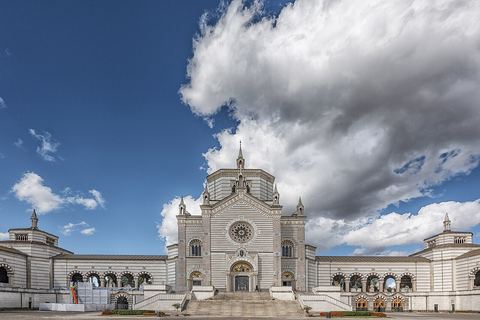
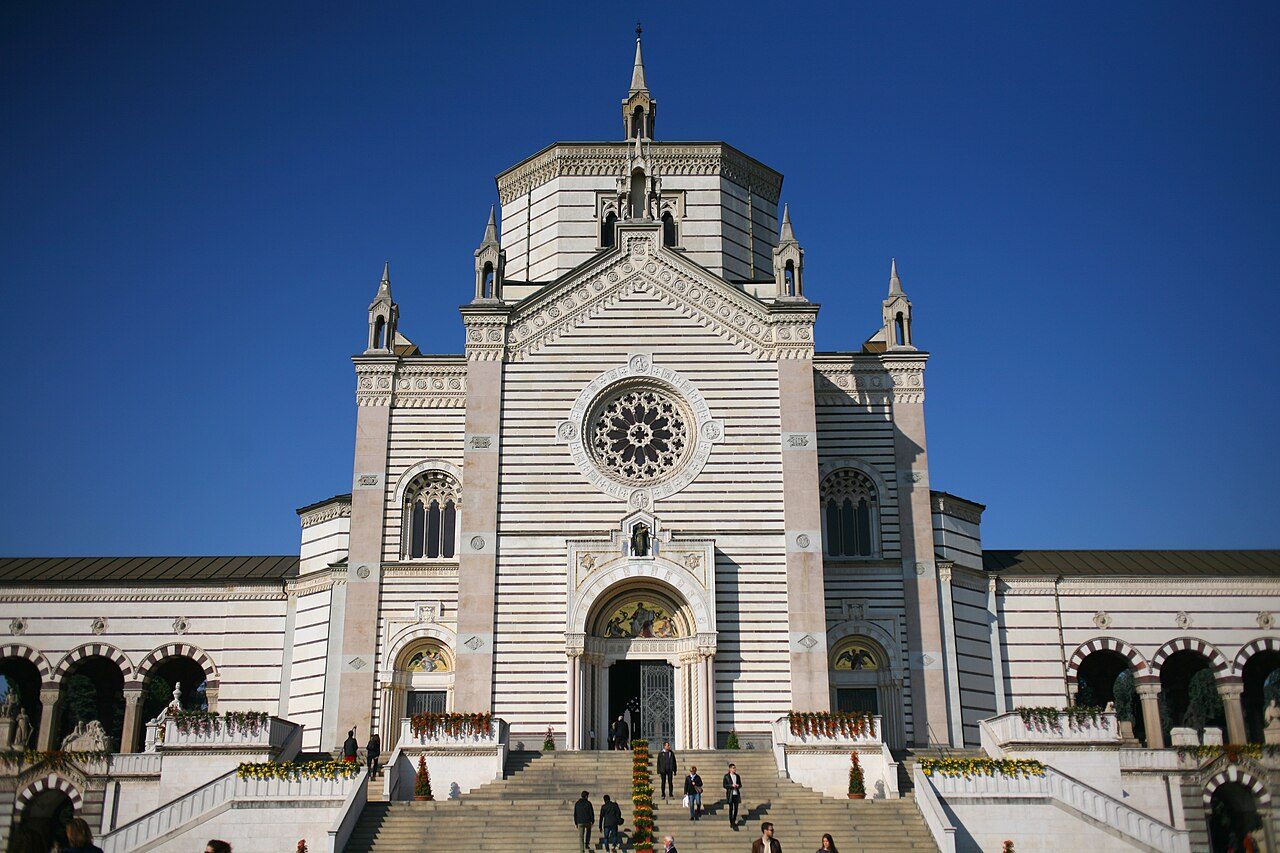
Here, outside the walls, Milan put its new cemetery. Not just any cemetery: it was to replace the old city graveyards and be, as the very first competition demanded, worthy of the luster of Milan. The architect Carlo Maciachini designed it and it opened on November 2, 1866.
Its heart is the Famedio, the temple of fame, where the writer Alessandro Manzoni rests. Around it, a century and a half of tombs signed by sculptors such as Medardo Rosso, Adolfo Wildt, and Lucio Fontana. It is an open-air museum, and that is how you should visit it.
About a kilometer away you find the opposite. Between the Porta Garibaldi station and Piazza della Repubblica, the Porta Nuova district has been growing since 2005.
There is Piazza Gae Aulenti, round and raised above street level. There is the UniCredit tower, which with its spire is the tallest skyscraper in Italy. And there is the Bosco Verticale, the vertical forest, two towers that wear about nine hundred trees.
It is worth seeing them on the same day. The Monumentale is how nineteenth-century Milan wanted to be remembered. Porta Nuova is how today's Milan wants to be seen.