In culture · The back, from the park
The column of infamy
Piazza Vetra, behind the basilica of San Lorenzo, was for centuries the place where Milan carried out its executions. In 1630, the year of the great plague, it was the turn of Guglielmo Piazza, a health commissioner, and Gian Giacomo Mora, a barber, accused of being untori, people who spread the contagion on purpose. They were tortured and put to death, and Mora's ashes ended up in the square's canal. His house was demolished and replaced by a column, called the colonna infame, the column of infamy, which stood until 1778. Alessandro Manzoni, the author of I promessi sposi, wrote about that trial in the Storia della colonna infame.
The stop
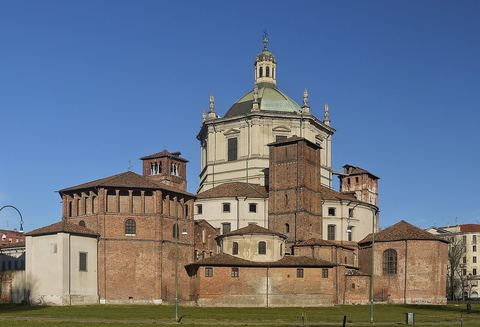
Stop 7 of 7
The back, from the park
The place
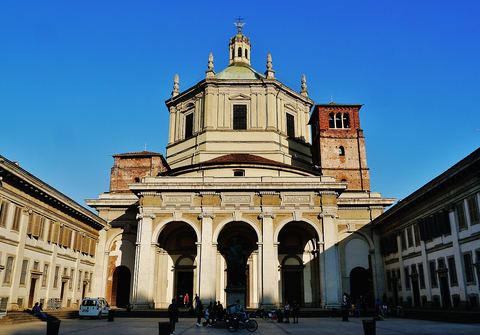
Church
Basilica di San Lorenzo Maggiore
More stories
- In culture · The back, from the park
Poor Rosetta
In the early 1900s Piazza Vetra, behind the basilica of San Lorenzo, was the realm of the ligera, Milan's small-time underworld. Rosetta worked here: born Elvira Andrezzi, she was a prostitute and… - Legend
The temple of Hercules that never was
For centuries people in Milan believed that the basilica of San Lorenzo had not started out as a church. In the 1300s chroniclers such as Galvano Fiamma and Benzo d'Alessandria described it as a… - Anecdote · The Colonne di San Lorenzo
The columns saved by a governor
In front of the basilica of San Lorenzo, along Corso di Porta Ticinese, stands a row of sixteen Roman columns, and it is almost by chance that they are still up. In 1548 Milan was preparing for the…