Stop 2 of 8Must-see
The Half-Woolly Sow
Where to stand
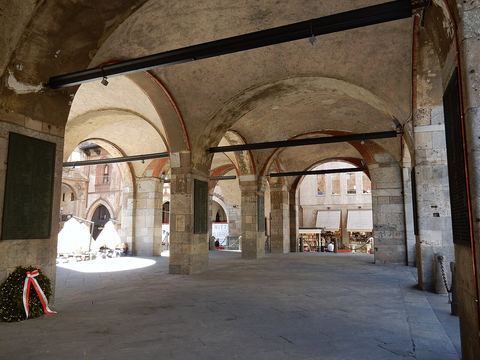
On Via Mercanti, in front of the arches of Palazzo della Ragione on the street side, looking up
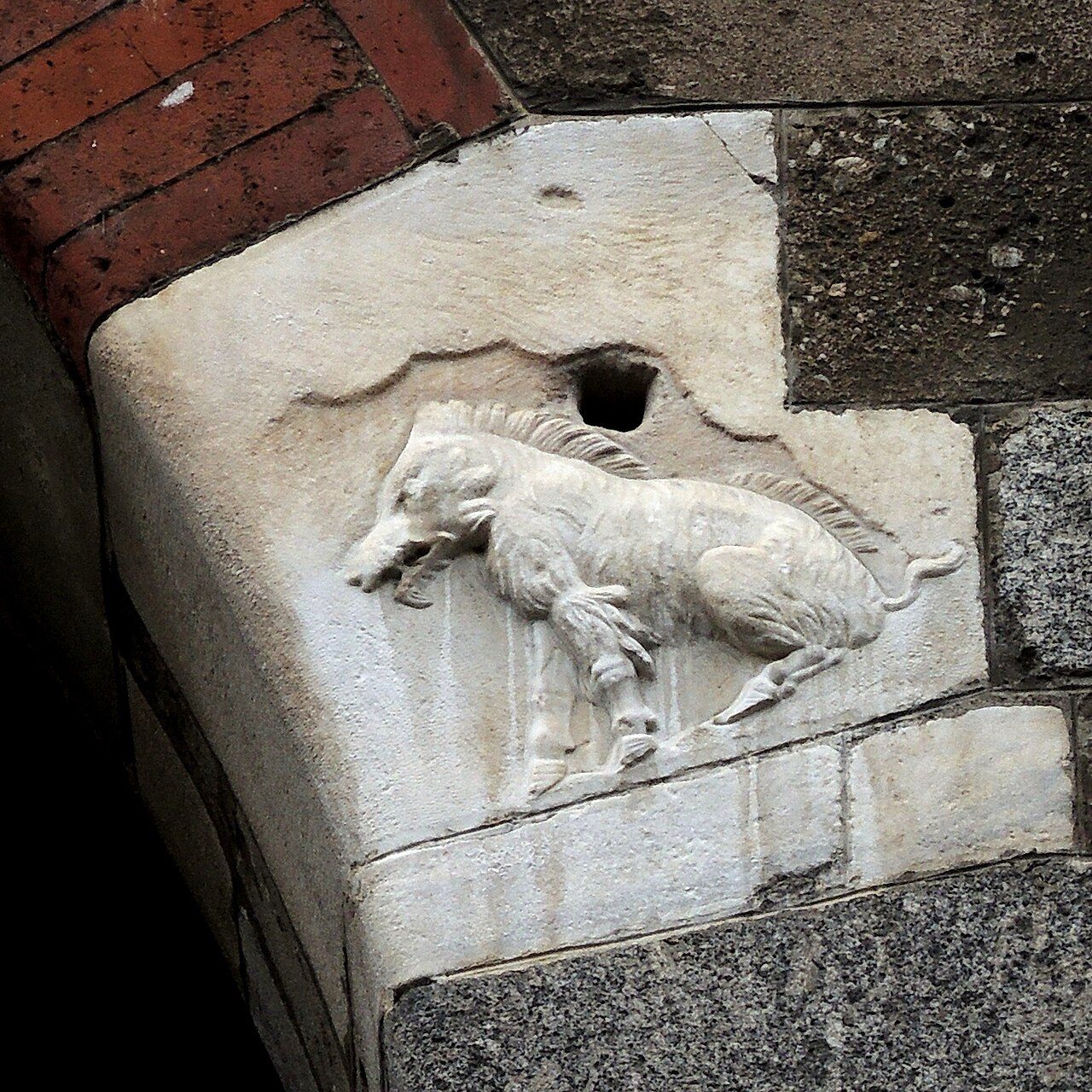
A small ancient relief set into the wall between the palace arches. According to legend, this is the animal that showed the Celts where to found Milan, and gave the city its name.
Spot the detail
On one of the arches facing Via Mercanti there is a carved animal. Find it, and look at its back
The full story
Search among the arches of Palazzo della Ragione, Milan's medieval town hall, on the side facing the street. The sources place it on the second arch: a stocky beast carved on a block of stone. It is small, and almost nobody looks up. And yet it is one of the most talked-about images in Milan.
Look closely and it resembles a wild boar. Nobody knows for sure how old the relief is. According to one tradition it turned up in 1233, during the digging of the foundations, and the builders set it into the wall here.
The legend of Belloveso
The story goes like this, and it is a legend. The Celtic chieftain Belloveso crosses the Alps and comes down into the plain, looking for a place to found a city. He asks the oracles where to build it and what to call it. The answer is strange: look for a sow with wool on its back.
Belloveso finds her, and founds the city there. The name comes from the omen: medio lanum, Latin for "half woolly." Hence Mediolanum, and later Milano. In one version of the tale the sow appears under a hawthorn, a plant sacred to the Celtic goddess Belisama.
A very old story
This is no recent invention. The ancients already knew it: the Latin poet Claudian mentions it, and the writer Sidonius Apollinaris speaks of Milan as the city named after a woolly sow.
Linguists are less romantic. For them Mediolanum means more or less "in the middle of the plain," or "middle land." No sow at all.
But the Milanese are fond of their beast. You'll find it again on the loggia on the other side of the palace, clutched in an eagle's talons, and in a coat of arms in the courtyard of Palazzo Marino, today's city hall. A city of banks and fashion that sees itself in a hairy pig: that's no small thing.
About this stop
Legend
The sow that gave Milan its name
Among the arches of Palazzo della Ragione, in Piazza Mercanti, there is a small relief of a sow. Legend says she gave Milan its name. The Celtic chieftain Belloveso, down from the Alps, asked the oracles where to found his city and what to call it. The answer: where he saw a sow with a woolly back. He found her, and the city took its name from the omen: medio lanum, "half woolly," hence Mediolanum. The tale is old: the Latin poet Claudian mentions it. Linguists prefer a less colorful explanation: "in the middle of the plain." And the relief, up close, looks more like a wild boar.
No, but the legend is ancient and the Milanese are attached to it. It says the Celt Belloveso founded the city where he found a sow half covered in wool, in Latin medio lanum. For linguists the name Mediolanum means instead "in the middle of the plain," or "middle land," and describes the city's position. The relief on the palace, in any case, looks more like a wild boar than a sow, and nobody knows for sure how old it is.
This stop on the map
Next stop
Walk under the arches and into the palace portico