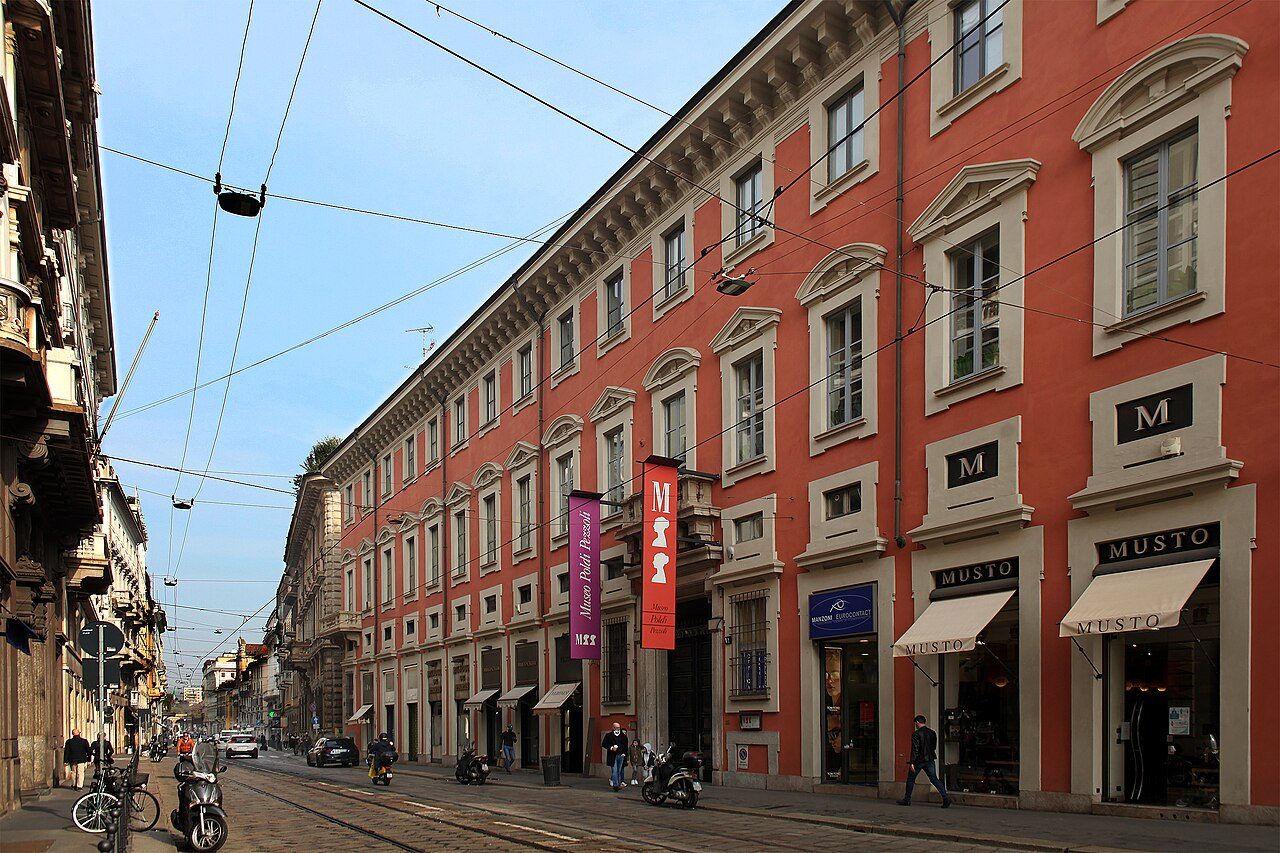
Museum · Historic Center · 1846–1881
Museo Poldi Pezzoli
The home of a count who bought masterpieces and left every one to Milan
In brief
The apartment of a nineteenth-century collector, kept as a museum because he wanted it so. Botticelli, Piero della Francesca and Pollaiolo hang as if in a drawing room, among armor, clocks and carpets. Bombed in 1943 and rebuilt, it is still the portrait of one man and his taste.
Stories of this place
- Anecdote · The Collector's HouseReadSix hundred thousand lire to come homeIn 1848 Count Gian Giacomo Poldi Pezzoli, founder of Milan's Museo Poldi Pezzoli, is young, enormously rich and a patriot. When Milan rises up against the Austrians he joins other noblemen in paying for an artillery unit, then goes to Venice as an envoy of the Lombard provisional government. In August the revolt is crushed. He takes refuge in Lugano, and his name lands on the list of citizens fined by Field Marshal Radetzky, the Austrian commander. He travels between France and Florence, then returns. To get his property back he pays six hundred thousand Austrian lire. With the rest he builds the house that is now the museum.
- Anecdote · The Collector's HouseReadThe bachelor count and his wardGian Giacomo Poldi Pezzoli, the count who left his house to Milan to become a museum, never married. The Dizionario Biografico degli Italiani, Italy's national biographical dictionary, describes him as often drawn to dancers and actresses, then attached to Giuseppina Parravicini, a chemist's wife. In 1859 Camilla Cavezzali was born: officially his ward and probably, the Dizionario writes, also his natural daughter. With the secret 1871 will, house and artworks went to the public, the rest of the estate to a relative on his mother's side. Camilla, according to the Dizionario, received four hundred thousand lire, a huge sum for the time. A half secret inside a secret will.
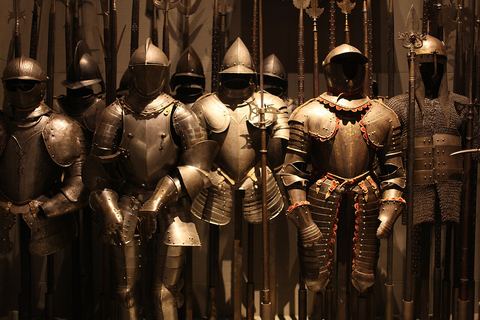
- Anecdote · The ArmeriaRead1848: the insurgents raid the armoriesThe Museo Poldi Pezzoli's Armeria, its armory, grew out of the antique weapons that its founder, Count Gian Giacomo Poldi Pezzoli, began buying in 1846. On March 19, 1848, during the Cinque Giornate, Milan's five-day uprising against the Austrians, the insurgents had few weapons. They emptied the city's armories and the banker Ambrogio Uboldo's collection: longswords, axes, breastplates. According to the catalog entry for a painting of that assault in Milan's Museo del Risorgimento, the Poldi Pezzoli house's arms rooms were looted too in those days, and the stage weapons vanished from La Scala. The count, after all, sided with the insurgents. Some Uboldo pieces are now in this museum.
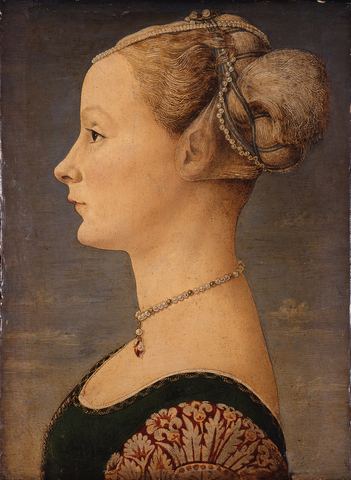
- In culture · Pollaiolo's LadyReadPollaiolo's lady turned trademarkIn the Salone Dorato, the Golden Room of the Museo Poldi Pezzoli, hangs the portrait of a young Florentine woman in profile, painted by Piero del Pollaiolo around 1470. She is not only the museum's most famous work: she is its signature. The graphic designer Italo Lupi simplified her profile down to a few strokes and used it to form the two Ps of Poldi Pezzoli in the logo. Try it: look at the museum's logo, then at the painting. Few portraits from five centuries ago can survive that kind of reduction and stay recognizable.
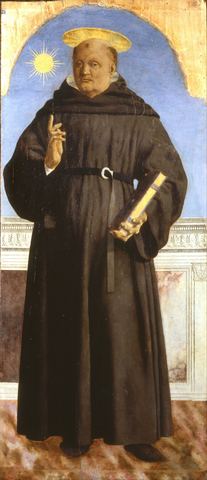
- Anecdote · Piero della Francesca's Saint NicholasReadPiero della Francesca: eight panels reunitedIn the Museo Poldi Pezzoli's Salone Dorato hangs a Saint Nicholas of Tolentino by Piero della Francesca, a fifteenth-century master. It was one panel of a polyptych, taken apart centuries ago. Putting it back together was a dream: the museum tried in 1996, then New York's Frick Collection in 2013 and the Hermitage in 2018, but the loans never all came through. In the spring of 2024 the museum pulled it off. The eight surviving panels, seven of them arriving from New York, London, Lisbon and Washington, were shown together for three months. Only the central panel and most of the small scenes at the base, all lost, were missing.
- Legend · Piero della Francesca's Saint NicholasReadSaint Nicholas's starIn the Salone Dorato, the Golden Room of the Museo Poldi Pezzoli, hangs a Saint Nicholas of Tolentino by Piero della Francesca, a fifteenth-century master: a friar in a black habit against the sky. Near him shines a star. It is not an ornament. According to legend, a star marked the place where Nicholas was to be buried. Piero takes up the story, but puts the star where he pleases: its position, the museum explains, is his own free choice, like the saint's face, which is invented. Nicholas had been canonized only a few years earlier, and the painter could afford to take a few liberties.
- In cultureReadThe American who wanted a house like thisAround 1857 a young American traveling in Italy, Isabella Stewart, saw in Milan the house of Count Gian Giacomo Poldi Pezzoli, now the Museo Poldi Pezzoli. We know this from a girlhood friend, Ida Agassiz Higginson, who in 1923 reminded her of her words back then: if she ever inherited money, she would have a house like the one in Milan, filled with beautiful pictures and objects of art, for people to come and enjoy. She kept her word. As Mrs. Gardner, by then a great collector, in 1903 she opened her museum in Boston, a Venetian-inspired palazzo. If her friend remembered correctly, the idea was born in Milan.
- AnecdoteReadA marble nude for a widow's mourningIn the Sala Nera, the Black Room of the Museo Poldi Pezzoli, sits a marble girl, nude, hands clasped in her lap, eyes turned upward. She is La fiducia in Dio, Trust in God, by Lorenzo Bartolini, a Tuscan sculptor. Rosa Trivulzio, the museum founder's mother, widowed in 1833, ordered it: she wanted an image of faith that sustains you in grief. The writer Pietro Giordani said the pose came from watching a model rest during work on another statue. Shown in Florence, Parma and Milan before delivery, the statue became hugely famous. The poet Giuseppe Giusti dedicated a sonnet to it. A nude to express faith: that took courage.
- RecordReadThe Persian carpet with the uncertain dateOn the ground floor of the Museo Poldi Pezzoli, in the Salone dell'Affresco, the Fresco Room, a large wall case holds a Persian carpet almost seven meters long, with horsemen hunting among real and imaginary animals. It is extremely rare because it carries a name and a date: an inscription at the center names Ghiyas al-Din Jami and a year in the Islamic calendar. But the second digit is uncertain: a 2 or a 4. The first gives 1522, the second 1542. Today the museum finds the later date more consistent. It has been here since 1923, on deposit from the Pinacoteca di Brera, Milan's picture gallery.
- In cultureReadGadda and a joy polished with waxThe writer Carlo Emilio Gadda mentions Milan's Museo Poldi Pezzoli in his book L'Adalgisa, in the story "Al Parco, in una sera di maggio." On one page he speaks of the "somewhat closed-in joy, polished with wax, of the Poldi-Pezzoli." Then he adds one of his footnotes: he explains that it is the apartment of an art lover and collector, and that it strikes the visitor with the richness and good upkeep of its rooms. Coming from Gadda, that is not just a compliment. It is the portrait of a certain Milan: gleaming, orderly, a little restrained.
Ready-made questions
Because it is two families. The founder's father was named Giuseppe Poldi, and his family came from Parma. In 1818 he inherited from an uncle, Giuseppe Pezzoli, the surname, the noble title and great wealth, built up by collecting taxes in Austrian-ruled Lombardy. From then on the family carried both names together. Add his mother, Rosa Trivulzio, from one of Milan's great noble families, and you see what kind of means allowed Gian Giacomo to afford Botticelli and Mantegna.
Go to stop: The Collector's HouseThe artworks are original: during the war they were safe in shelters. The rooms, for the most part, are not. In August 1943 incendiary bombs destroyed ceilings, stuccowork, frescoes and paneling. What survived was the Studiolo dantesco, the count's Dante study, along with some carved doors and a number of pieces of furniture. The reconstruction, finished in 1951, chose a plain tone instead of remaking everything as a copy. The Armeria, the armory, dates from 2000, and the Salone Dorato, the Golden Room, regained its proportions in 2026. It is a house with many scars, and they are part of its appeal.
No. Her dress and jewels tell us only that she belonged to the high society of fifteenth-century Florence, and that the portrait may have been made for her wedding. An inscription on the back names her as the wife of the banker Giovanni de' Bardi, but it is considered probably fake. In nineteenth-century Milan she passed for an ancestor of the Belgioioso family. Someone has put forward the name of Marietta Strozzi. No proposal has been proven, and by now the mystery is part of the painting.
Go to stop: Pollaiolo's LadyIt was his first love as a collector. Between 1846 and 1848, in his early twenties, Gian Giacomo bought hundreds of antique weapons and suits of armor, mostly from the armorer Carlo Maria Colombo. It was the spirit of the age: Romanticism had rediscovered the Middle Ages and their knights. The Renaissance paintings came later, on the advice of painters and connoisseurs. The armory was the first room he had fitted out, and it is still on the ground floor, at the start of the visit.
Go to stop: The ArmeriaIn a museum the works are arranged by scholars, by period or by school. In a they stay tied to the taste of the person who lived there, along with furniture, carpets, clocks and porcelain: you are looking at a collection and at a way of living. Gian Giacomo took his cue from the Musée de Cluny in Paris, which grew out of one collector's holdings. In his will he asked that house and works stay together "for public use and benefit in perpetuity." Today the Poldi Pezzoli is part of a network of Milanese house museums.
It is complete as a panel, but it is one piece of something bigger: a painted by Piero della Francesca for a church in Sansepolcro. The altarpiece was broken up probably as early as the sixteenth century. The other saints are now in Lisbon, London, New York and Washington. The central part, perhaps a Coronation of the Virgin, is lost. That is why the panel is so tall and narrow: it was a side compartment, designed to stand next to others.
Go to stop: Piero della Francesca's Saint NicholasGo straight up to the second floor, to the Salone Dorato, the Golden Room. Within a few steps you have the three paintings people come here for: the lady in profile by Piero del Pollaiolo, Botticelli's Madonna del Libro and the Saint Nicholas by Piero della Francesca. Then look for the Studiolo dantesco, the Dante study, the only room that keeps its nineteenth-century painted decoration. If you have a quarter of an hour left, go down to the Armeria, the armory: it is the most surprising room, and looks like nothing you saw upstairs.
The stops
1 The Collector's House
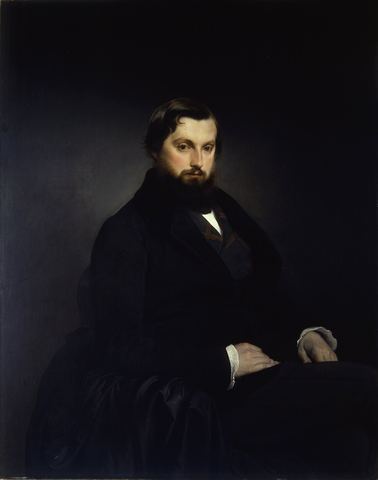
Before the art, meet your host. Gian Giacomo Poldi Pezzoli was a hugely rich count, a patriot in 1848, an exile, then a full-time collector. Everything you are about to see was chosen by him, and he left it to the city in a secret will.
2 The Armeria
The count's first passion: hundreds of weapons and suits of armor, bought in his early twenties. The Gothic-style room that held them was destroyed in 1943. In 2000 the sculptor Arnaldo Pomodoro reinvented it from scratch, and today it feels more like a work of art than a museum room.
3 The Grand Staircase and the Fountain
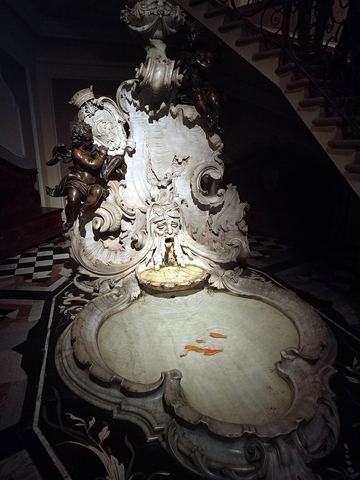
The theatrical entrance to the count's apartment: a Baroque staircase, eight stone statues and a fountain added purely to amaze. This is where you pass from the ground floor into the house proper.
4 The Salone Dorato
The most important room in the house, designed for the Renaissance masterpieces. Destroyed by bombs in 1943, rebuilt in a lower key, then mutilated by a false ceiling. Since September 2026 it has had its height and its window back.
5 Pollaiolo's Lady
The symbol of the museum: a Florentine girl painted by Piero del Pollaiolo around 1470. Her dress and jewels say she was rich and perhaps newly married. Her name, though, nobody knows.
6 Piero della Francesca's Saint Nicholas
One piece of a dismantled masterpiece. Piero della Francesca painted this saint for a great polyptych in his hometown, Sansepolcro. The altarpiece was broken up, and today it is split between Milan, London, Lisbon, New York and Washington.
7 Botticelli's Madonna del Libro
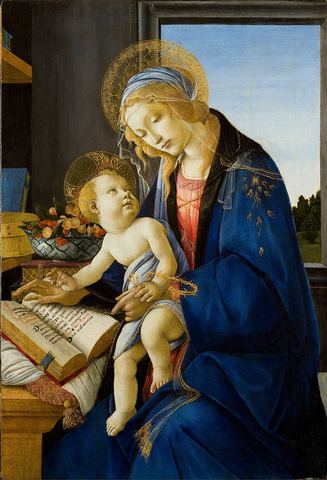
A Botticelli for a private room, painted in the early 1480s for the prayers of someone very rich. It looks like a tender scene between mother and son. Look closer, and it is already speaking of the cross.
8 The Studiolo dantesco
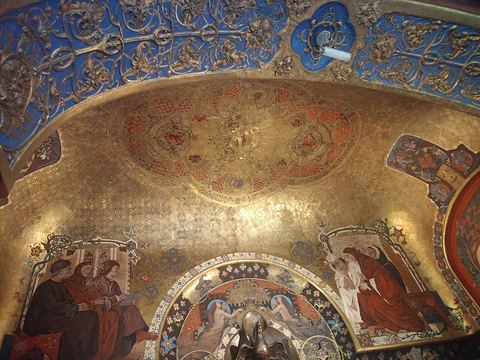
The count's private study, dedicated to Dante and decorated like a medieval dream. It is the only room in the house whose painted decoration survived the bombs of 1943: here you see the Poldi Pezzoli as it was.
Timeline
- 1846At twenty-four, Gian Giacomo Poldi Pezzoli comes into his inheritance. He starts buying antique arms and redoing the apartment.
- 1848He backs Milan's revolt against the Austrians. After the defeat he flees to Lugano; to get his property back he will pay a huge fine.
- 1871In a secret will he leaves house and collection to become a museum open to the public "in perpetuity."
- 1881Two years after the count's death, the museum opens in April for Milan's National Exhibition. Its director is the painter Giuseppe Bertini.
- 1943In mid-August, in a single night, incendiary bombs destroy roofs and decoration. The artworks were already safe in shelters.
- 1951The museum reopens in December, rebuilt in the same palazzo in a plainer form.
- 2000The Armeria, the armory, reopens in a new design by the sculptor Arnaldo Pomodoro.
- 2026On September 15 the restored Salone Dorato reopens: the 1970s false ceiling is gone, and the big marble window is visible again.
Who's who
Gian Giacomo Poldi Pezzoli
count, collector, founder of the museum
Milan, 1822–1879. A patriot in 1848, then a collector for thirty years. He leaves house and artworks to public use in a secret will.
Rosa Trivulzio
the founder's mother
Daughter of the book collector and Dante scholar Gian Giacomo Trivulzio. Widowed in 1833, she raises her son alone. She is a patron of the sculptor Lorenzo Bartolini.
Giuseppe Bertini
painter, Brera professor, first director of the museum
The count's friend and adviser. From 1853 he designs the rooms of the house, paints the Dante windows and runs the museum from its opening until his death in 1898.
Fernanda Wittgens
leader of the postwar reconstruction
In 1946 she fights for the museum to be rebuilt in the bombed palazzo and not elsewhere. With the architect Ferdinando Reggiori she brings it back to life by 1951.
Arnaldo Pomodoro
sculptor, designer of the Armeria
In 2000 he redesigns the armory: walls of pietra serena stone, weapons that seem to float in their cases and a copper-colored vault with one of his sculptures.
Piero del Pollaiolo
fifteenth-century Florentine painter
Now credited with the portrait of a lady that is the museum's symbol, painted around 1470 and long given to his brother Antonio.
Words to know
Where it is
The neighborhood
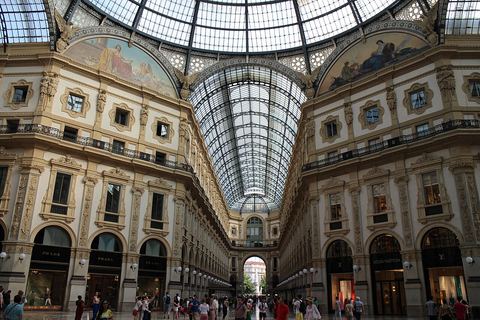
Historic Center
Related places
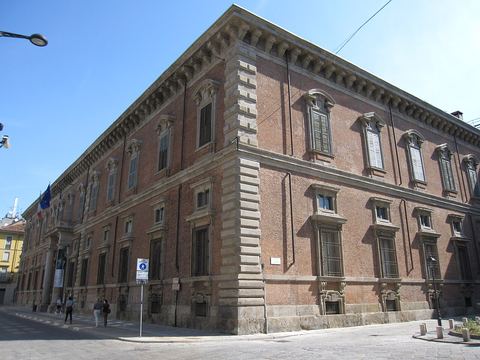
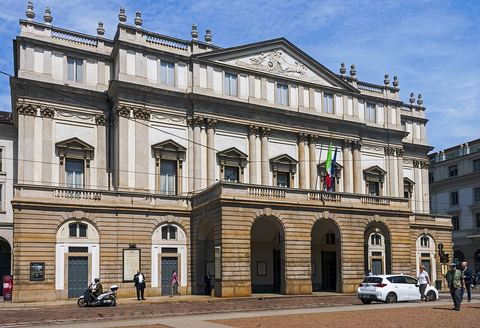
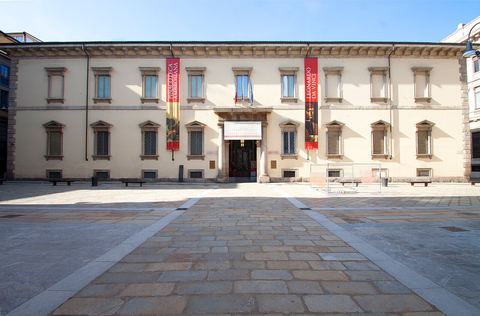
The story of the place
You would never guess from via Manzoni, the elegant street outside. A doorway, a courtyard, a seventeenth-century palazzo like others in the center. Inside, though, this is not a museum built to be one. It is a : one man's apartment, with his things in it.
The man is Gian Giacomo Poldi Pezzoli, a Milanese count born in 1822 and enormously rich. At twenty-four he comes into the family fortune and starts with what the Romantics dreamed of: antique arms and armor, by the hundreds. In 1848 he backs Milan's revolt against the Austrians, and pays for it with exile and a huge fine.
When he comes back he devotes himself to the house. For almost thirty years he has it decorated room by room, each in a different style from the past, and fills it with Renaissance paintings, glass, clocks, porcelain, jewelry. His model is the Musée de Cluny in Paris, which also grew out of one collector's holdings.
The will and the museum
In 1871 he writes a secret will. House and collection must stay together, "for public use and benefit in perpetuity." He dies suddenly eight years later, and in 1881 the museum opens. Its director is his friend the painter Giuseppe Bertini, the man who had designed those rooms.
The war and the rebuilding
Then comes the war. The artworks are hidden in shelters. The house cannot be. In August 1943 incendiary bombs burn the roof, and in a single night carved ceilings, stuccowork and frescoes are gone.
Some propose moving the collection elsewhere. Those who want to rebuild here win, and in 1951 the museum reopens: plainer, but in the same place and with the same works.
The two levels of a visit
That is why a visit works on two levels. The first is the masterpieces, few and superb: the lady in profile by Piero del Pollaiolo, Botticelli's Madonna del Libro, the Madonna of the Book, and the Saint Nicholas by Piero della Francesca. The second is the house itself, with what survived and what was remade: the armory reinvented by a sculptor in 2000, the Salone Dorato, the Golden Room, restored in 2026, and the count's study, left as it was.
One piece of advice: don't try to see everything. There are thousands of objects here, and counting them gets you nowhere. What matters is understanding what happens when one person, with a lot of money and a very good eye, decides what deserves to last.
Sources
- Museo Poldi Pezzoli, la storia del museo (opens in a new tab)Official site
- Museo Poldi Pezzoli, mappa del museo (PDF) (opens in a new tab)Official site
- Museo Poldi Pezzoli, The Golden Room restored to light (opens in a new tab)Official site
- Museo Poldi Pezzoli, scheda del Ritratto di giovane donna di Piero del Pollaiolo (opens in a new tab)Official site
- Museo Poldi Pezzoli, scheda del San Nicola da Tolentino di Piero della Francesca (opens in a new tab)Official site
- Museo Poldi Pezzoli, scheda della Madonna con il Bambino di Sandro Botticelli (opens in a new tab)Official site
- Museo Poldi Pezzoli, scheda del Ritratto di Gian Giacomo Poldi Pezzoli di Francesco Hayez (opens in a new tab)Official site
- Museo Poldi Pezzoli, scheda del Tappeto di caccia (opens in a new tab)Official site
- Poldi Pezzoli, Gian Giacomo, Dizionario Biografico degli Italiani, Treccani (opens in a new tab)Encyclopedia
- Palazzo Poldi Pezzoli, Lombardia Beni Culturali (opens in a new tab)Catalog
- Tappeto, ambito Persia nord occidentale, Lombardia Beni Culturali (opens in a new tab)Catalog
- Milano, ricostruito dopo 555 anni il Polittico Agostiniano di Piero della Francesca, Finestre sull'Arte (opens in a new tab)Other source
- The Golden Hall at the Poldi Pezzoli Museum returns to its 19th-century layout, Finestre sull'Arte (opens in a new tab)Other source
- Poldi Pezzoli Museum, The Armoury, Studio Piero Castiglioni (opens in a new tab)Other source
- Carlo Emilio Gadda, Al Parco, in una sera di maggio, The Edinburgh Journal of Gadda Studies (opens in a new tab)Institution
- Museo Poldi Pezzoli, Gian Giacomo Poldi Pezzoli: il mecenate dall'anima curiosa (opens in a new tab)Official site
- Museo Poldi Pezzoli, scheda della Fiducia in Dio di Lorenzo Bartolini (opens in a new tab)Official site
- Bartolini, Lorenzo, Dizionario Biografico degli Italiani, Treccani (opens in a new tab)Encyclopedia
- Carlo Bossoli, L'armeria del nobile Uboldo saccheggiata dagli insorti milanesi, 19 marzo 1848, Lombardia Beni Culturali (opens in a new tab)Catalog
- Paola Carrea, Le collezioni artistiche di Ambrogio Uboldo, MDCCC 1800, Edizioni Ca' Foscari, 2018 (PDF) (opens in a new tab)Institution
- Joseph J. Thorndike Jr., Mrs. Jack And Her Back Bay Palazzo, American Heritage, 1978 (opens in a new tab)Other source
- Isabella Stewart Gardner Museum, Building Isabella's Museum (opens in a new tab)Institution
- Museo di Palazzo Pretorio, Prato, scheda del gesso della Fiducia in Dio di Lorenzo Bartolini (opens in a new tab)Institution
- Fiducia in Dio, Bartolini, Lorenzo, Lombardia Beni Culturali (opens in a new tab)Catalog
- Storia di Milano, cronologia dal 1841 al 1850 (opens in a new tab)Other source
- Museo Poldi Pezzoli, Wikipedia in italiano (opens in a new tab)Wikipedia
- Museo Poldi Pezzoli, Wikipedia in inglese (opens in a new tab)Wikipedia
- Ritratto di giovane dama, Wikipedia in italiano (opens in a new tab)Wikipedia
- Madonna of the Book, Wikipedia in inglese (opens in a new tab)Wikipedia
- Giuseppe Bertini (pittore), Wikipedia in italiano (opens in a new tab)Wikipedia
- Isabella Stewart Gardner, Wikipedia in inglese (opens in a new tab)Wikipedia
- Ambrogio Uboldo, Wikipedia in italiano (opens in a new tab)Wikipedia
- La fiducia in Dio, Wikipedia in italiano (opens in a new tab)Wikipedia