Stop 7 of 8Must-see
Botticelli's Madonna del Libro
Where to stand
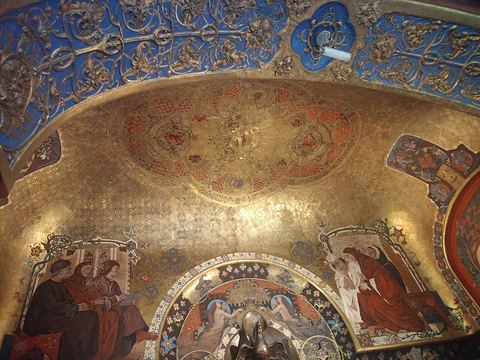
In the Salone Dorato, in front of Botticelli's small panel of the Madonna reading beside a window
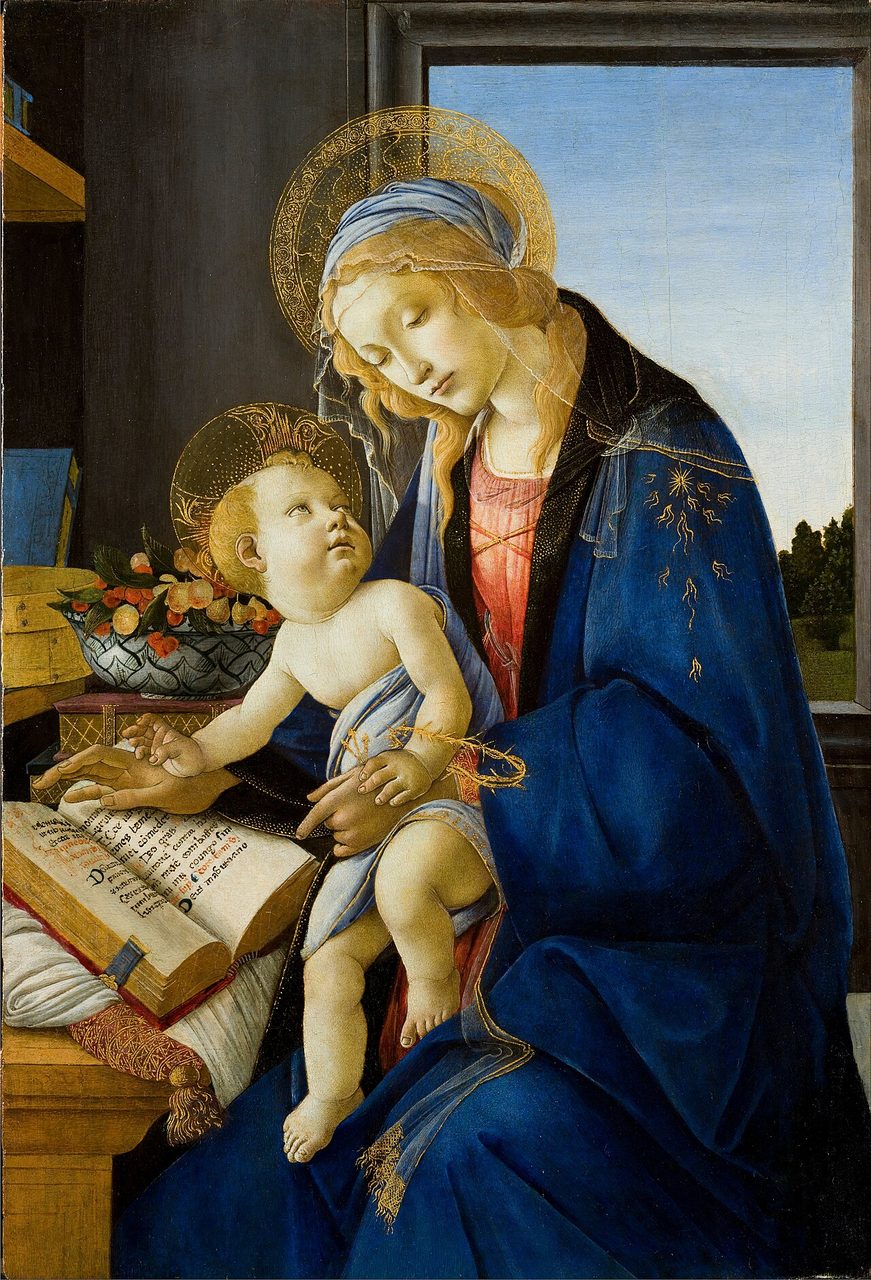
A Botticelli for a private room, painted in the early 1480s for the prayers of someone very rich. It looks like a tender scene between mother and son. Look closer, and it is already speaking of the cross.
Spot the detail
The Child's arm: what is he wearing on it like a bracelet?
The full story
Move in close. This painting was made to be seen up close, by one person, in silence.
Sandro Botticelli, the Florentine painter, makes it in the early 1480s. The Madonna del Libro, the Madonna of the Book, is not an altarpiece for a church: it is an object of private devotion, to be kept at home.
Who ordered it is unknown. What is known is that money was no object. The blue of the mantle is ground , a hugely expensive pigment. The gold of the halos and the embroidery is real gold.
A scene at home
The scene is domestic. A corner of a room, an open window, other books, a few household objects, a bowl of fruit. Mary holds open a , the prayer book of laypeople, and the Child lifts his head to look at her.
Notice the hands: the right ones open, the left ones closed. The son's repeat the mother's.
The signs of the Passion
So far, tenderness. Then your eye falls on the Child and the temperature changes. He is holding three nails, and on his arm he wears a crown of thorns. They are the instruments with which he will be killed. Mary goes on reading, and it is as if the ending were already written in that book.
Even the fruit serves the same story.
- The cherries recall the blood of Christ.
- The plums speak of the sweetness between mother and son.
- The figs point to the Resurrection.
A fifteenth-century Florentine read these signs the way we read a road sign.
The light after restoration
And then the light. A restoration removed centuries-old varnish, and behind the window a pale, early-morning sky came back. But the warmest light does not come from outside: it seems to radiate from the two figures.
Botticelli was superb at this: taking a difficult idea and giving it a gentle face. Here the idea is that joy and sorrow live in the same room, and a mother knows it before anyone else.
The painting came to the museum with the bequest of Count Gian Giacomo Poldi Pezzoli, the collector who lived in this house. He had bought it for himself. Then he decided that everyone should be able to look at it.
Next stop
Leave the Salone Dorato and continue through the apartment to the Studiolo dantesco, the small room with stained glass