Stop 1 of 8
The Collector's House
Where to stand
On the ground floor, just inside, before you start your tour of the rooms
Before the art, meet your host. Gian Giacomo Poldi Pezzoli was a hugely rich count, a patriot in 1848, an exile, then a full-time collector. Everything you are about to see was chosen by him, and he left it to the city in a secret will.
Spot the detail
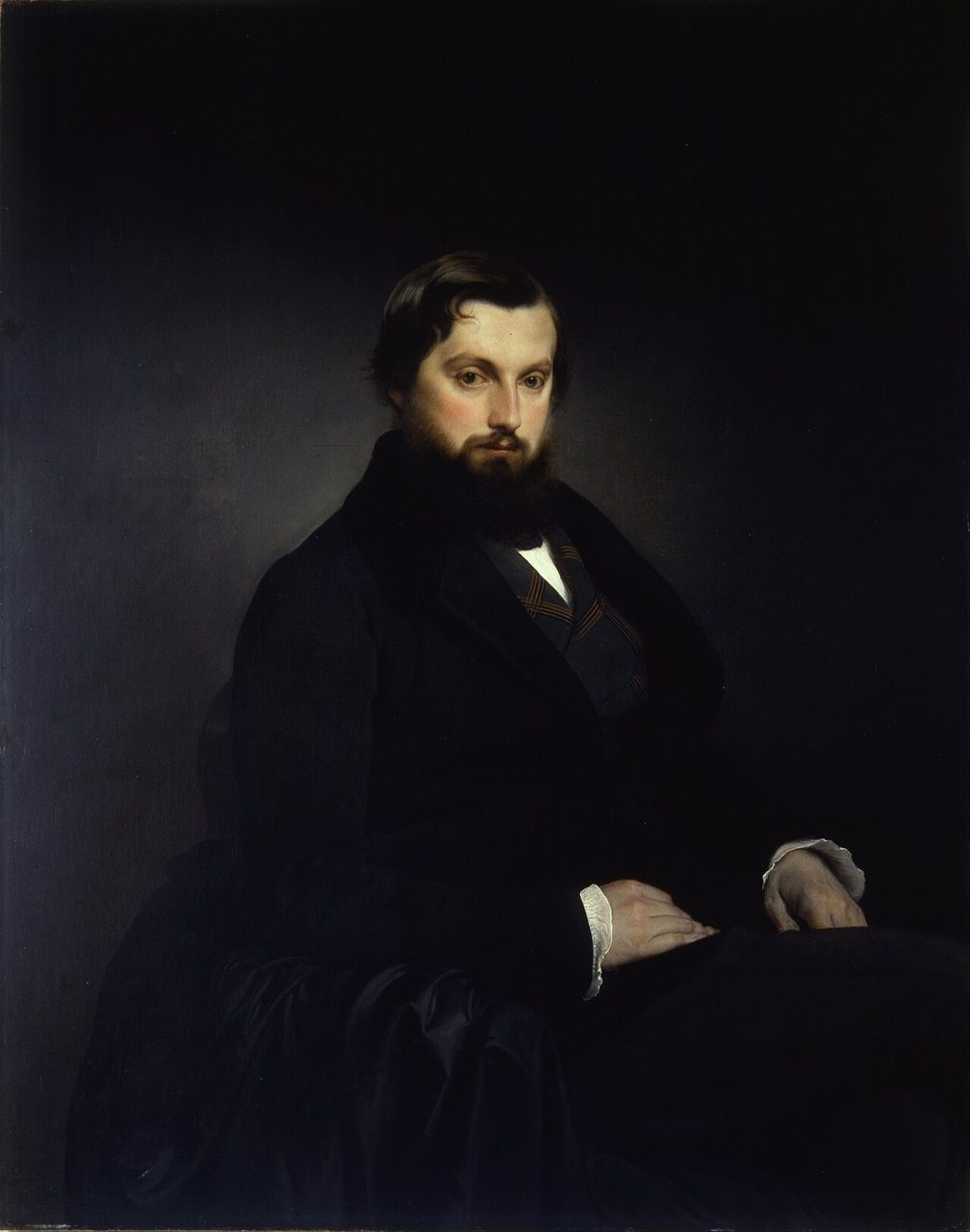
Your host is waiting in a portrait of himself as a young man, on the ground floor: find him before you go up
The full story
Before you look at a single painting, get to know the man who bought them. Because this is not just any museum: you are a guest in someone else's home.
Your host is Gian Giacomo Poldi Pezzoli, a count, born in Milan in 1822. The double surname is already a story of inheritance. His father was a Poldi, and from a Pezzoli uncle he had received a name, a title and a fortune built on collecting taxes in Austrian-ruled Lombardy.
The father dies young. The boy is raised by his mother, Rosa Trivulzio, daughter of a book collector and Dante scholar, a cultured woman and a patron of artists. At twenty-four Gian Giacomo comes of age under the law of the time, and becomes master of it all.
The revolt and exile
He could live off his income. Instead, in 1848, when Milan rises up against the Austrians, he takes sides: with other noblemen he pays for an artillery unit. The revolt ends badly. He takes refuge in Lugano, then moves between France and Florence, and to get his property back he has to pay a fine of six hundred thousand lire.
A room for every era
Once home, he has a single project: the house. He has an apartment fitted out just for himself and hands it to painters and craftsmen who work like set designers. Each room is meant to conjure up an era: the Middle Ages for the weapons and the study, the Baroque for the staircase and the bedroom, the Renaissance for the grand reception room.
Then he fills it with the right objects, bought one by one with the help of the best connoisseurs of the day. He records what he spends in a notebook in his own handwriting, which still exists.
The secret will
One problem remains: who to leave it all to. The nephew he had in mind dies before him. So in 1871 he writes a secret will: house and collection will become a museum, open to everyone, forever. He dies suddenly eight years later, in his palazzo.
Keep that in mind as you walk around. No curator chose these works to teach you the history of art. One man chose them because he liked them, and wanted to see them every day.
About this stop
Anecdote
Six hundred thousand lire to come home
In 1848 Count Gian Giacomo Poldi Pezzoli, founder of Milan's Museo Poldi Pezzoli, is young, enormously rich and a patriot. When Milan rises up against the Austrians he joins other noblemen in paying for an artillery unit, then goes to Venice as an envoy of the Lombard provisional government. In August the revolt is crushed. He takes refuge in Lugano, and his name lands on the list of citizens fined by Field Marshal Radetzky, the Austrian commander. He travels between France and Florence, then returns. To get his property back he pays six hundred thousand Austrian lire. With the rest he builds the house that is now the museum.
Anecdote
The bachelor count and his ward
Gian Giacomo Poldi Pezzoli, the count who left his house to Milan to become a museum, never married. The Dizionario Biografico degli Italiani, Italy's national biographical dictionary, describes him as often drawn to dancers and actresses, then attached to Giuseppina Parravicini, a chemist's wife. In 1859 Camilla Cavezzali was born: officially his ward and probably, the Dizionario writes, also his natural daughter. With the secret 1871 will, house and artworks went to the public, the rest of the estate to a relative on his mother's side. Camilla, according to the Dizionario, received four hundred thousand lire, a huge sum for the time. A half secret inside a secret will.
Because it is two families. The founder's father was named Giuseppe Poldi, and his family came from Parma. In 1818 he inherited from an uncle, Giuseppe Pezzoli, the surname, the noble title and great wealth, built up by collecting taxes in Austrian-ruled Lombardy. From then on the family carried both names together. Add his mother, Rosa Trivulzio, from one of Milan's great noble families, and you see what kind of means allowed Gian Giacomo to afford Botticelli and Mantegna.
Next stop
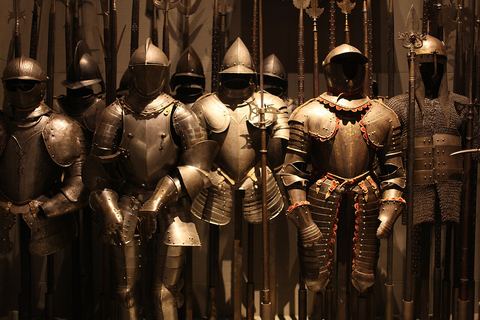
Stay on the ground floor and look for the Armeria, the room of arms and armor