Museum · Magenta and Sant'Ambrogio · 1494–1498
Cenacolo Vinciano
A dining hall wall, an experiment gone wrong, and the most famous painting in Milan
In brief
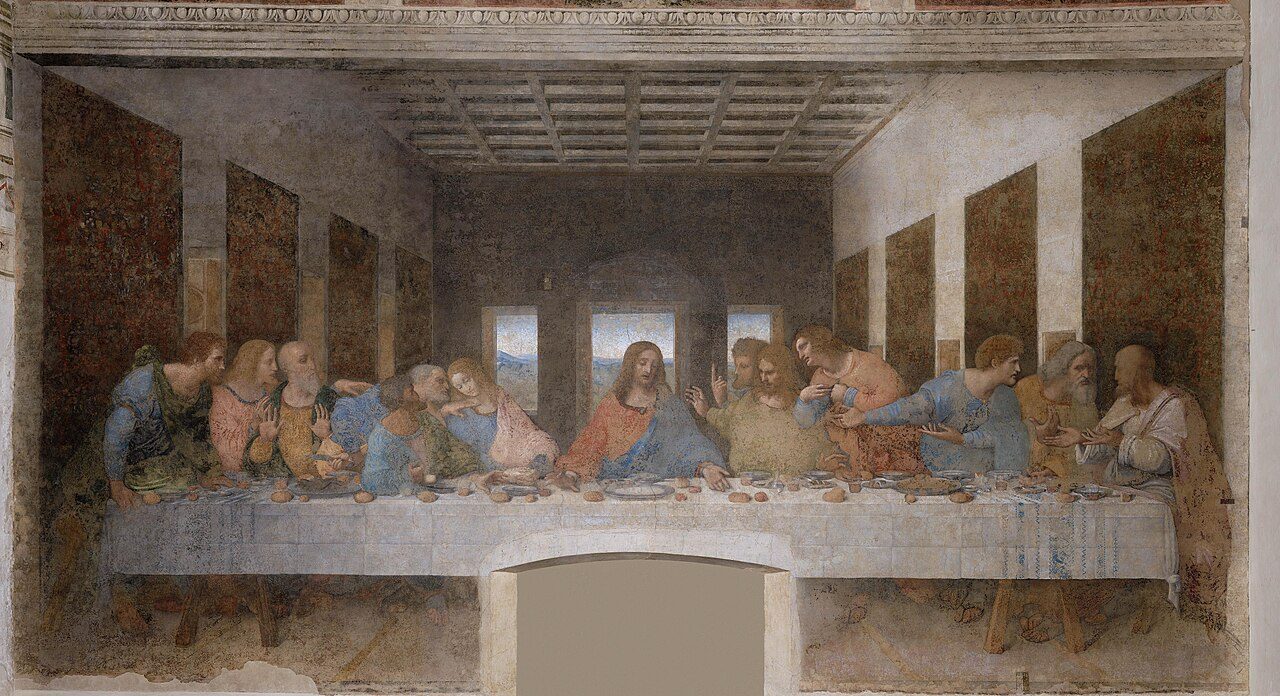
Leonardo da Vinci's Last Supper is still where he painted it in the late 1400s: on the wall of the friars' dining hall at Santa Maria delle Grazie. It is fragile, full of gaps, and it survived a bomb. You get fifteen minutes inside, so it pays to arrive prepared.
Stories of this place
- Anecdote · The duke, the friars and the slow painterReadLeonardo and the prior's face for JudasLeonardo da Vinci painted the Last Supper in the refectory of the convent of Santa Maria delle Grazie, and it took him years. Giorgio Vasari, biographer of the artists, says the prior of the convent, fed up with watching him never finish, kept pressing him and finally went to complain to Ludovico il Moro, Duke of Milan. Leonardo explained that he still had two heads to paint: that of Christ and that of Judas, the traitor. For Judas, he added, if nothing better turned up he could always use the face of that prior, “so importunate and indiscreet.” The duke laughed, and the prior was left speechless.
- Anecdote · The duke, the friars and the slow painterReadThe vineyard given to LeonardoIn 1498, the year Leonardo da Vinci finished the Last Supper, Ludovico il Moro, Duke of Milan, gave him a vineyard steps from the convent of Santa Maria delle Grazie: about one hectare of vines, to reward his work. Leonardo cared about it. The French confiscated it; he claimed it back and got it. Shortly before dying in France, he split it in his will between his pupil Salaì and a servant. Five centuries later the University of Milan searched the soil for remains of the old vines: the likeliest grape is Malvasia di Candia aromatica, replanted in 2015. The painting stayed with the friars. Leonardo kept the land.
- In culture · An experiment on the wallReadMark Twain preferred the copiesIn 1867 the American writer Mark Twain entered the refectory of the convent of Santa Maria delle Grazie to see Leonardo da Vinci's Last Supper. He found a dozen painters copying it, and noted that the copies looked better than the original. On the wall he saw faded colors, flaking faces, lifeless eyes. Napoleon's horses, he added, had kicked the legs off most of the disciples. Around him visitors sighed: such expression, such grace! He told the story in his travel book The Innocents Abroad: the painting had been a miracle of art, but three hundred years earlier. Harsh, but not entirely unfair: much of what he saw was repainting.
- Anecdote · What to look for in fifteen minutesReadOn the Last Supper's plates, perhaps an eelOn the table of Leonardo da Vinci's Last Supper, in the refectory of the convent of Santa Maria delle Grazie, there are plates of food. Only after the latest restoration, completed in 1999, could anyone look into them. John Varriano, who taught art history at an American college, studied them and in 2008 proposed a reading: grilled eel with slices of citrus, orange or lemon. It was a much-loved dish in Renaissance Italy, and it appears nowhere in the Gospels. The restorer Pinin Brambilla Barcilon simply saw fish. Either way, Leonardo did not paint a supper in Jerusalem. He set the table as people did in his own day.
- In culture · Twelve reactions to one sentenceReadJohn or Mary Magdalene beside Christ?In Leonardo da Vinci's Last Supper, in the refectory of the convent of Santa Maria delle Grazie, a delicate-featured figure sits next to Christ. In 2003 Dan Brown's novel The Da Vinci Code made one idea famous: that it is not the apostle John but Mary Magdalene. It is a novelist's invention. For art historians the figure is John, the youngest of the twelve, with the androgynous look Leonardo often gave his young men. Besides, if it were Mary Magdalene, there would be an apostle missing from the table. The theory does not hold up, but it has one merit: it makes people look at the painting figure by figure.
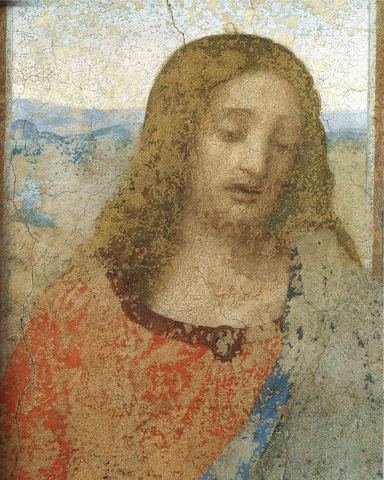
- Legend · Twelve reactions to one sentenceReadThe face of Christ Leonardo never finishedAt the center of Leonardo da Vinci's Last Supper, in the refectory of the convent of Santa Maria delle Grazie, is the face of Christ. According to Giorgio Vasari, biographer of the artists, Leonardo left the head of Christ “imperfect,” meaning unfinished: he felt he could not give it the divinity the subject called for. Another sixteenth-century writer, Giovanni Paolo Lomazzo, claims the advice came from a colleague, the painter Bernardo Zenale. These accounts were written decades later, and are best taken as tradition rather than record. But they show how high Leonardo set the bar, and why the prior of the convent so often saw him standing still, thinking.
- In culture · Twelve reactions to one sentenceReadA melody hidden in the Last Supper?In 2007 a musician and computer technician, Giovanni Maria Pala, announced he had found music inside Leonardo da Vinci's Last Supper. He had drawn a five-line musical staff across the painting and read the loaves and the hands around the table as notes. Read from right to left, the direction in which Leonardo wrote, they gave a slow melody of forty seconds, which to him sounds like a requiem. Alessandro Vezzosi, a Leonardo scholar, had not seen the research but judged the idea plausible, and warned: there is always a risk of seeing something that is not there. Leonardo certainly played the lyre. The rest, for now, is conjecture.
- Record · Twenty years to take the retouching offReadTwenty years to restore, four to paintLeonardo da Vinci took about four years to paint the Last Supper in the refectory of the convent of Santa Maria delle Grazie. The latest restoration, completed in 1999, took more than twenty, five times as long, for a painted wall nearly nine meters wide, about 29 feet, and more than four meters high. The numbers say everything about how fragile the work is: nine documented restorations since the early 1700s, and traces of even older ones. Few paintings have been so cared for, retouched and argued over. And few ask their viewers to count the minutes: you stay in the room for fifteen, no more.
- AnecdoteReadThe king who wanted to take the Last Supper homeLeonardo da Vinci's Last Supper is painted on a refectory wall at the convent of Santa Maria delle Grazie, and a king once tried to take it away. Giorgio Vasari, biographer of the artists, tells the story without naming him: a king of France was so struck that he wanted it in his kingdom. He is usually identified as Louis XII, who took Milan in 1499. He looked for a way to move it, but it was painted on the wall and the job proved impossible. Three centuries later, in Napoleonic times, a copy was ordered: a life-size mosaic by Giacomo Raffaelli. It is now in a church in Vienna.
- In cultureReadAndy Warhol's Last SupperIn January 1987 Andy Warhol came to Milan for the opening of a show devoted entirely to Leonardo da Vinci's Last Supper, the painting that fills a wall of the refectory of the convent of Santa Maria delle Grazie. The gallery owner Alexander Iolas had asked him to reinterpret it, and he had made more than a hundred works from a black-and-white reproduction. They were shown in the former refectory of the Palazzo delle Stelline, right across from the Grazie: one refectory facing another. Warhol died in February, with the show still open. Some thirty years earlier Salvador Dalí had painted a Last Supper of his own, now in Washington.
Ready-made questions
Because Leonardo wanted to work slowly. In you paint on plaster that is still wet, and you have to finish before it dries. He preferred a dry wall: a white ground, and over it colors in , an oil-enriched tempera, as if on a wooden panel. He could correct and refine as much as he liked. But the paint stayed on the surface instead of sinking into the wall, and it began to come away within a few years.
Go to stop: An experiment on the wallBecause the painting is fragile and needs a stable climate. Too many people at once push up the humidity and bring in dust. After the restoration that ended in 1999, the choice was prevention: filtered air, conditions monitored around the clock, a few visitors at a time and for a short while. Even the automatic doors you pass through on the way in, which open one after another, are there to filter the outside air.
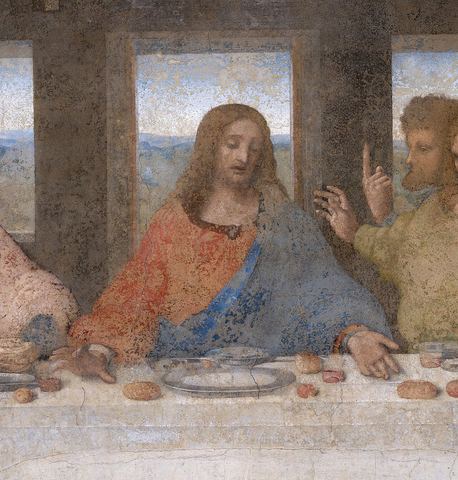
Go to stop: An experiment on the wallThe instant right after Jesus has said: one of you will betray me. The sentence is in the Gospel of John, which adds that the disciples looked at one another, not knowing whom he meant. Other painters had shown the apostles sitting in order, composed. Leonardo chooses the reaction: the twelve are stirred up, they question one another, they protest, while Christ stays calm in the center.
Go to stop: What to look for in fifteen minutesBecause in the 1600s the friars cut a door to connect the to the kitchen, right under the figure of Christ. The opening destroyed his feet. By then the painting was already badly deteriorated. The door was later walled up, but its arched outline is still visible. To know what those feet looked like you have to turn to the early copies, such as the one by Giampietrino now in London.
Go to stop: Every line leads to ChristLess than we would like, but at last you can see it. Nine restorations are documented since the early 1700s, and for a long time restoring meant repainting. The latest campaign, which ended in 1999, removed those layers and recovered the original parts that had been hidden. Where the paint was lost, the gaps were filled in watercolor in muted tones, without pretending it was Leonardo.
Go to stop: Twenty years to take the retouching offA large Crucifixion by Donato Montorfano, a Lombard painter, finished in 1495. It is a true and is in good condition. At the bottom, on either side, are portraits of Ludovico il Moro, Duke of Milan, his wife Beatrice d'Este and their two children, most likely added by Leonardo. They are painted , like the Supper, and little more than shadows are left of them. So in one room you have the two techniques side by side, and the result after five centuries.
Go to stop: The wall across the roomFor the ancient Romans the cenacolo was the room where people ate. For Christians it became the name of the room where Jesus had his last supper with the apostles. Over time the word also came to mean painted Last Suppers, which were often in convent . That is why Cenacolo Vinciano means two things at once: the friars' hall and the painting by Leonardo da Vinci.
The stops
1 The duke, the friars and the slow painter
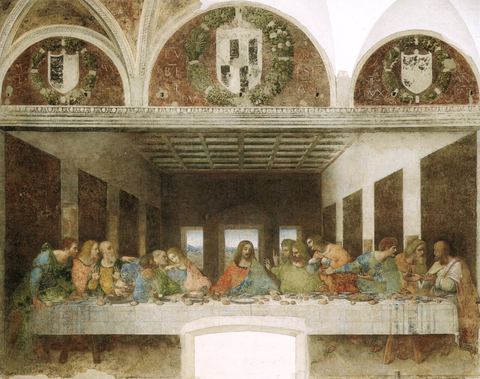
The Last Supper began as decoration for a dining hall. Ludovico il Moro, Duke of Milan, wanted it for the convent that was meant to become the Sforza mausoleum. Leonardo took about four years over it, at a pace all his own.
2 An experiment on the wall
Leonardo did not paint in fresco, which forces you to work fast. He worked a secco, on the dry wall, so he could retouch at leisure. He got subtleties never before seen on a wall, but the paint began to fall off within a few years.
3 What to look for in fifteen minutes
The painting shows the moment after one sentence: “one of you will betray me.” Don't try to see everything. Look at Christ, then the twelve apostles in groups of three, then the painted room around them. And before you leave, turn around.
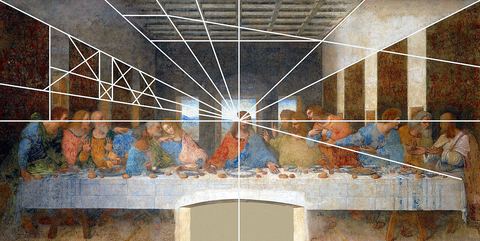
4 Every line leads to Christ
The painted room is built like a stage set: the lines of the ceiling and walls all run toward a single point, the head of Christ. Right there, the restorers found a nail hole.
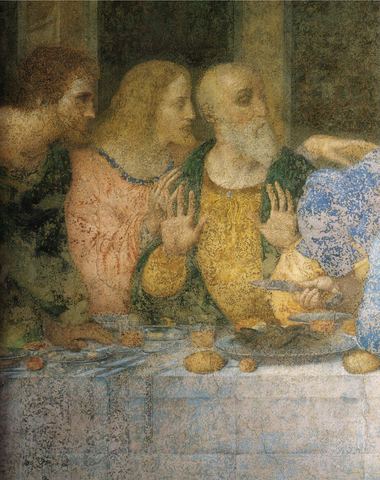
5 Twelve reactions to one sentence
Twelve apostles, four groups of three, a single sentence: “one of you will betray me.” Leonardo paints what he called motions of the mind: each man reacts with his body, in his own way. Judas is in among the others.
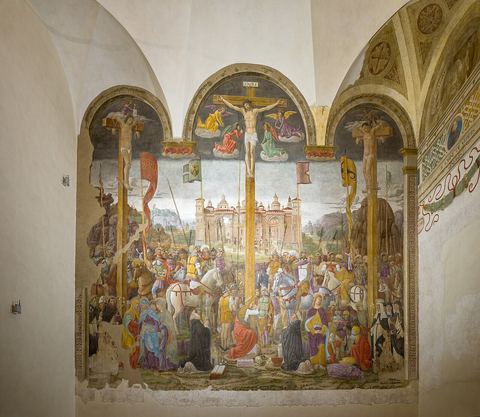
6 The wall across the room
Facing Leonardo is the Crucifixion by Donato Montorfano, painted in the same years. It is a true fresco and has come down to us in good condition. At the bottom are portraits of the ducal family, most likely added by Leonardo: they have all but vanished.
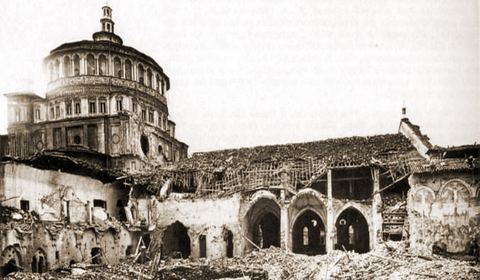
7 The night the ceiling came down
In August 1943 a bomb fell in the cloister next to the refectory. The vault and one entire wall collapsed. The wall of the Last Supper, shored up and covered in sandbags, stayed standing amid the rubble.
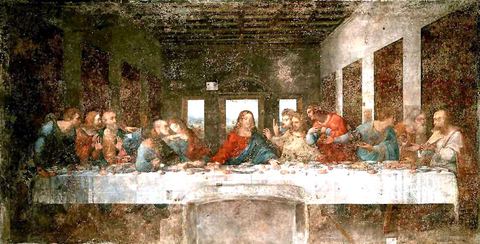
8 Twenty years to take the retouching off
For centuries, restoring the Last Supper meant repainting it. Between the late 1970s and 1999 the restorer Pinin Brambilla Barcilon did the opposite: she took away, layer after layer, until she found Leonardo again.
Timeline
- 1494–1498Leonardo paints the Last Supper in the refectory, for Ludovico il Moro, Duke of Milan.
- 1517A visitor, Antonio De Beatis, notes that the painting “is beginning to spoil.”
- 1652The friars cut a door through to the kitchen: the opening destroys Christ's feet.
- 1726First documented restoration: the gaps are filled in oil paint and everything is varnished.
- Napoleonic eraFrench soldiers use the refectory as a bivouac and as a stable.
- August 1943A bomb brings down the vault and one wall of the refectory. The wall of the Last Supper stays standing.
- 1980The church, the convent and the Last Supper join the UNESCO World Heritage List.
- 1999Pinin Brambilla Barcilon's restoration ends, after more than twenty years.
Who's who
Leonardo da Vinci
painter, in Milan from 1482 to 1499
He painted the Last Supper between 1494 and early 1498, in an a secco technique all his own that made it both exquisite and fragile.
Ludovico Sforza, known as il Moro
Duke of Milan, patron
He wanted to make Santa Maria delle Grazie the Sforza mausoleum. He gave Leonardo the refectory wall. His coats of arms are in the lunettes above the Supper.
Giovanni Donato Montorfano
Lombard painter
He painted the Crucifixion on the opposite wall, finished in 1495 and signed on a stone at the foot of the cross. It is a true fresco, and it shows.
Matteo Bandello
writer, eyewitness to the work
In one of his tales he describes Leonardo on the scaffolding: whole days of painting, then long pauses just looking, sometimes two brushstrokes and off he went.
Giorgio Vasari
painter and biographer of the artists
His Lives tell the most famous anecdotes about the Cenacolo. In the second half of the 1500s he found it already reduced to “a dazzled stain.”
Pinin Brambilla Barcilon
restorer
She led the latest restoration, which took more than twenty years and ended in 1999: she removed two centuries of repainting and recovered what was left of Leonardo.
Words to know
Where it is
The neighborhood
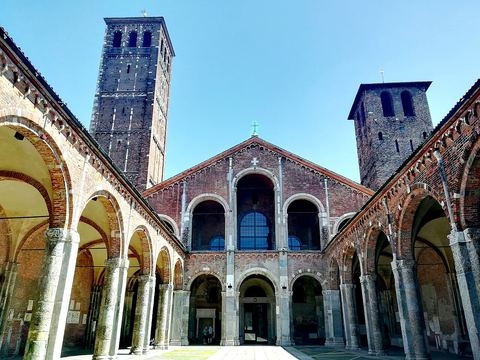
Magenta and Sant'Ambrogio
Related places
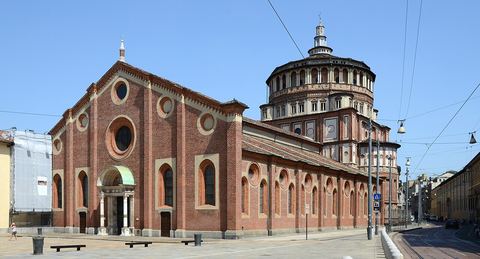
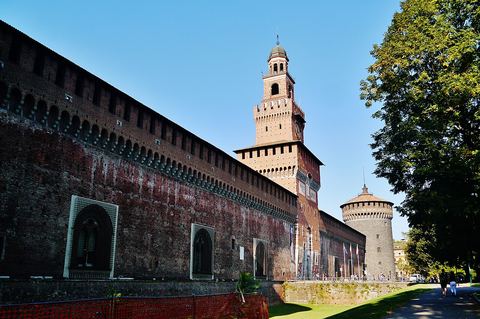
The story of the place
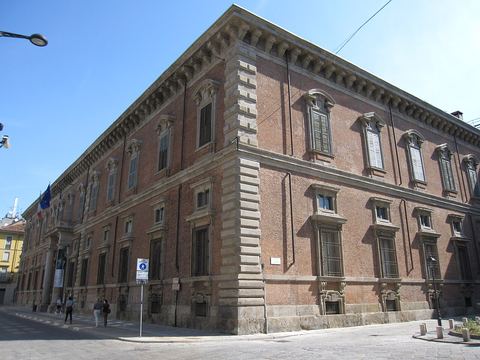
Cenacolo is an old word for the room where people eat, and later for the room of Jesus's last supper. Here it means two things at once: the of the Dominican friars of Santa Maria delle Grazie, and the painting that fills one whole wall of it, Leonardo da Vinci's Last Supper.
The man behind it was Ludovico Sforza, known as il Moro, Duke of Milan, who dreamed of turning the Grazie into his family's mausoleum. The church has its own entry in this guide. For the the duke called in his court painter: Leonardo, in Milan since 1482. He worked on it between 1494 and early 1498, while on the wall across the room the Lombard painter Donato Montorfano was painting a large Crucifixion.
The scene and the technique
The starting idea was simple: the friars eat, and in front of their eyes is another table. Leonardo turned it into a piece of theater. He chose the instant when Jesus says “one of you will betray me” and painted twelve men reacting, each in his own way. And he chose a technique all his own: not , but colors laid on the dry wall, so he could take his time and make corrections.
Five centuries of damage
It was a masterpiece and a disaster. Twenty years later a visitor was already noting that the painting had begun to spoil. Then came the retouchings of every century, a door cut through the wall that took away Christ's feet, and Napoleon's soldiers, who turned the hall into a stable.
In August 1943 a bomb brought down the ceiling and one wall of the . Leonardo's wall, shielded by sandbags, stayed standing.
What you see today is the result of a restoration that lasted more than twenty years and ended in 1999. It stripped away the repainting and brought back to light what is left of Leonardo's own hand. Since 1980 the has been a UNESCO World Heritage Site, together with the church and the convent.
How to use this guide
One piece of advice. Don't expect an intact picture with the colors you know from reproductions. Expect a survivor. And since you only get fifteen minutes in the room, the stops in this guide come in three stages: some to read outside, before you go in; three short ones to use in front of the painted walls; and the last ones for afterward, while the painting is still fresh in your eyes.
Sources
- Museo del Cenacolo Vinciano, Dietro le quinte: tecnica, degrado e restauri (opens in a new tab)Official site
- Museo del Cenacolo Vinciano, scheda dell'Ultima Cena (opens in a new tab)Official site
- Museo del Cenacolo Vinciano, scheda della Crocifissione di Donato Montorfano (opens in a new tab)Official site
- Museo del Cenacolo Vinciano, storia del museo (opens in a new tab)Official site
- Museo del Cenacolo Vinciano, scheda di presentazione del museo (opens in a new tab)Official site
- Giorgio Vasari, Le vite (1568), Lionardo da Vinci, Wikisource (opens in a new tab)Other source
- Cenacolo, Enciclopedia Treccani (opens in a new tab)Encyclopedia
- Il Cenacolo vinciano, Diocesi di Cuneo e Fossano (opens in a new tab)Institution
- Pietro Petraroia, Introduzione (il restauro del Cenacolo nel dopoguerra), rivista ACME 2/2020, Università degli Studi di Milano (opens in a new tab)Institution
- At the Cenacle Museum, the Last Supper in pictures, Finestre sull'Arte (opens in a new tab)Other source
- How The Last Supper survived World War II bombs, Aleteia (opens in a new tab)Other source
- Museo del Cenacolo Vinciano, OpenStreetMap (coordinate) (opens in a new tab)Other source
- Museo del Cenacolo Vinciano, Wikidata (coordinate) (opens in a new tab)Other source
- Ultima cena (Leonardo), Wikipedia in italiano (opens in a new tab)Wikipedia
- The Last Supper (Leonardo), Wikipedia in inglese (opens in a new tab)Wikipedia
- The Last Supper (Warhol), Wikipedia in inglese (opens in a new tab)Wikipedia
- Mark Twain, The Innocents Abroad (1869), capitolo 19, Wikisource (opens in a new tab)Other source
- Leonardo painting has coded 'soundtrack', Associated Press su NBC News (2007) (opens in a new tab)Other source
- Is there a melody hidden in Leonardo da Vinci's Last Supper?, Aleteia (opens in a new tab)Other source
- «La musica celata» nel Cenacolo di Leonardo, Studentville (opens in a new tab)Other source
- The Tiny Detail You May Have Missed In Da Vinci's Last Supper, HuffPost (opens in a new tab)Other source
- The Strange Dish Depicted In Leonardo Da Vinci's The Last Supper, Tasting Table (opens in a new tab)Other source
- Casa degli Atellani and Leonardo's vineyard purchased by Bernard Arnault, WineNews (opens in a new tab)Other source
- Vigna di Leonardo da Vinci, Wikipedia in italiano (opens in a new tab)Wikipedia
- Casa degli Atellani, Wikipedia in italiano (opens in a new tab)Wikipedia
- The Innocents Abroad, Wikipedia in inglese (opens in a new tab)Wikipedia
- La Vigna di Leonardo, FAI Fondo per l'Ambiente Italiano (opens in a new tab)Institution
- On Recreating Leonardo da Vinci's Vineyard (and His Wine), Literary Hub (opens in a new tab)Other source
- Leonardo da Vinci's Vineyard, Wikipedia in inglese (opens in a new tab)Wikipedia
- Menu for Leonardo's Last Supper discovered, Zoomata (opens in a new tab)Other source
- The Innocents Abroad, Mark Twain in His Times, University of Virginia (opens in a new tab)Institution
- Musician uncovers hidden music in Da Vinci's 'Last Supper', Associated Press su Lawrence Journal-World (2007) (opens in a new tab)Other source
- Last Supper has a secret score, claims musician, Irish Examiner (2007) (opens in a new tab)Other source