Stop 3 of 8
The bell tower cut short
Where to stand
Still outside, from a spot with a clear view of the brick bell tower beside the church
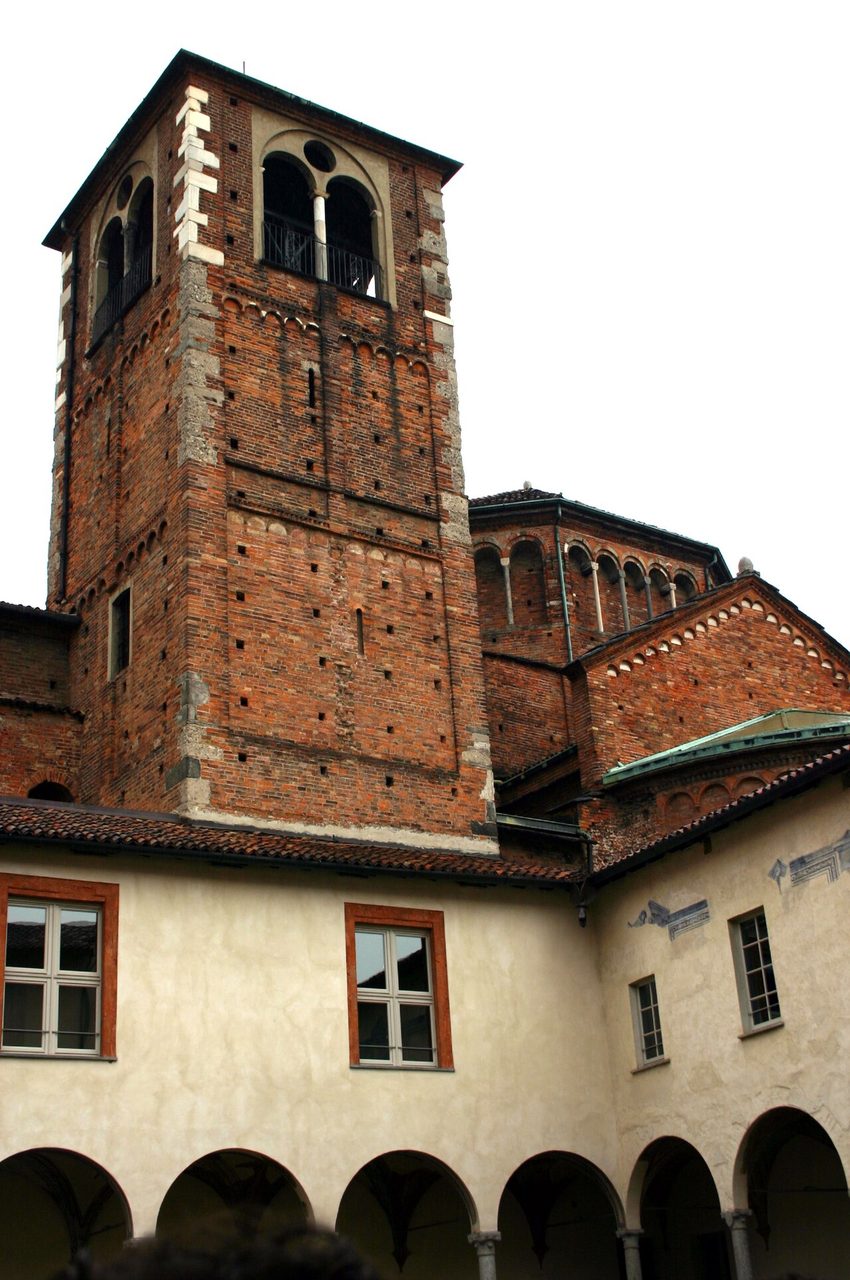
The bell tower is from the 12th century, but it is no longer what it was: in the mid-1500s a governor had about 25 meters taken off it. From up there you could see too well into the Castello.
Spot the detail
Look at the proportions of the tower: wide, sturdy, and yet low. What is it missing?
The full story
A tower this wide ought to climb much higher. The bell tower of San Simpliciano was built in the 12th century, in the same works that gave the church its Romanesque facade. Today it is squat, almost squashed. It was not born that way.
Too close to the Castello
The culprit has a name: Ferrante Gonzaga, governor of Milan in the mid-1500s, when the city was under Spanish rule. Not far from here is the Castello Sforzesco, the city's castle, then a military fortress. From the top of a bell tower anyone could look inside.
Gonzaga solved the problem in the most direct way. He had the tower lowered by about 25 meters, some 80 feet. It was not the only one: other bell towers around the Castello met the same fate.
Lower down, the tower holds something older than itself. Built into the base are blocks of serizzo, a gray stone, taken from Roman tombs. Medieval builders reused whatever they found.
The lightning bolt of 1517
The bell tower is also at the center of an ugly story, told in the 1800s by the writer Ignazio Cantù. In 1517 the monks moved the altar and found the relics of the basilica's saints. While a large crowd was gathered, lightning struck the tower.
The people took it for the anger of the saints. The crowd stormed the monastery, and there were riots and arrests. Then the word witchcraft began to go around. According to Cantù, some women were burned at the stake in two villages of the countryside, Ornago and Lampugnano.
Bells against toothache
There is a lighter legend too. The bells of San Simpliciano were said to have the power to heal. A local merchant, tormented by toothache, is said to have talked the bell ringer into letting him ring them by pulling the rope with his teeth.
He was no professional, and the rope lifted him until his head hit the ceiling. The toothache, though, the story swears, vanished on the spot.
A lopped tower, a lightning bolt, a miracle cure. For a bell tower without a top, it has plenty of stories.
About this stop
Anecdote
Twenty-five meters shorter
The bell tower of San Simpliciano, built in the 12th century, used to be much taller than it is today. In the mid-1500s Ferrante Gonzaga, governor of Milan under Spanish rule, ordered it lowered by about 25 meters. The reason was military: from the top you could look inside the nearby Castello Sforzesco, the city's castle. Other bell towers in the area met the same fate. The result is the squat tower you see, with a Renaissance belfry on top of a medieval shaft.
Anecdote
Lightning on the bell tower, then witches
In 1517 the monks of San Simpliciano move the altar of the basilica and rediscover the relics of Simpliciano, the 4th-century bishop it is named after, of the three martyrs buried here and of other saintly bishops. According to the 19th-century writer Ignazio Cantù, while a large crowd is gathered a lightning bolt strikes the bell tower. The people read it as the anger of the saints. The crowd storms the monastery, and riots and arrests follow. Then, again according to Cantù, talk of witchcraft begins, and some women are burned at the stake in Ornago and Lampugnano. The relics, meanwhile, are sealed in lead caskets.
Next stop
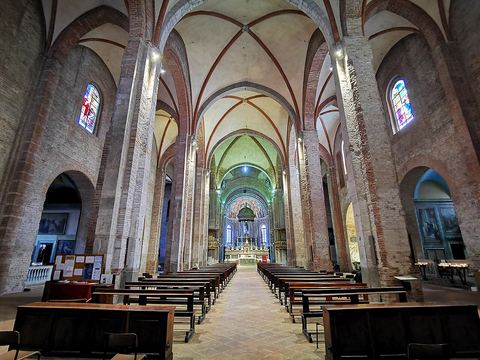
Go back to the piazza, enter through the portal and stop at the start of the nave