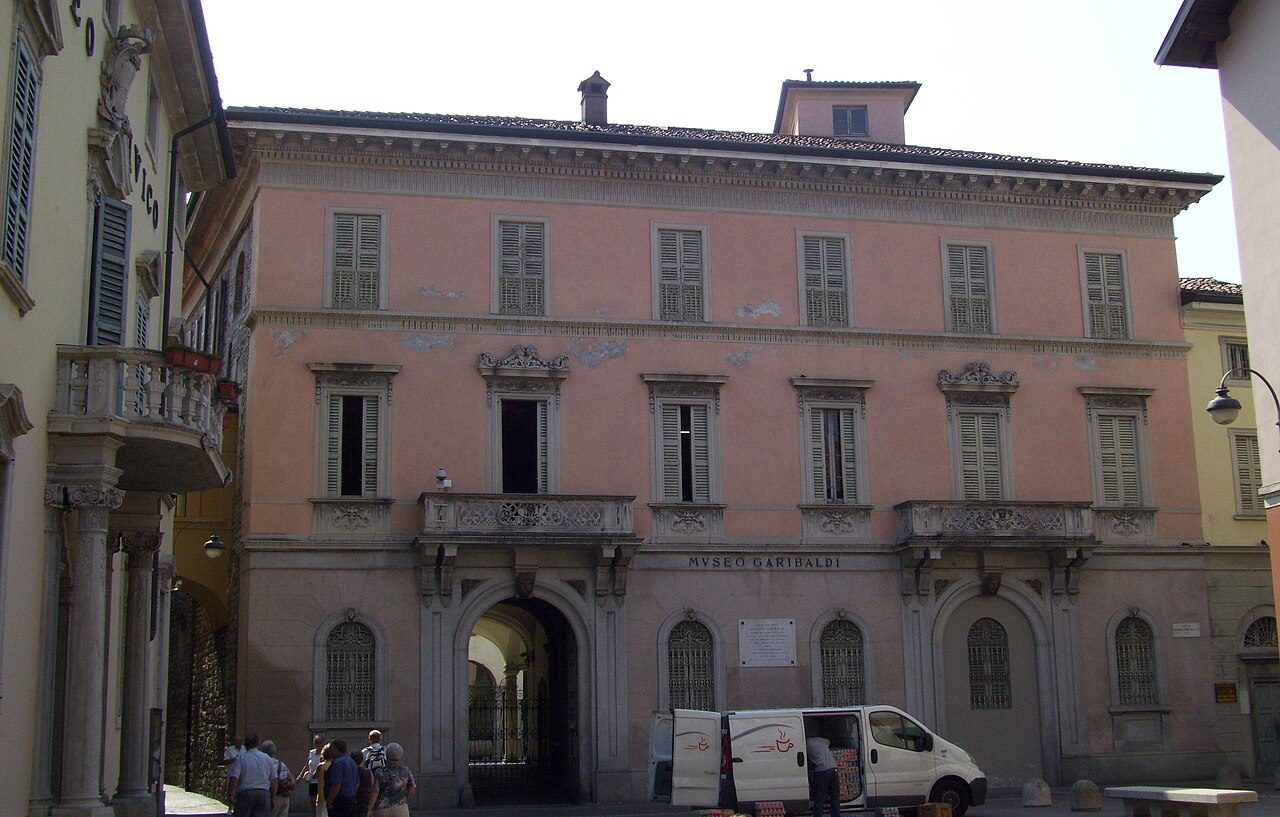
Museum · The Walled City · 1932
Museo Storico Giuseppe Garibaldi
The house where Garibaldi stayed, among red shirts and 19th-century parlors
In brief
A noble palazzo left to the city on one condition: turn it into a museum named after Garibaldi, who stayed here in 1866. Inside you find the Risorgimento as seen from Como, the wars of the 20th century, and the parlors of the family who owned the house.
Stories of this place
- Anecdote · Como's 1848ReadHanged for BooksIn the Garibaldi Museum in Como, the room devoted to 1848, the year the city rose up against the Austrians, remembers Luigi Dottesio. A Como man, he had been deputy secretary of the city, until his ideas cost him the job. In secret he circulated dangerous goods: the anti-Austrian pamphlets printed in Capolago, in the Swiss canton of Ticino. Arrested at the border in 1851, he was tried in Venice for high treason and refused to name names. He was hanged on October 11. Seventeen years later his bones were brought back to Como. The museum's archive holds his letters and the papers of Giuseppina Bonizzoni, the woman he loved.
- In culture · San Fermo, May 27, 1859ReadWar Painted by Those Who Were ThereIn the Garibaldi Museum in Como, the Risorgimento rooms are also a small gallery of war painting. Sebastiano De Albertis, who painted the large canvas of the battle of San Fermo, won by Garibaldi in 1859 outside the city, studied at the Brera Academy in Milan, volunteered in the wars of independence, and from 1855 painted battle scenes. The painter Trezzini painted himself in the sergeant's uniform of the Cacciatori delle Alpi, Garibaldi's volunteers. The veteran Francesco Capiaghi painted the Austrian surrender of 1848, with carts bringing food to the starving troops. The prints after drawings by the painter Bossoli were made instead for readers of the Times of London.
- Anecdote · The Room of the Red ShirtsReadThe Marriage That Ended on the Wedding DayThe Garibaldi Museum in Como gives a whole room to Giuseppe Garibaldi, the general of the Risorgimento volunteers. In 1859, a few days after beating the Austrians at San Fermo, in the hills outside Como, he met an eighteen-year-old girl who had come with news of the city: Giuseppina Raimondi, daughter of a marquis from Fino Mornasco. He fell in love and married her on January 24, 1860, in the chapel of the family villa. When the ceremony was over, he was handed a note: the bride had had other lovers, even shortly before the wedding. She admitted it. Garibaldi repudiated her that very day. The annulment took twenty years.
- Anecdote · The Room of the Red ShirtsReadGaribaldi's Fake LettersThe archive of the Garibaldi Museum in Como holds dozens of letters by Giuseppe Garibaldi, donated over time by Como families. One folder, though, bears an unusual title: facsimiles and forgeries. Inside, among others, is a letter to the dearest women of Como dated Fino, January 14, 1860, which the inventory records as an invented forgery. Ten days later, in Fino itself, Garibaldi was getting married. The real letters talk about other things: they thank the women of Como for their good wishes, ask the authorities for provisions, and urge a collection of money to buy rifles.
- Anecdote · The Room of the Red ShirtsReadRed Shirts Sewn at HomeThe red shirts on display in Como's Garibaldi Museum were the uniform of Giuseppe Garibaldi's volunteers. In 1866, the year of the Third War of Independence against Austria, they numbered almost forty thousand and lacked everything, starting with uniforms. Como was one of the seven training centers, and the city got organized. The museum's archive has the receipt book for shirt donations, opened on June 17 and closed a month later, with twenty-three receipts torn out. A second list names ten ladies who offered to sew them for free. And a Como woman, Francesca Lampugnani, kept a diary of Garibaldi's passage through the city between May and July that year.
- Record · From the Trenches to the ResistanceReadThe Rower Who Won at Henley and Died in the WarIn Como's Garibaldi Museum, the Como Heroes corridor displays the medals for valor of the city's soldiers. One was an athlete: Giuseppe Sinigaglia, a rower born in Como in 1884. On July 4, 1914, he won the Diamond Sculls at Henley, England's most famous regatta: the first Italian ever to enter. Queen Mary handed him the prize. When Italy entered the Great War he volunteered, as an officer in the Granatieri di Sardegna, the grenadiers. In August 1916 he was hit by machine-gun fire while leading an attack on Monte San Michele and died the next day. He received the silver medal for military valor. Como's stadium bears his name.
Ready-made questions
For two reasons, one private and one public. The private one: in 1866 Garibaldi was a guest in this palazzo, and the last heir of the Olginati family left it to the city on condition that it become a museum bearing his name. The public one: it was Garibaldi who beat the Austrians at San Fermo on May 27, 1859, and entered the city that same evening. For the people of Como he was no distant hero. He had come through here more than once, and he wrote to the city.
Yes, in 1866: the plaque on the facade records it and the papers confirm it. The museum's archive has the letter in which the mayor of Como thanks Luigi Olginati for the hospitality offered to the General. There is also a letter from Garibaldi himself, written years later from Caprera, thanking Olginati for the hospitality he received. Which rooms he stayed in, the sources we consulted do not say. Be wary of anyone who points one out too confidently.
Go to stop: The Facade and Garibaldi's PlaqueA short, decisive battle, on May 27, 1859. Garibaldi, with about three thousand volunteers of the and not a single cannon, attacked the Austrians dug in on the hills outside Como. The bayonet charge succeeded, but it cost the lives of Captain Carlo De Cristoforis and twelve other men. Toward sunset the Austrians tried to come back up and were driven off. At half past nine that evening Garibaldi entered the city. The village, then called Vergosa, has been called San Fermo della Battaglia since 1911.
Go to stop: San Fermo, May 27, 1859Twenty-nine, by the count the museum records. A large picture in the Garibaldi room gathers their names and portraits. Among them was Paolo Carcano, born in Como in 1843, who was seventeen when they set out. He fought with Garibaldi again in 1866 at Bezzecca, then entered Parliament and stayed there until his death in 1918. He was several times minister of finance and of the treasury of the Kingdom of Italy.
Go to stop: The Room of the Red ShirtsNo, and that is the surprise. Garibaldi gives the museum its name and has a room all to himself. Around it is the history of Como from the age of Napoleon to World War II: the uprising of 1848, the African campaigns, the Great War, the Resistance. And there is a whole section that has nothing to do with war, devoted to life around the lake from the 1600s to the 1800s: clothing, lace, carnival masks, and the parlors of the family that lived here.
They are next-door neighbors and share a piece of history. The first were collected from citizens in 1884 and shown in the civic museum, which in 1897 moved to Palazzo Giovio: there they had a room of their own. In 1932 they moved into Palazzo Olginati, which had just come to the city as a bequest. A few years later the two palazzi were joined by two covered passages. On a small bridge between the two buildings, above Via Balestra, is a white marble bust of Garibaldi.
Largely from the homes of Como's people. When the museum was about to open, in 1932, the committee in charge realized that the material left by the Olginati was not enough to furnish all the rooms. It decided to use what the civic museum already owned and to appeal to citizens and private individuals in the surrounding area who were known to own Garibaldi . Many documents in the archive still carry a note with the donor's name.
The stops
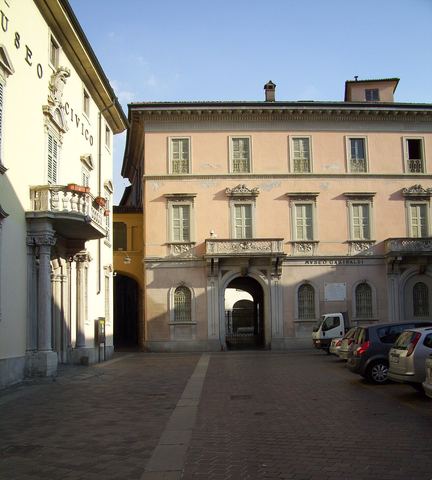
1 The Facade and Garibaldi's Plaque
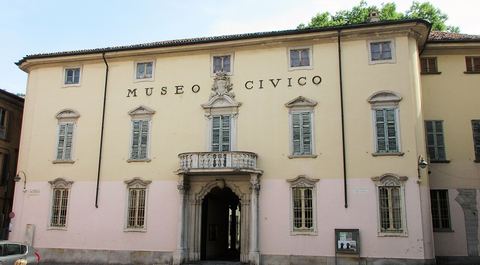
A 15th-century palazzo remodeled in the mid-1800s by Luigi Olginati. In 1866 it hosted Garibaldi, and that is why the last heir left it to the city: it was to become a museum bearing the General's name.
2 Como's 1848
Five days in March when Como forced the Austrians to surrender, and the men who paid for that idea. Among them Luigi Dottesio, hanged for smuggling books, and Francesco Anzani, the friend Garibaldi trusted with his Legion in Uruguay.
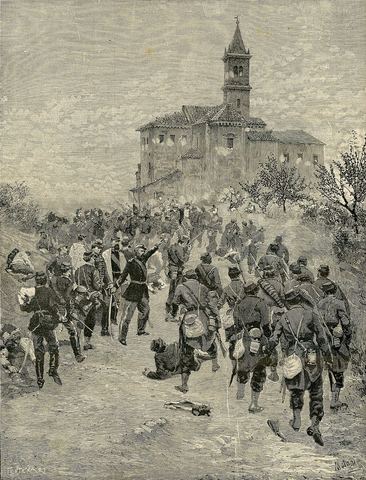
3 San Fermo, May 27, 1859
The battle that opened the gates of Como to Garibaldi, fought in the hills just outside town. At the center is the large canvas of the death of Captain De Cristoforis, who fell leading the attack. Around it, weapons and uniforms of the two armies.
4 The Room of the Red Shirts
Garibaldi and his men, from the expedition of the Mille, his Thousand, in 1860 to the last red shirts who left for the Balkans half a century later. With the General's belongings, his signed photographs, and the faces of the Como men who followed him to Sicily.
5 From the Trenches to the Resistance
The museum doesn't stop at Garibaldi. These rooms follow the people of Como through the wars of the 20th century with soldiers' belongings: gas masks, canteens, trench signs. And with the medals of those who never came back, among them a Futurist architect and a rowing champion.
6 The Olginati Parlors
The private rooms of the family that hosted Garibaldi. A 19th-century sitting room with the family's porcelain and paintings, the owners' bedroom, a vault painted with allegorical figures. The decorations only resurfaced in the 1960s.
7 Costumes, Masks, and a Nativity Scene
How people dressed and celebrated around the lake, from the 1600s to the 1800s. A rare mountain costume, a wooden mask from the carnival of Schignano, lace and embroidery, and an 18th-century Neapolitan nativity scene.
Timeline
- 15th centuryThe De Curte family builds the palazzo, which later passes to the Della Torre di Rezzonico counts and then to the Olginati.
- 1848From March 18 to 22 Como rises up: the Austrian garrison surrenders to the citizens.
- 1853Luigi Olginati has the palazzo remodeled, giving it the look it has today.
- 1859On May 27 Garibaldi beats the Austrians at San Fermo and enters Como that same evening.
- 1866Garibaldi is a guest of the Olginati, in the year of the Third War of Independence.
- 1884Risorgimento mementos and documents, collected from citizens, enter the civic museum.
- 1932On June 12, fifty years after Garibaldi's death, the museum called for in Carlotta Olginati's will opens.
- 1968The ethnographic section is given the arrangement it still largely keeps.
Who's who
Giuseppe Garibaldi
general, leader of the Risorgimento volunteers
He freed Como from the Austrians in 1859 with the victory at San Fermo. In 1866 he was a guest in this palazzo, and the museum bears his name.
Luigi Olginati
master of the house
In 1853 he had the palazzo remodeled, aiming for an antique look. He sat on the city committee for the civic museum and corresponded with Garibaldi.
Carlotta Olginati
last descendant of the family
She left the city the palazzo with its furnishings, books, and documents, on condition that it become a museum named after Garibaldi.
Carlo De Cristoforis
captain in the Cacciatori delle Alpi
Milanese, a law graduate and a student of the art of war. He died at thirty-four leading the attack at San Fermo on May 27, 1859. The museum's large canvas tells of his end.
Luigi Dottesio
Como patriot
A former deputy city secretary, he secretly spread anti-Austrian pamphlets printed in Switzerland. Arrested at the border, he was hanged in Venice in 1851.
Teresa Ciceri
noblewoman and inventor
A friend of Alessandro Volta, she introduced potato growing to the Como area and made thread and cloth from lupins. Her portrait is in the Sala De Orchi.
Words to know
Where it is
The neighborhood
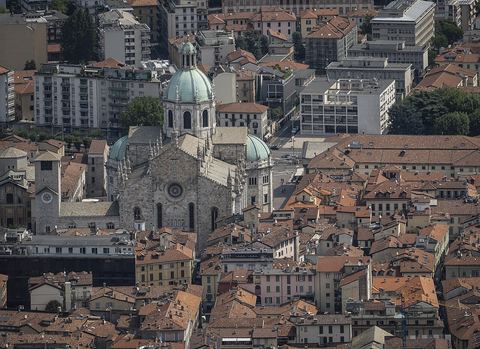
The Walled City
Related places
The story of the place
There is a plaque on the facade, and the plaque explains everything: in 1866 Giuseppe Garibaldi, the general who led the volunteers of Italian unification, was a guest in this house. The owners were the Olginati, a family of Como's nobility. The last of them, Carlotta, left the palazzo to the city with its furnishings, paintings, and books, on one precise condition: that it become a museum named after the General, in memory of that stay. The museum opened on June 12, 1932, during the fiftieth anniversary of Garibaldi's death, with his grandson Ezio in attendance.
A collection made by citizens
There was a problem, and the committee in charge put it in the minutes: the Olginati material was not enough to fill the rooms. The solution was to ask the city. Como, in fact, had started long before. As early as 1884, citizens had brought and documents from the wars against Austria to the civic museum.
That collection moved here from the palazzo next door, and more gifts followed. This is why the museum has a tone of its own. It doesn't tell grand history from above: it shows what families had kept.
What you find inside
And Como had plenty to remember. In March 1848 the city rose up for five days, while Milan was rising too, and forced the Austrian garrison to surrender.
In 1859 Garibaldi, at the head of the , his volunteer corps whose name means Hunters of the Alps, won at San Fermo, in the hills just outside town, and entered Como that same evening. The following year twenty-nine men from Como left with him for Sicily, among the Mille, his Thousand. The rooms of the , the main upper floor, that face the square follow this thread and carry it forward to the two world wars.
Then there is the other half of the palazzo, the one facing the courtyard. There the museum changes subject and tells how people lived around the lake from the 1600s to the 1800s: clothing, lace, carnival masks, a Neapolitan nativity scene. And above all the Olginati parlors, with their 19th-century decoration.
The palazzo is paired with Palazzo Giovio, home of the archaeological museum: two covered passages join them into a single route. But here the era is different, and so is the spirit. If you have time for only one thing, choose the room on the battle of San Fermo: it is the chapter of the , Italy's 19th-century struggle for unification, that Como feels is most its own.
Sources
- Museo Storico Giuseppe Garibaldi, Musei Civici di Como (opens in a new tab)Official site
- Palazzo Olginati, Musei Civici di Como (opens in a new tab)Official site
- Risorgimento e Storia contemporanea, Musei Civici di Como (opens in a new tab)Official site
- Sezione etnografica, Musei Civici di Como (opens in a new tab)Official site
- Archivio del Museo del Risorgimento G. Garibaldi in Como, Inventario del fondo, Comune di Como (opens in a new tab)Official site
- Museo storico Giuseppe Garibaldi, Ministero della Cultura (opens in a new tab)Institution
- Museo Storico Giuseppe Garibaldi presso Palazzo Olginati, UPEL (opens in a new tab)Institution
- Francesco Capiaghi, Dopo la resa di Como il 22 marzo 1848, Catalogo generale dei beni culturali (opens in a new tab)Catalog
- De Cristoforis, Carlo, Dizionario Biografico degli Italiani, Treccani (opens in a new tab)Encyclopedia
- Dottesio, Luigi, Dizionario Biografico degli Italiani, Treccani (opens in a new tab)Encyclopedia
- Anzani, Francesco, Dizionario Biografico degli Italiani, Treccani (opens in a new tab)Encyclopedia
- Museo storico Giuseppe Garibaldi, OpenStreetMap (coordinate) (opens in a new tab)Other source
- Como – Its Role in the Birth of a Nation, Como Companion (opens in a new tab)Other source
- Museo storico Giuseppe Garibaldi, Wikipedia in italiano (opens in a new tab)Wikipedia
- Garibaldi Museum (Como), Wikipedia in inglese (opens in a new tab)Wikipedia
- Battaglia di San Fermo, Wikipedia in italiano (opens in a new tab)Wikipedia
- Corpo Volontari Italiani, Wikipedia in italiano (opens in a new tab)Wikipedia
- Giuseppina Raimondi, Wikipedia in italiano (opens in a new tab)Wikipedia
- Luigi Dottesio, Wikipedia in italiano (opens in a new tab)Wikipedia
- Francesco Anzani, Wikipedia in italiano (opens in a new tab)Wikipedia
- Paolo Carcano, Wikipedia in italiano (opens in a new tab)Wikipedia
- Teresa Ciceri Castiglioni, Wikipedia in italiano (opens in a new tab)Wikipedia
- Teresa Ciceri Castiglioni, Wikipedia in inglese (opens in a new tab)Wikipedia
- Sebastiano De Albertis, Wikipedia in italiano (opens in a new tab)Wikipedia
- Antonio Sant'Elia, Wikipedia in italiano (opens in a new tab)Wikipedia
- Giuseppe Sinigaglia, Wikipedia in italiano (opens in a new tab)Wikipedia
- Schignano, Wikipedia in italiano (opens in a new tab)Wikipedia