Stop 4 of 8
Saint Catherine and the shadow of the countess
Where to stand
In the public hall, in front of the chapel on the right side dedicated to Saint Catherine of Alexandria
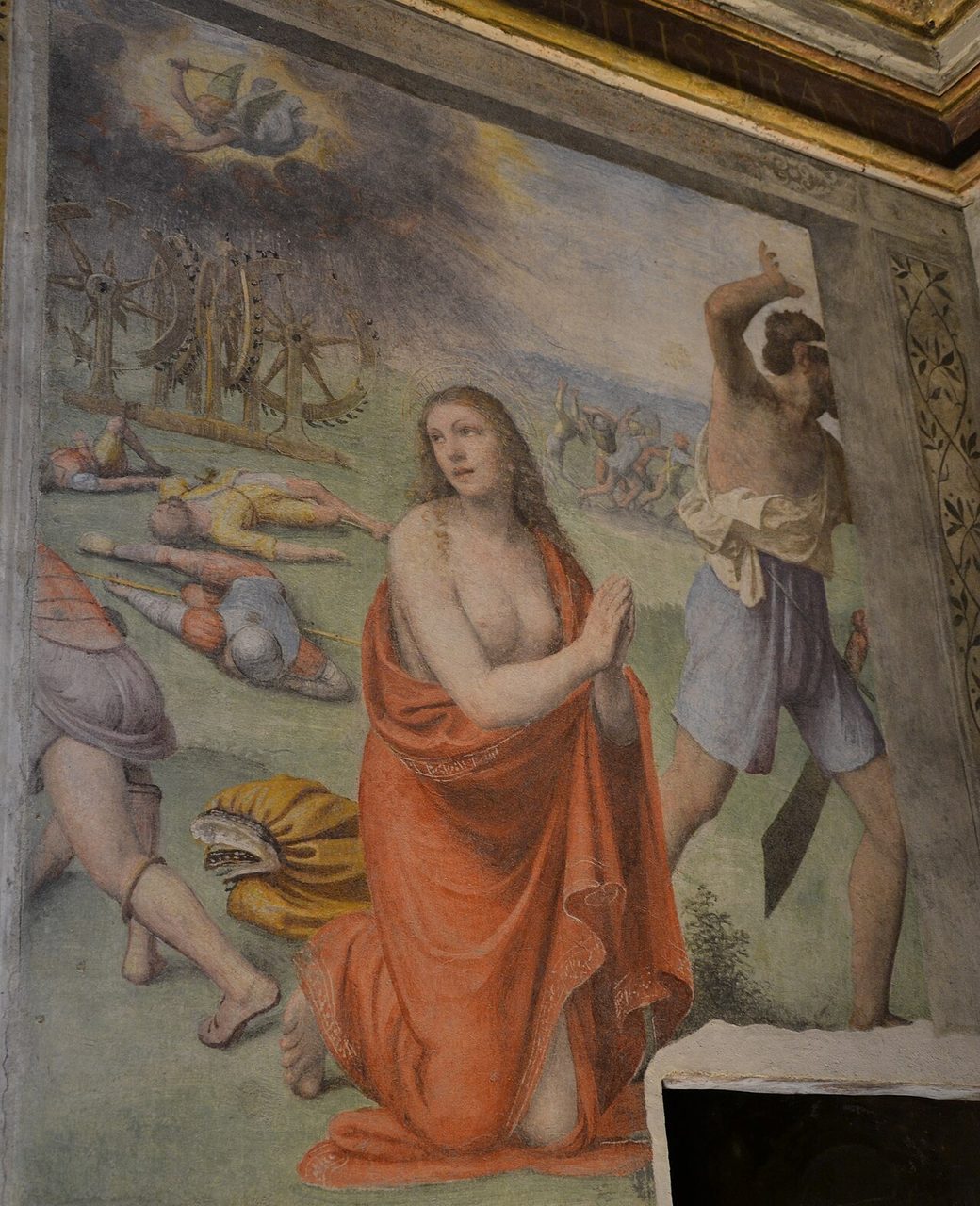
Bernardino Luini's last work in San Maurizio, painted in 1530, two years before he died. On the walls is the martyrdom of Saint Catherine. According to tradition, the saint has the face of a countess beheaded in Milan.
Spot the detail
In the beheading scene, lift your eyes from the saint to the top of the mountain in the background
The full story
A date painted on the frame reads 1530. Luini would die in 1532: this chapel is his farewell to San Maurizio, after almost ten years of working here on and off.
It was paid for by Francesco Besozzi, a Milanese man of law, who wanted it as his tomb and was in fact buried here. You will find him on the back wall, kneeling, in profile.
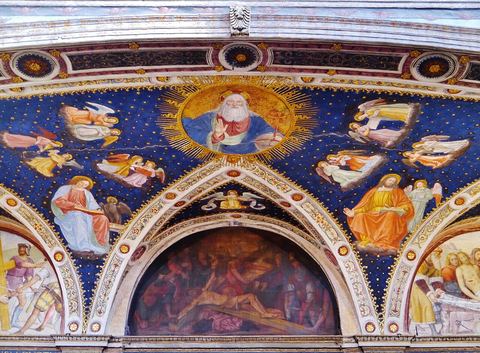
Saint Catherine presents him and leads him into a brutal scene: Christ at the column, after the flogging. On the other side Saint Lawrence looks on. And yet Christ's face is calm, resigned. That is Luini's trademark: with him even pain has good manners.
The side walls tell the saint's story. On one, the torture of the wheel, foiled by an angel. On the other, the beheading: Catherine on her knees, wrapped in a golden robe, waits for the blow without flinching as the executioner raises his sword.
The legend of the countess
This is the figure the church's most famous story has latched onto. In 1526, four years earlier, the countess of Challant had been beheaded in Milan: young, rich and convicted of having a lover killed.
Matteo Bandello, a writer, turned her story into a tale and added that the countess's portrait could be seen in the church of the Monastero Maggiore, the convent this church belonged to. A beheaded saint, a beheaded countess: the connection made itself, and ever since tradition has repeated that Catherine has the countess's face.
A story that is probably false
A good story, but in all likelihood false. Bandello had left Milan before the chapel was painted, and today several scholars think he meant a different portrait, that of the lady beside the altar. No evidence links the saint to the countess.
The fact remains that for centuries visitors have come here looking for a face. If the legend is wrong, it at least has the merit of making you look long and hard at one of Luini's finest paintings.
About this stop
Legend
The beheaded countess and her portrait
Bianca Maria Scapardone, countess of Challant, was beheaded at the Castello, Milan's castle, on October 20, 1526, accused of having a lover killed. The writer Matteo Bandello turned her into a tale and closed it with an invitation: anyone wanting to see her face should go to the church of the Monastero Maggiore, which is San Maurizio. Tradition recognized her in the beheaded Saint Catherine that the painter Bernardino Luini painted in a chapel on the right of the public hall. But that chapel dates from 1530, after Bandello had left Milan. Today several scholars look for the countess in a beside the altar, kneeling near her first husband.
Next stop
Go to the dividing wall and pass into the nuns' hall; once through, turn back toward the wall you came from