Anecdote · Boccioni, Unique Forms of Continuity in Space
Boccioni's plasters that ended up as scrap
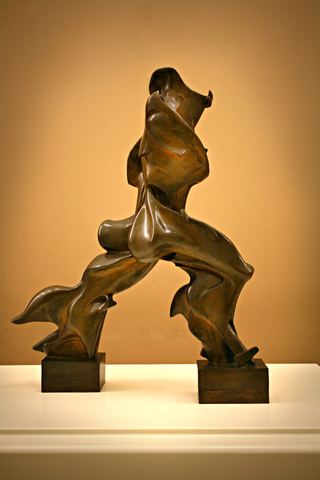
At Milan's Museo del Novecento, Unique Forms by the Umberto Boccioni is bronze. The original was plaster: Boccioni died in 1916 without casting any of his sculptures. What happened to the plasters afterward is unclear. By the most widely told account they stayed in the storeroom of a Lombard sculptor and years later were smashed and dumped. Someone is said to have recognized them and reassembled the least damaged. The plaster of Unique Forms passed from the painter Fedele Azari to the poet Marinetti in 1928. In 1952 Marinetti's widow sold it to a Brazilian industrialist, who donated it to a museum in São Paulo in 1963.
The stop
Stop 3 of 7
Boccioni, Unique Forms of Continuity in Space
The place
Museum
Museo del Novecento
More stories
- In culture · Morandi and his bottles
Morandi's still lifes at the movies
One room at Milan's Museo del Novecento is devoted to Giorgio Morandi, the painter from Bologna who spent a lifetime painting bottles, vases, and boxes in his bedroom. For such a reclusive man, he… - Anecdote · Fontana and the neon
The hotel ceiling saved in pieces
Among the Lucio Fontana rooms at the Museo del Novecento, Milan's twentieth-century art museum, is a ceiling that came from a hotel. Fontana, the artist of the slashed canvases, made it in 1956 for… - Anecdote · Fontana and the neon
Fontana's neon, made to spite the critics
In the windowed hall of Milan's Museo del Novecento hangs an arabesque of light a hundred meters long: the Struttura al neon by Lucio Fontana, the artist of the slashed canvases. It is a…