Stop 7 of 8Must-see
Printing: wooden blocks and screens
Where to stand
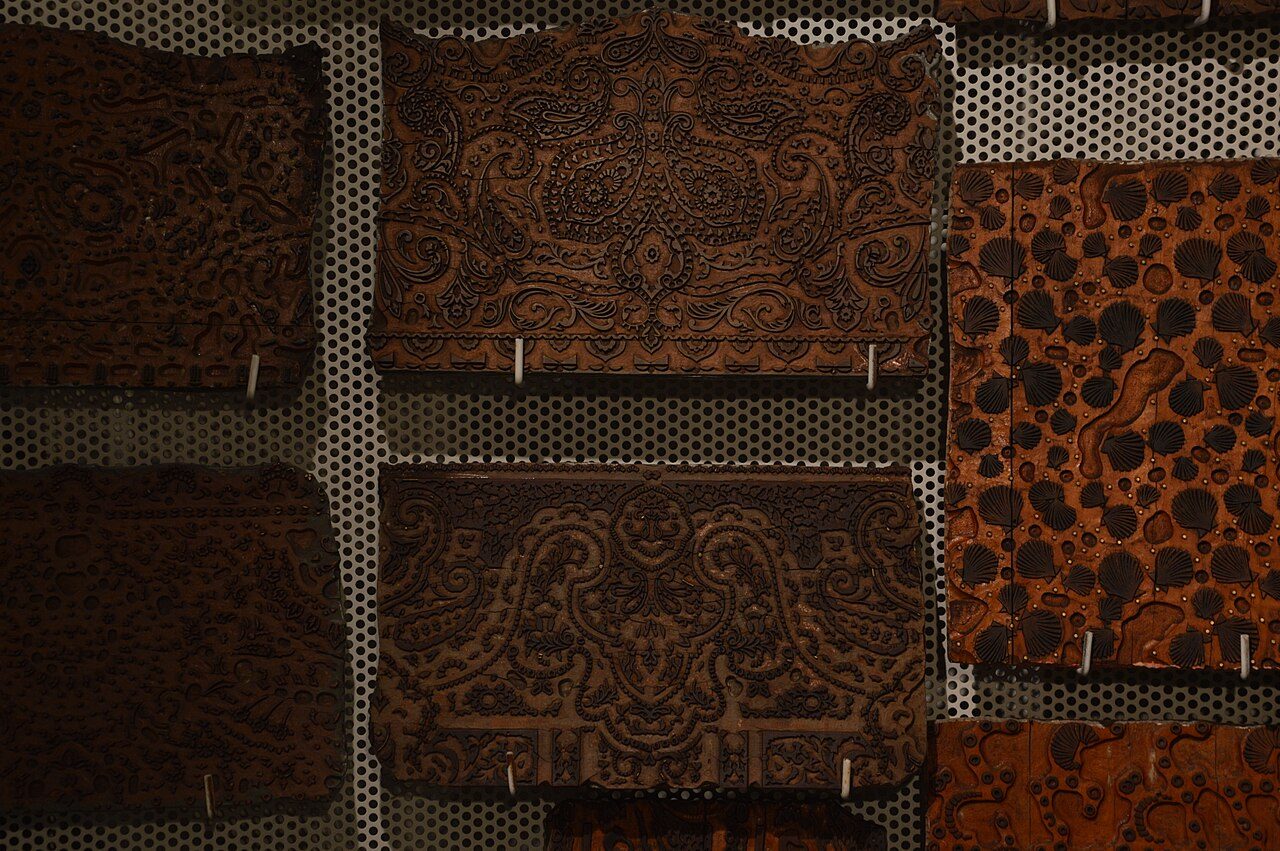
In the print shop, in front of the collection of carved wooden blocks and the printing table
Patterns printed on silk are one of Como's specialties. First it was done with wooden blocks struck by hand, one color at a time; then with screens, which means screen printing.
Spot the detail
Pick a wooden block and study the raised motif: how many colors can it print?
The full story
Up to now the pattern lived inside the cloth, interlaced thread by thread. There is another way, quicker and freer: weave a plain silk and put the pattern on top. That is printing.
The wooden blocks
Start with the collection of blocks. They are called , in the French manner, and they are wooden boards with raised motifs, in wood or in metal.
The gesture went like this: you dipped the in the color, set it on the fabric and struck it with a small mallet. Then one step along, and again. The technique is medieval and stayed in use until the end of the 1800s.
The hard part was color. Each prints only one, so the design had to be broken down: one board for each color. The printer laid them over one another in turn, and the image appeared one color at a time.
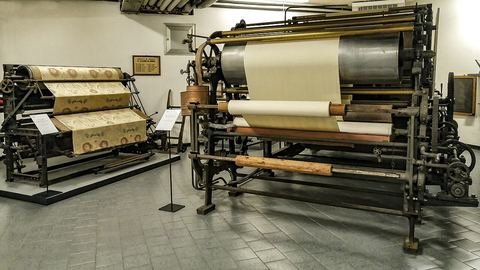
To go faster, the printing surface was given the shape of a cylinder. The museum traces the idea back to the 1500s, and for large quantities it is still used.
The printing screens
Then look at the rectangular frames with cloth stretched across them. These are the screens, and with them printing enters a new era. The principle of breaking down the design stays the same: each color is traced by hand onto a transparent sheet.
The screen is a wooden or metal frame with a very fine mesh stretched over it, coated with a light-sensitive gelatin. You lay the sheet on it, switch on the lamp, and the gelatin hardens everywhere except where the drawing shields it. A wash is all it takes: there the gelatin dissolves and the mesh stays open.
On the table the printer pours the color into the screen and spreads it with a squeegee. The color passes only where it can. One screen, one color, then the next.
Around you are the other pieces of the print shop: the color kitchen, where the dyes were mixed, and the scale models of the machines that later did the same job automatically.
If you wonder why a scarf in many colors is a small masterpiece of precision, the answer is on these boards. One block out of place and the flower has its outline on one side and its color on the other.
About this stop
It lies in the moment the pattern is born. In figured silk the pattern is woven: it is the threads themselves, raised and lowered by the Jacquard loom according to the holes in the cards, that form the motif. In printed silk the fabric starts out plain and the pattern is applied afterward, with wooden blocks or with screens, one color at a time. In the museum you see both routes, first at the looms and then in the print shop.
Next stop
Continue to the last part of the route, dominated by a big machine with rollers