Stop 5 of 8
The Bronze Serpent
Where to stand
In the nave, in front of the freestanding column that carries a bronze serpent
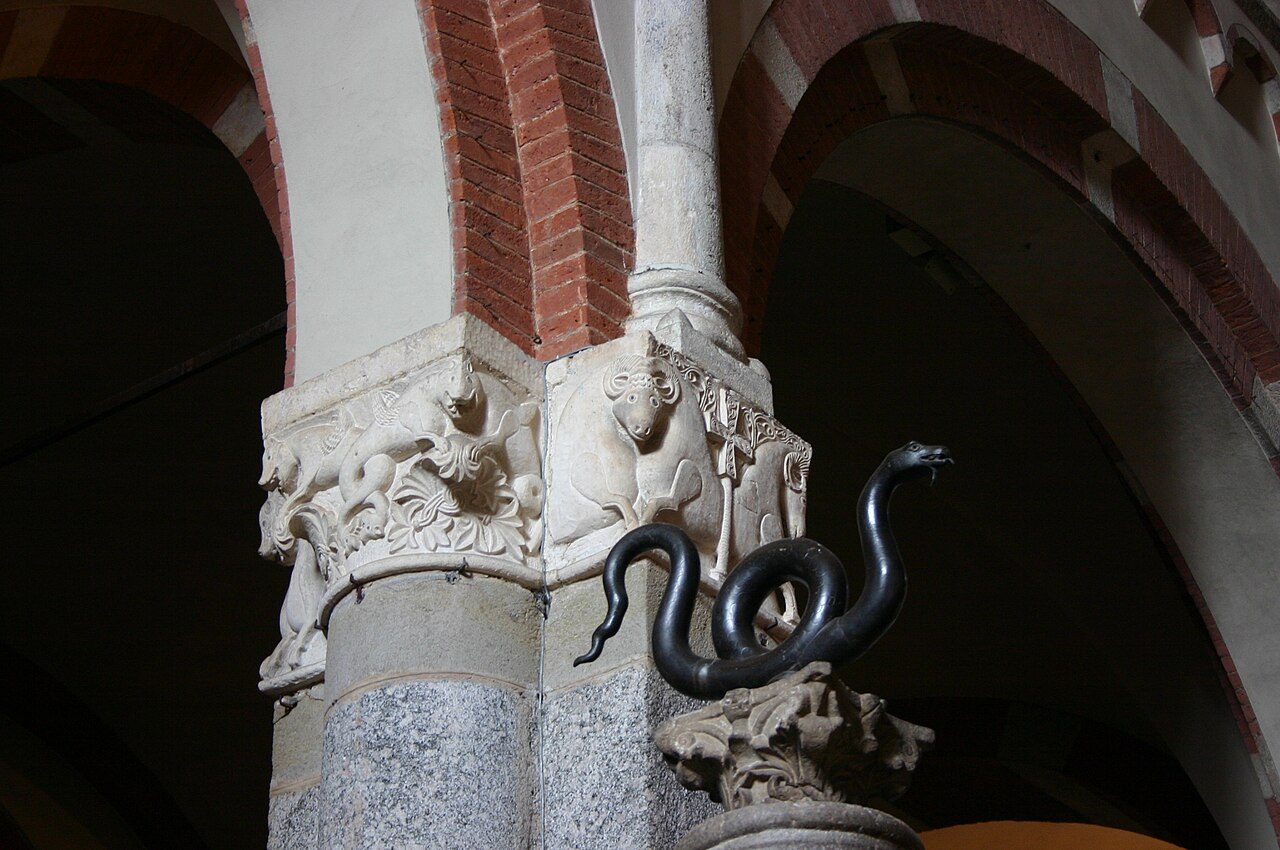
A bronze serpent that arrived from Constantinople shortly after the year 1000. For centuries the Milanese believed it was the one Moses cast in the desert, and they gave it a job: to announce the end of the world.
Spot the detail
The serpent on top of the column: check that it is still in its place
The full story
In the middle of a church, on top of a column, a serpent. It is not a joke, and here it is not a symbol of evil. It is one of the objects the Milanese are fondest of, and has been for a thousand years.
Start with the facts. The serpent is bronze and comes from Constantinople. It reached Milan shortly after the year 1000, a gift from Emperor Basil II to Archbishop Arnulf II.
Constantinople, today's Istanbul, was the capital of the Eastern Roman Empire. A present from there carried enormous prestige.
The serpent of Moses
Then the legend begins. Over time the Milanese became convinced that this was no ordinary serpent, but the serpent of Moses.
The Bible tells how the people of Israel were attacked by poisonous snakes in the desert. So Moses made a bronze serpent and raised it on a pole. Anyone who was bitten looked at it, and lived.
Having that very object in Milan meant owning a relic older than Christ. Nobody has ever proved it, and nobody claims it today. But for centuries people truly believed it.
Out of that story grew a very practical devotion. If the serpent of Moses saved people from venom, the one in Sant'Ambrogio might cure other things. Tradition has it that prayers were said at its foot to keep certain illnesses away.
The end of the world
And there is the second legend, the one people most enjoy telling. The serpent will not stay up there forever. One day it will come down from the column, and that day will be the end of the world.
It raises a smile, but it says something true about this basilica. Here objects are never just objects. A piece of bronze can tie Milan to Moses. A column can become the clock of the Last Judgment.
Look at it a moment longer. It isn't big, and it isn't even beautiful in the usual sense. But it has been in Milan since before the church around it was rebuilt, and it was here when that church was bombed and put back together. If anyone in this nave has seen it all, it is the serpent.
About this stop
Legend
The Serpent and the End of the World
In the nave of the basilica of Sant'Ambrogio, on top of a column, sits a bronze serpent. It arrived from Constantinople shortly after the year 1000, a gift from Emperor Basil II. In Milan it soon became something more: for centuries people believed it was the one Moses cast in the desert, able to save anyone who looked at it from snakebite. Tradition gives it one last task as well. The day it comes down from its column, the story goes, will be the end of the world. For now it stays up there, and for centuries prayers against certain illnesses were said at its foot.
Next stop
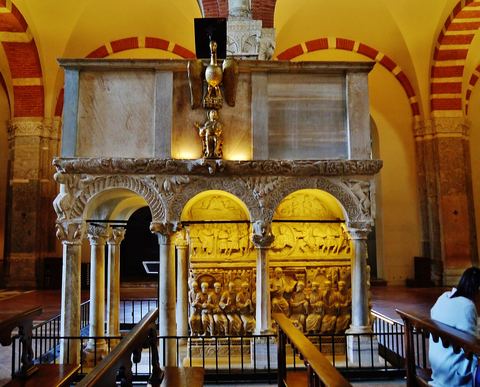
Still in the nave, look for the large marble pulpit raised on columns, with a sarcophagus underneath