Stop 1 of 6
The cardinal who wanted a school
Where to stand
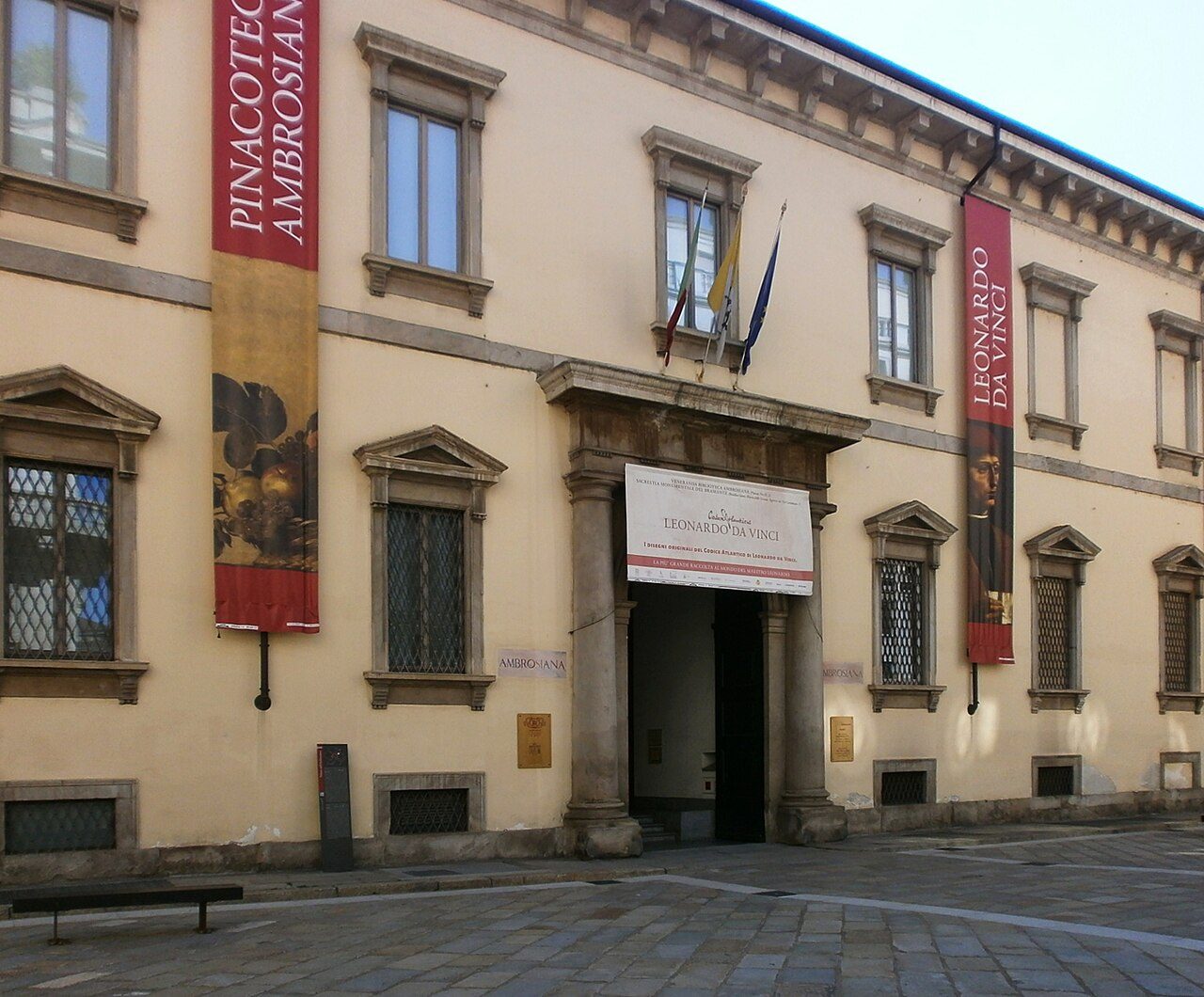
In Piazza Pio XI, facing the entrance: look at the plain facade with its doorway set between two columns
Before you go in, the key to everything: the Ambrosiana was not created to guard treasures but to teach. It was the idea of Cardinal Federico Borromeo, who brought together a library open to all, a picture gallery and an academy.
Spot the detail
Read the name of the square: it belongs to a pope. What does a pope have to do with a library?
The full story
The facade in front of you is polite and a little anonymous: two rows of windows, a doorway between two columns. It is a nineteenth-century addition. The historic entrance is on the opposite side of the block, in Piazza San Sepolcro, and there a statue honors the man behind all of it: Federico Borromeo, cardinal and archbishop of Milan.
A library open to everyone
Federico is born in Milan in the second half of the sixteenth century, into one of the families that matter. His cousin is Saint Carlo Borromeo, who oversees his education. At twenty-three he is already a cardinal, at thirty an archbishop.
He could settle for that. Instead he has a fixed idea, formed during his years in Rome: a library open to anyone who can read and write, one of the first in Europe. He sends his agents hunting for manuscripts in Italy, France, Germany, Spain, the Greek islands and the Near East. In 1609 the reading room opens to the public.
The gallery and the academy
Then comes the part that concerns your visit. In 1618 the cardinal gives the library his paintings, his drawings and his sculptures. Soon afterward he adds an academy of painting, sculpture and architecture, and puts it in the hands of Cerano, one of the most prominent painters in the Milan of the day. Library, gallery, school: three pieces of a single project.
That is why the collection took in things an ordinary collector would not have wanted. Plaster casts of famous statues. Preparatory drawings. Copies.
The most famous is the copy of Leonardo da Vinci's Last Supper, which the cardinal had painted by an artist known as Vespino: you will meet it toward the end, beside the works of Leonardo and his pupils. For Federico a good copy was worth as much as a good lesson.
He even wrote a book to explain his collection, the Musaeum: a collector telling the public why he chose those particular paintings. Today every museum does it. Back then it was anything but a given.
The school did not survive. In the eighteenth century the Austrian government favored Brera, the new academy across town, and the Ambrosiana's academy closed. But the imprint remains: the works you are about to see were chosen by a man who was thinking of students, not of guests to impress.
The cardinal in Manzoni's novel
One last thing about him. If the name sounds familiar, the credit goes to Alessandro Manzoni: he is Cardinal Federigo in I promessi sposi, The Betrothed, the great Italian novel.
He was not only a man of books. During the great plague of 1630 he stayed in the city to care for the sick, and he died the following year.
Now go in. And remember the house rule: here you look at a painting the way you read a book, to take something away with you.
About this stop
Anecdote
Excommunication for stealing a book
Many old libraries protected their volumes by chaining them to the desks. Federico Borromeo, the cardinal who founded the Ambrosiana, chose another system. In his library, opened in 1609, the books were available to anyone who could read and write, but whoever stole one would be excommunicated. The warning is carved on a marble plaque that still exists. For a seventeenth-century cardinal it was the most powerful anti-theft device imaginable.
In culture
The cardinal of I promessi sposi
If you have read I promessi sposi, The Betrothed, the great Italian novel, you already know the founder of the Ambrosiana: Federico Borromeo, archbishop of Milan, is its Cardinal Federigo. The author, Alessandro Manzoni, gives him the twenty-second chapter, where he tells the story of his life and of his visits to the villages of the diocese. The character is not made up. The real Federico handed out alms during the famine, and in the plague of 1630 he stayed to care for the sick. And before ending up in a novel he had founded the Ambrosiana, library and museum.
Because they come from the same project. Federico Borromeo opened the library first, then in 1618 gave it his paintings and drawings, and finally added an academy for young artists. Books and images were meant to serve the same purpose: educating people. To this day the library and the , the picture gallery, share the same building, and the visit ends right in the old reading room.
This stop on the map
Next stop
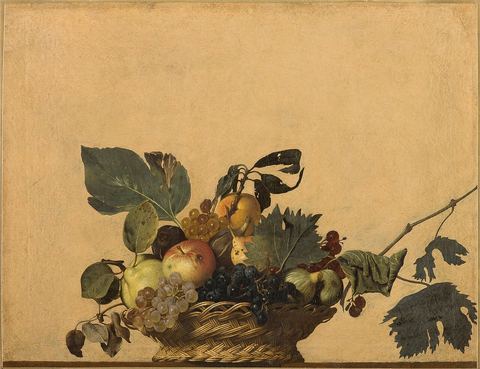
Go in and head up to the first rooms: look for a small painting of a basket of fruit against a pale background