Stop 3 of 8Must-see
The central nave
Where to stand
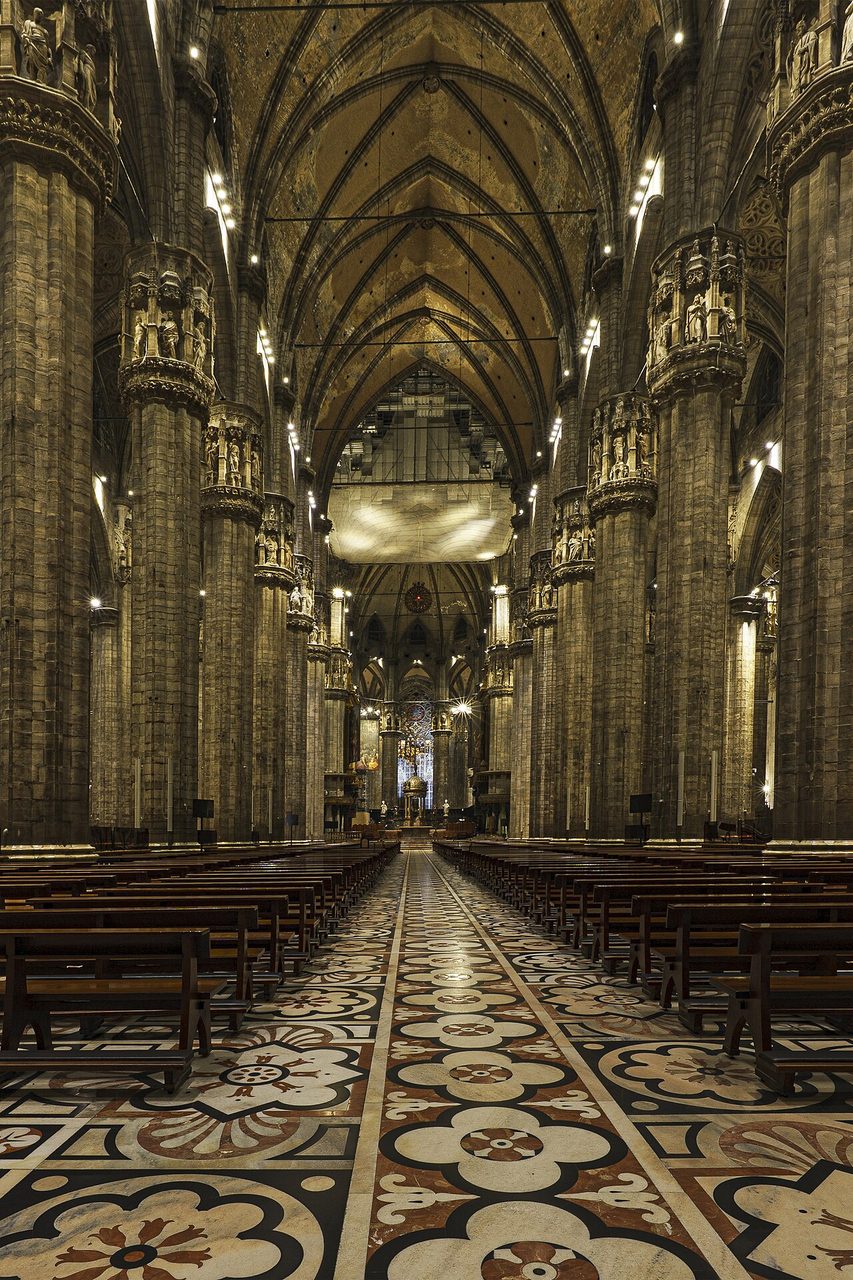
Just inside, at the start of the central nave, with your back to the facade and your eyes on the altar
Fifty-two pillars and vaults 45 meters above the floor: this is the most powerful view in the Duomo. A Gothic style that came from northern Europe, and that the Milanese builders remade in their own way.
Spot the detail
The top of the pillars, where there is usually a simple capital: here there is something else
The full story
Stop right away, before you go any farther. Give your eyes time to get used to the half-light and then look toward the far end. It is a long way off: from here to the is almost 150 meters.
What comes toward you is a forest. Fifty-two pillars rise to vaults that sit 45 meters, about 150 feet, above the floor. There are five , and the central one, the nave where you are standing, is the widest. This is Gothic: everything pushes upward, and the stone seems to weigh less than it does.
The experts from abroad
Except that in Milan nobody knew how to build Gothic. It was the style of the French and German cathedrals. Gian Galeazzo Visconti, lord of the city, wanted it in order to rival them, and the Lombard master builders found themselves facing a problem bigger than they were.
So the , the body in charge of the works, called in experts from outside, from Germany and France. The most famous is Jean Mignot, who arrived from Paris in 1399, a little more than ten years after work began. He did not stay long, amid the mistrust of the Lombard master builders, who did not enjoy being lectured. Six centuries later, the pillars are still in place.
The pillars and the vaults
What came out of it is a Gothic that looks like no other. Look at the top of the pillars: instead of a normal capital there is a kind of stone crown inhabited by statues.
Then look at the vaults. Where it can still be seen, that dense tracery that seems carved into the stone is painted. It is a fake openwork, begun in the fifteenth century at the end. A stage designer's trick, 45 meters up.
Light through the stained glass
Then there is the light. It comes in through dozens of huge, colored stained-glass windows, made in different centuries: the oldest are from the fifteenth century, and many were remade in the nineteenth. Among those who prepared the designs was Giuseppe Arcimboldo, the painter who later became famous for heads made up of fruit and vegetables. Here, before the fame, he was drawing the story of a saint.
Try to picture someone walking in here five centuries ago, coming from low houses and narrow streets. They had never seen an enclosed space this big. That was exactly the effect intended.
About this stop
Anecdote
The Frenchman who said the Duomo would fall
In 1399 an expert arrived from Paris at the Duomo's building site, Jean Mignot, and his verdict was scathing. He put dozens of criticisms in writing: the pillars were too weak, he said, and the church was sure to collapse. In January 1400 it came to a showdown. The Lombard master builders answered that science is one thing and craft another. Mignot shot back with a line that became famous, ars sine scientia nihil est: craft without science is worth nothing. The Lombards did not give in, and pointed out that their marble was stronger than the stone of Paris. The Duomo has proved them right.
Out of ambition. Gian Galeazzo Visconti, lord of Milan, wanted a cathedral on a par with the French and German ones, and Gothic was their style. In Milan, though, nobody had mastered it: the Fabbrica, the body in charge of the works, called in architects from Germany and France, and did not always get along with them. The result is a very Lombard Gothic, with details less common north of the Alps, such as the statues of saints at the top of the pillars.
Next stop
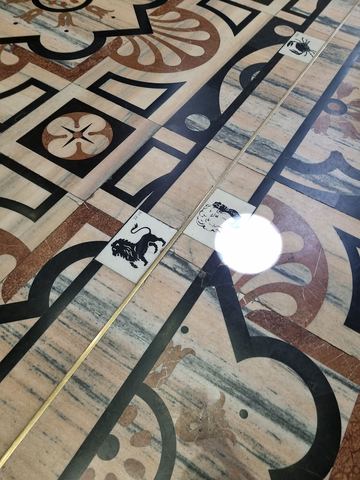
Stay near the entrance and look on the floor for a brass strip that crosses the church from one side to the other