Stop 5 of 7Must-see
The rooms of the myths and Garibaldi
Where to stand
In the rooms that follow the ballroom, in front of the fireplace with the medallion
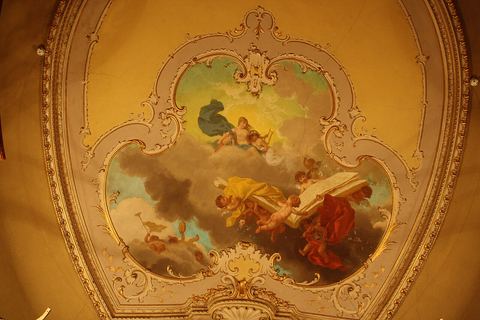
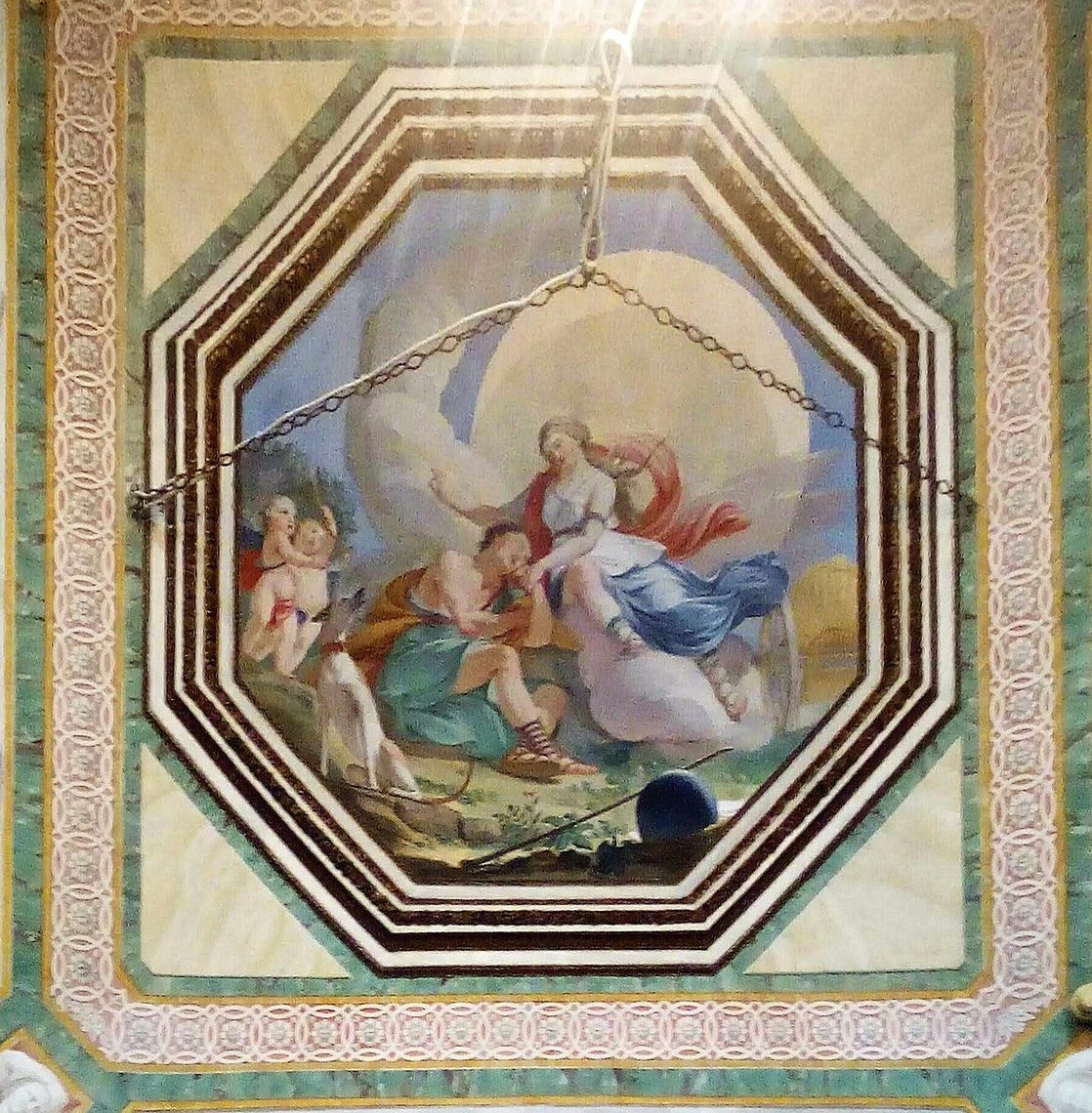
A string of sitting rooms, each with its own painted myth: Dionysus, Selene, Artemis. In one of them a medallion recalls the villa's most famous guest and one of the most disastrous love stories of the Risorgimento, the movement that unified Italy.
Spot the detail
One of these rooms has a fireplace with a small medallion: can you tell who it commemorates?
The full story
After the ballroom the villa changes scale. A series of smaller rooms begins: these were the spaces for conversation and receiving guests. Each takes its name from the myth painted on its walls, amid and gilding. There is the room of Dionysus, the room of Selene with Endymion, the room of Artemis.
In one of these rooms, look for a fireplace with a small medallion. That is where you need to stop, because it recalls a true story, one more like a novel than the myths on the walls.
Garibaldi and Giuseppina Raimondi
May 1859. Giuseppe Garibaldi, the general who led the fight to unify Italy, beats the Austrians at San Fermo at the head of his volunteers and enters Como. During those days an eighteen-year-old girl crossed enemy lines to bring him news from the city. Her name was Giuseppina Raimondi, and she was the daughter of Marquis Giorgio, the owner of Villa Olmo, a patriot whose ideas had cost him exile in Switzerland.
The general was thunderstruck. He stayed in this villa as the marquis's guest, and in the months that followed he wrote the girl passionate letters. For a long time she answered coolly. Then, out of the blue, she agreed to marry him.
The wedding and the note
The wedding took place on January 24, 1860. Not here, though: at the Raimondi family's other villa, in Fino Mornasco, in the countryside outside Como.
As soon as the ceremony was over, someone handed the groom a note. It accused Giuseppina of having an affair with another man, a young officer. Garibaldi confronted her, she admitted it, and he repudiated her on the spot. They never saw each other again.
Actually dissolving that marriage took twenty years. The annulment came only in 1880, and only then could Garibaldi marry again. Giuseppina, too, later found another husband.
Look at the fireplace before you leave. That medallion shows the heroic side of the affair: the victorious general welcomed into the finest villa in town. The other side, the one with the note, the villa passes over in very elegant silence.
About this stop
Anecdote
Garibaldi, husband for a day
In 1859 General Giuseppe Garibaldi, a guest at Villa Olmo after beating the Austrians at San Fermo, fell for Giuseppina Raimondi, the eighteen-year-old daughter of the marquis who owned it. He married her on January 24, 1860, at the Raimondi family's other villa, in Fino Mornasco. Right after the ceremony he was handed a note accusing the bride of an affair with another man. She admitted it, he repudiated her on the spot, and the two never saw each other again. The annulment came only in 1880, twenty years later. At Villa Olmo a medallion on a fireplace recalls the general's stay.
Anecdote
Garibaldi's rival who ended up in Siberia
At Villa Olmo in 1859, General Giuseppe Garibaldi fell for Giuseppina Raimondi, daughter of the marquis who owned it. On their wedding day he learned she had another man and repudiated her. That man was Luigi Caroli, a young cavalry officer from Bergamo. He fled with her to Switzerland, then left her. The general's loyalists kept him out of the Expedition of the Thousand. In 1863 he volunteered for Poland, in revolt against the czar. Captured by the Russians and sentenced to death, he refused to ask for a pardon. The sentence was still changed to twelve years of hard labor. He died in Siberia in 1865, just over thirty.
No. Garibaldi was a guest at Villa Olmo in 1859, and here he spent time with Giuseppina Raimondi, his host's daughter. But the wedding was held on January 24, 1860, in the private oratory of the Raimondi family's other villa, in Fino Mornasco. It lasted no time at all: right after the ceremony the general received a note about the bride's affairs and repudiated her. In the Como villa a small medallion remains, on the fireplace of a ground-floor room, commemorating his stay.
Next stop
Head back toward the ballroom and make for the teatrino, the villa's little private theater