Stop 3 of 6
The flammable air of the marshes
Where to stand
On the ground floor, in front of the first display cases on the route, the ones devoted to gases
In 1776 Volta discovers methane in a reed bed on Lake Maggiore. Curious instruments follow: a gauge for how healthy the air is, a pistol that fires nothing but a stopper, and a parlor lamp that doubles as a lighter.
Spot the detail
Look for Volta's pistol: what does it fire?
The full story
Start here, with the chapter of Volta that almost nobody studies at school: gases. In 1776 Alessandro Volta, a physicist from Como just over thirty, is on Lake Maggiore.
In a reed bed near the shore he stirs the bottom of the marsh, collects the gas that rises and finds that it burns. He calls it native flammable air of the marshes. We call it methane.
The instruments born of methane
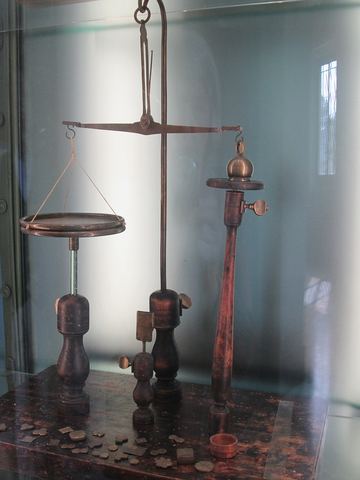
Out of that discovery come the instruments in front of you. The first is the : a graduated glass tube, closed at the top, with two electrodes reaching inside and its base standing in water. Fire a spark, the gases combine, the water rises in the tube, and from the level you can tell how much oxygen was there.
Volta thought of it as a gauge for how healthy the air was. With an electric the French chemist Lavoisier showed that water is made of hydrogen and oxygen.
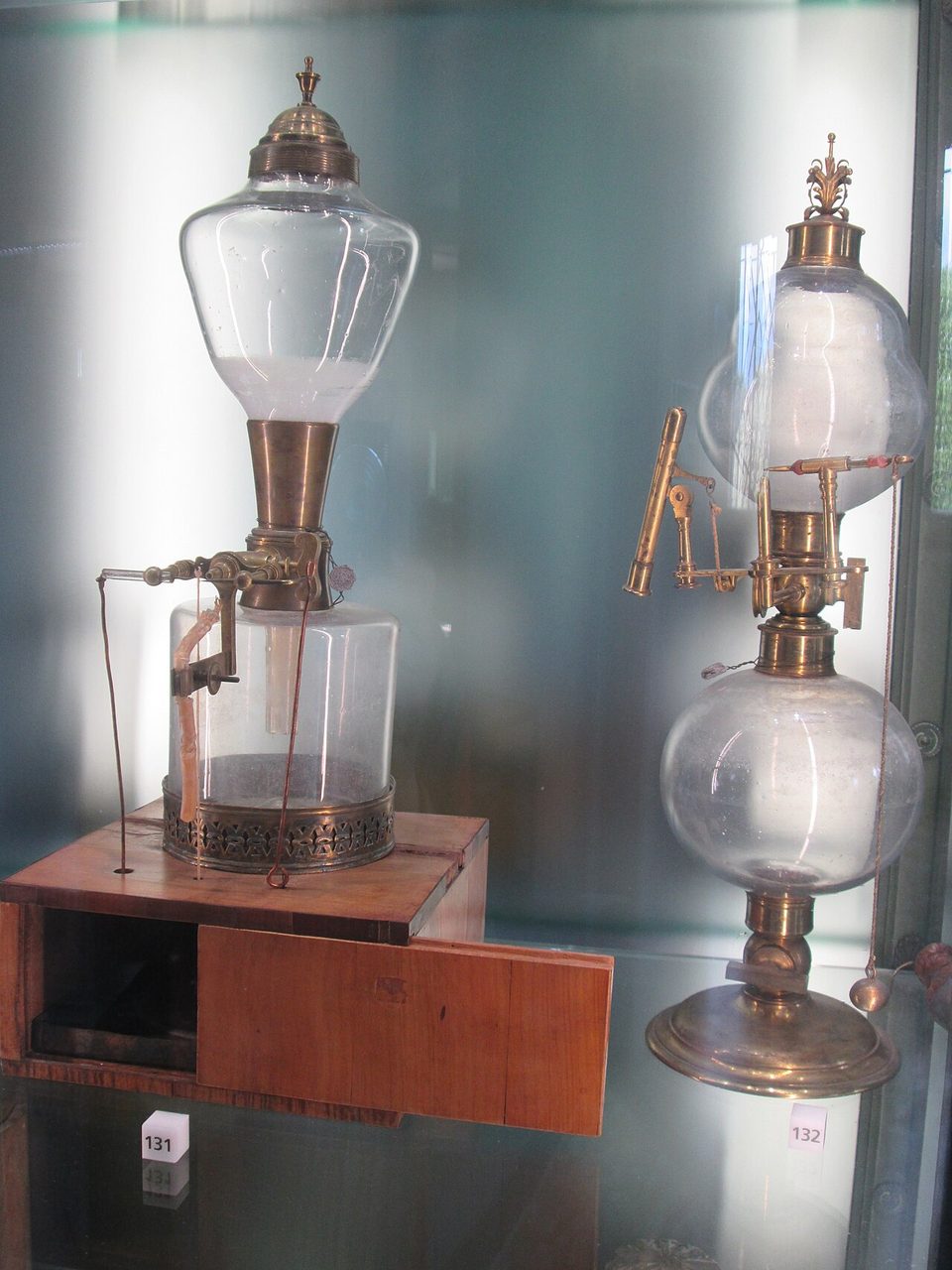
The second is the flammable air pistol. The name promises a weapon, but it is an experiment: fill the vessel with air and gas, fire the spark, the mixture explodes and the stopper flies off.
Volta built a bold idea on top of it. He imagined stringing an insulated wire on poles from Como to Milan and sending an electric discharge from here, to make the pistol go off over there. He never tried it, but the idea is often read as an early proposal for an electric telegraph. Decades later, starting from this very pistol and the , the Tuscan inventor Eugenio Barsanti found the spark for the first internal combustion engine.
The third is the flammable air lamp, my favorite. Two glass vessels, one above the other: water runs down from the top one, pushes the gas out of the bottom one, and a spark lights it at a nozzle. Other makers refined it and it became a fashionable object. In the mid-nineteenth century it sat in parlors as a table lighter, until matches came along.
Keep the journey in mind as you move on. A bubble rising from the mud of a marsh became a parlor lighter, an idea for a telegraph and, at a distance, an engine.
About this stop
It is the name Volta gave to methane. He discovered it in 1776 on Lake Maggiore, stirring the bottom of a marsh and collecting the gas that rose, and he noticed that it burned. To him it was an air, flammable and born of the marshes: hence the name. From that discovery came the , the pistol and the lamp you see in the first display cases.
Next stop
Move on to the next display cases, the ones on electricity