Stop 1 of 8Must-see
The apse and the twin bell towers
Where to stand
Outside, on the apse side, far enough back to see both towers together
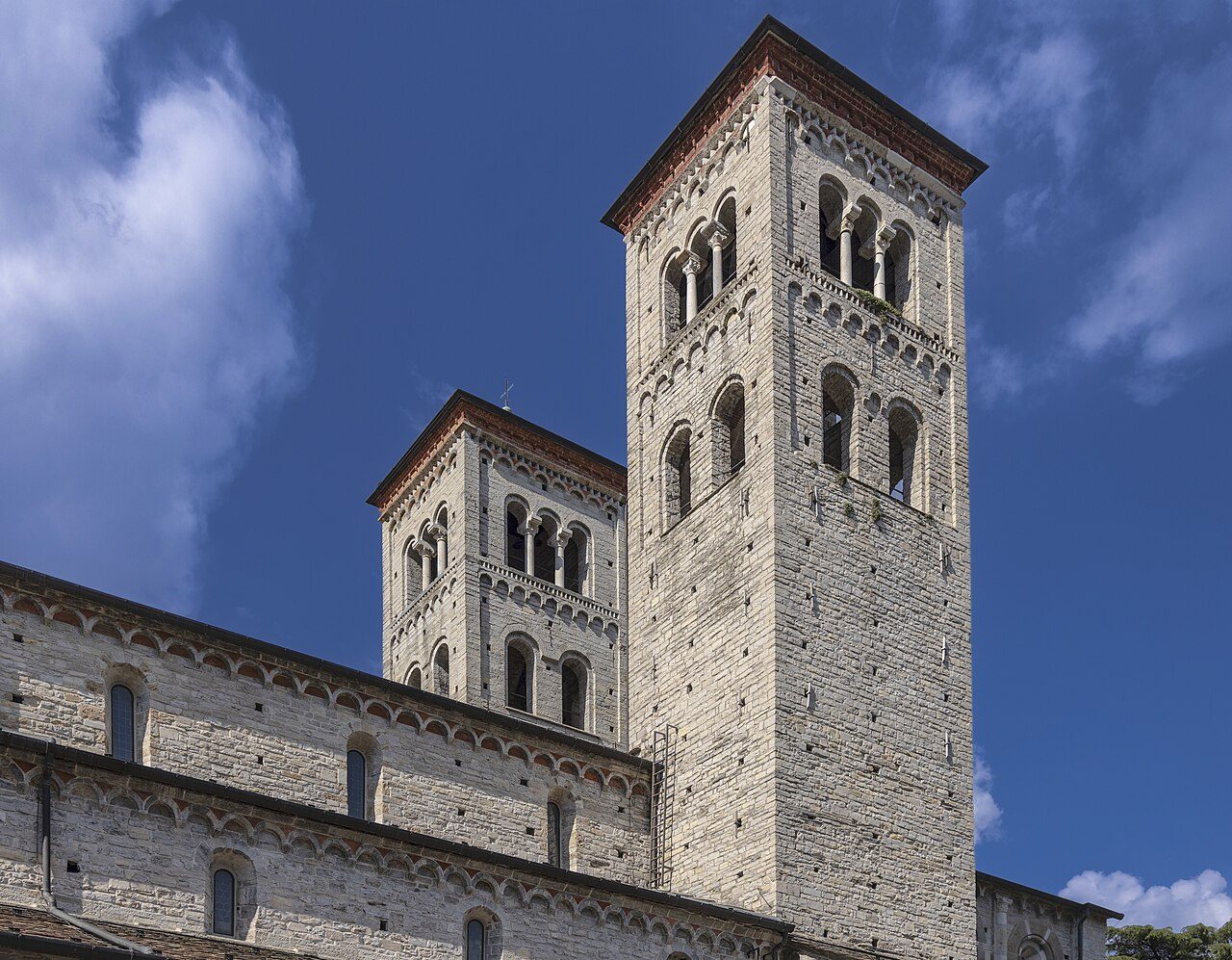
The best side of Sant'Abbondio is the back. A long , a tall and twin bell towers: an arrangement common along the Rhine and almost impossible to find in Italy.
Spot the detail
The two bell towers look identical, but one is almost eight centuries younger than the other. Which?
The full story
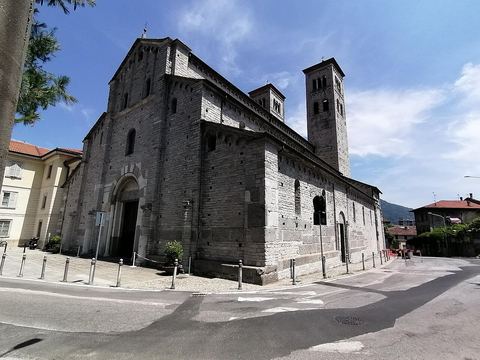
Don't start at the facade. Sant'Abbondio makes sense from behind, and this is the side travelers saw first as they came along the Via Regina, the medieval road that climbed from Milan toward the Alpine passes. Before anything else, these appear: two square towers, identical, planted on either side of the .
An idea from the Rhine
In Italy, twin bell towers beside the are an exception. Along the Rhine, though, they were a fairly common arrangement. That says a lot about who built the basilica: Benedictine monks with deep pockets and their eyes turned beyond the Alps. Between 1050 and 1095 they took ideas from Germany and France and handed them to the master builders of Como, who knew how to work stone like few others.
Look at how the towers are made. They are massive, but near the top the windows lighten them and let the sound of the bells out.
Then shift your eyes to the , the long block that juts out between the two towers and ends in the . It is the most carefully finished part of the whole building.
Slender half-columns climb all the way to the roof. A row of small arches runs under the eaves. And the windows have frames carved as densely as embroidery: interlace, geometric patterns, and here and there monstrous animals enclosed in medallions of leaves.
The tower rebuilt in the 1800s
Not everything is the same age. In 1784 the north bell tower collapsed onto the vault of the and ruined part of the frescoes. For more than eighty years the church had a single tower.
The other was rebuilt during the great restoration of the 1800s, modeled on the survivor and following a drawing by the French scholar Fernand De Dartein. The restorers of the time reasoned like this: if a piece is missing, you remake it as it was, or as you imagine it was.
The result is a perfect pair, half medieval and half nineteenth-century. From here you would never guess.
About this stop
Anecdote
The bell tower that fell on the church
In 1784 the north bell tower of the basilica of Sant'Abbondio, one of the twin towers flanking the , already partly demolished two centuries earlier, collapsed onto the vault of the . It took a piece of the starry sky painted there in the 1300s and wrecked the four thrones that appeared in it, probably those of the Doctors of the Church. For over eighty years the basilica had one tower. Then the restoration of the 1800s rebuilt it to match its twin, following a drawing by the French scholar Fernand De Dartein. What the fallen tower really looked like, no one knows for certain: no record survives.
Because the monks who built the basilica looked north of the Alps. Twin towers flanking the were a fairly common arrangement in the churches of the Rhine valley, while in Italy they are an exception. The road to the Alpine passes ran through Como, and ideas traveled along that road too. Of the two bell towers, though, only the south one is medieval: the other collapsed in 1784 and was rebuilt in the 1800s in imitation of the first.
Next stop
Walk along the side of the church to the facade