Stop 3 of 6
The Garibaldi monument
Where to stand
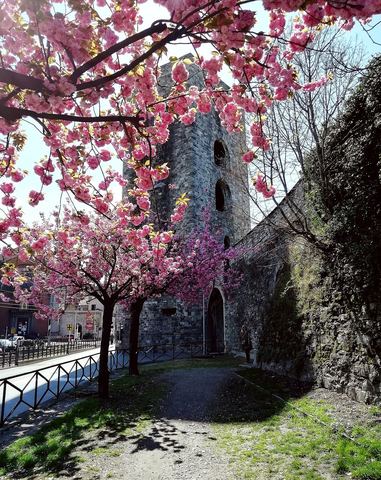
In Piazza Vittoria, in front of the monument with the bronze statue, with Porta Torre in the background
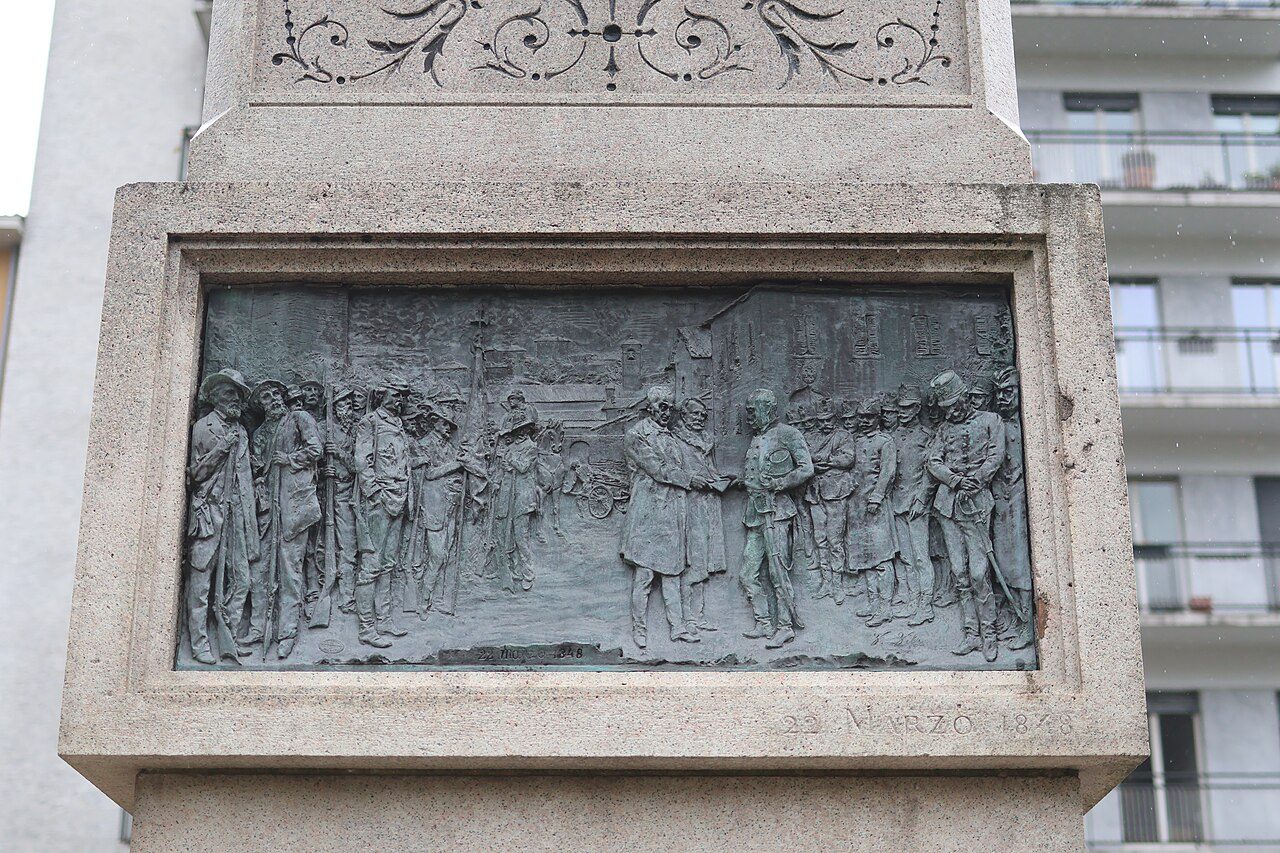
Giuseppe Garibaldi in bronze, by the Ticino sculptor Vincenzo Vela, unveiled in 1889. But the relief on the pedestal tells of another victory: the Austrians' surrender to the people of Como, right here in 1848.
Spot the detail
In the pedestal relief, among the insurgents, look for a face the sculptor knew better than any other
The full story
You recognize the statue on top right away: Giuseppe Garibaldi, the general who led the volunteers of the Risorgimento, the movement that unified Italy. He is standing, in the uniform of the Savoy army, in a natural pose with no rhetoric.
Como decided to dedicate a monument to him in the very year of his death, and entrusted it to Vincenzo Vela, a sculptor from Ticino. It was unveiled in 1889, thirty years after Garibaldi entered the city. It is one of Vela's last works.
Garibaldi had reached Como in May 1859, after beating the Austrians at San Fermo, just outside the city. Curiously, he did not come in this way but through Porta Sala, on the west side of the walls, a gate that no longer exists.
The surrender carved on the pedestal
So why does the monument stand in front of Porta Torre? The answer is on the pedestal. The relief does not show Garibaldi: it shows the surrender of the San Francesco barracks, eleven years earlier.
In March 1848, while Milan was fighting its Cinque Giornate, the five days of revolt against Austrian rule, Como rose up too. The Austrian soldiers shut themselves in the barracks, outside this gate. They tried a sortie and were driven back.
After five days, out of food, they surrendered. It happened in this open space, before a crowd of citizens.
Look at the relief with that story in mind. On one side are the defeated Austrians, who that day also handed over their regimental flag: one of the few seized from Austria in the whole Risorgimento. On the other side are the insurgents, and Vela was not working from imagination, because in 1848 he was in Como too.
On the back, a song
Before you leave, walk around behind the monument. The back commemorates a song: the Inno di Garibaldi, Garibaldi's Hymn, written by the poet Luigi Mercantini at the general's own request, on the eve of the 1859 campaign, to accompany his volunteers on the march. It is still sung.
And so a single monument holds two victories together. The general's is at the top. The citizens' is lower down, at the level of your eyes.
About this stop
Record
1848: Como captures an Austrian garrison
In March 1848, while Milan was fighting its Cinque Giornate, the five days of revolt against Austrian rule, Como rose up too. Right at the start the citizens seized the military bakery, and that was the decisive move: the Austrian soldiers shut inside the San Francesco barracks, outside Porta Torre, the city's medieval gate, were left without bread. They tried a sortie and were driven back. After five days they surrendered, in the square where the Garibaldi monument stands today. They also handed over their regimental flag: one of the few seized from Austria in the whole Risorgimento, the movement that unified Italy.
In culture
The 1848 Austrian surrender, in a painting
In front of Porta Torre, Como's medieval gate, the Garibaldi monument has a relief on its pedestal: Austrian soldiers surrendering to the citizens in revolt, in March 1848. The same scene also exists in color. The Como painter Francesco Capiaghi painted it in the late nineteenth century: the crowd, the Austrian command facing the members of the provisional government, the carts bringing food to the starving soldiers. In the background you can see the barracks and the start of Via Milano. The painting is kept in Como's Museo Storico Giuseppe Garibaldi, the city history museum: if you go there after seeing the monument, you will recognize the square.
No. In May 1859, after his victory at San Fermo, Garibaldi came in through Porta Sala, on the west side of the walls: that gate has been demolished, and it stood where Via Garibaldi runs today. The monument stands in front of Porta Torre for a different reason. Here, in March 1848, the Austrian garrison had surrendered to the citizens in revolt, and that is the scene shown in the relief on the pedestal.
This stop on the map
Next stop
Facing the tower, turn right and follow the walls along the avenue to the corner tower