Stop 7 of 8
The frescoed rooms and the Greek vases
Where to stand
On the piano nobile, the main floor of Palazzo Giovio, in the reception rooms: the Sala Giovio, the Sala Perrone and those nearby
The floor where the counts received their guests. Four large canvases celebrate the family, one hall is covered in painted myths, and the cases hold about a hundred Greek vases and a collection of engraved gems.
Spot the detail
In the canvas with the Temple of Glory, find the three defeated figures at bottom right
The full story
Here the museum steps aside and the house comes back out. You are on the piano nobile, the main floor where the Giovio counts received their guests, and every wall is a message. The messages were chosen by Count Giovan Battista Giovio, who had the rooms decorated in the second half of the 1700s with one clear aim: to exalt the glories of his line.
The canvases in the Sala Giovio
Start in the Sala Giovio, the Giovio room, with the four large canvases by Giovan Battista Rodriguez. They are a family album in giant format.
Paolo Giovio, the historian, before Pope Leo X. Paolo again, as ambassador, before Francis I, king of France. Then Benedetto Giovio, his brother, the historian of Como.
And in the fourth canvas, who is climbing to the Temple of Glory, escorted by Minerva, Genius and Fame? The patron himself. Modesty was not his strong point.
At the center of the same room are the gems: sixty-six engraved stones, from Etruscan scarabs of the fourth century BC to Neoclassical pieces of the 1800s. Beside them are as many copies in colored glass paste, which collectors had made to fill out their collections. When the original could not be had, a replica would do.
The vases in the Sala Perrone
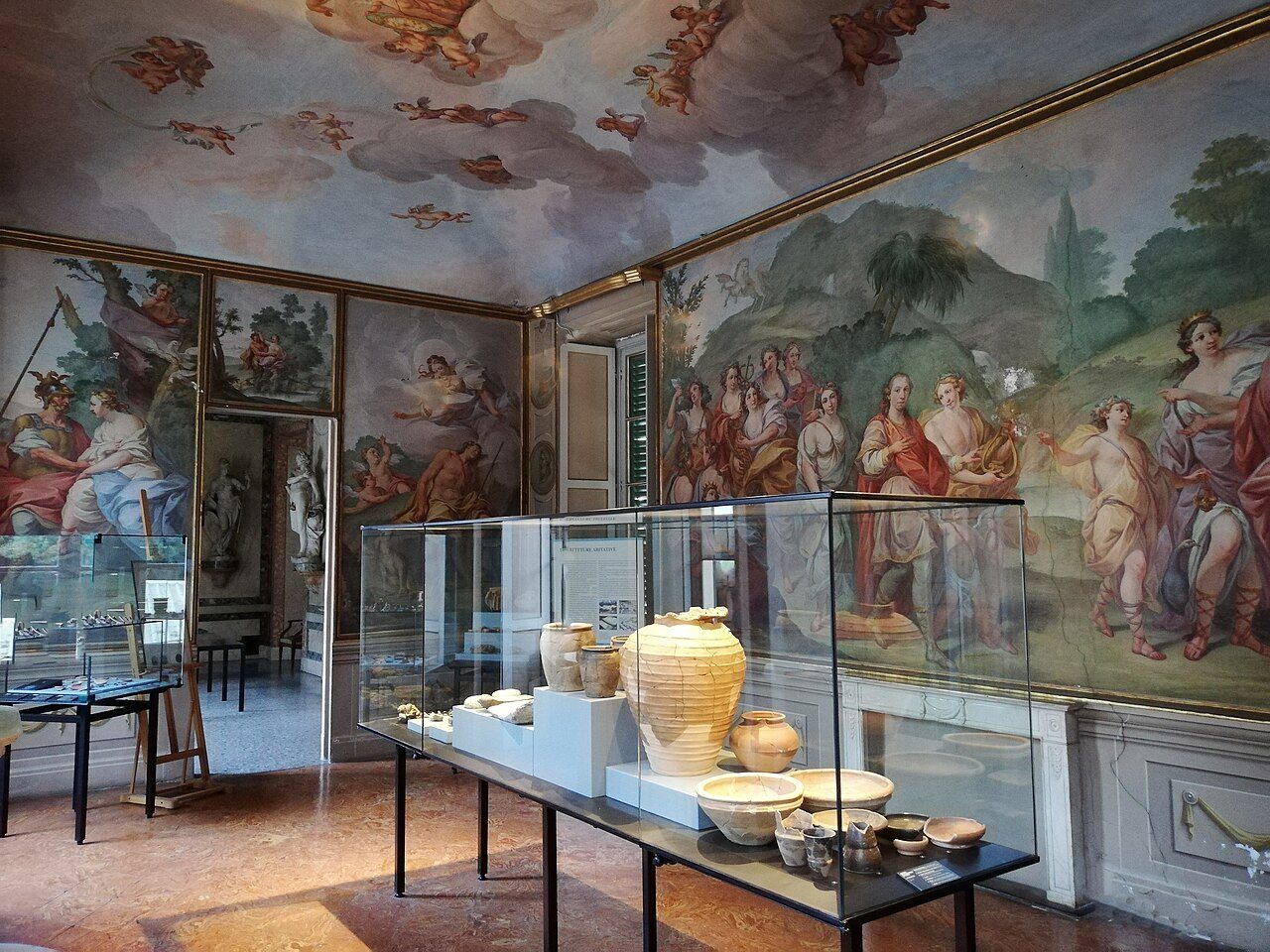
Then step into the Sala Perrone, the grandest room in the museum. The walls are covered in mythological scenes, which Rodriguez took from famous paintings.
Four glass cases hold about a hundred vases from Greece and from Magna Graecia, the Greek south of Italy. There are vases from Corinth, black-figure and red-figure vases from Athens, and vases from ancient Puglia with wedding scenes and enigmatic women's faces. Look for the vases from Paestum: a small Eros painted by the painter Asteas, and a plate decorated with fish.
The other painted rooms
The neighboring rooms keep the game going. The ballroom is all , meaning mock architecture, painted by Giuseppe Coduri, known as il Vignoli. The wedding room was frescoed by Giovanni Battista Ronchelli for the count's marriage to Chiara Parravicini, and it is peopled with the gods of Olympus, modeled in stucco.
Lift your eyes from the vases to the walls, then back down. They are the same gods, painted more than two thousand years apart: the Greeks on pottery, the eighteenth century on plaster.
Next stop
Among the collectors' rooms, look for the Egyptian one