Stop 2 of 8
The inscribed stones
Where to stand
On the ground floor of the palazzo: under the portico, along the grand staircase and in the rooms of the Roman lapidarium
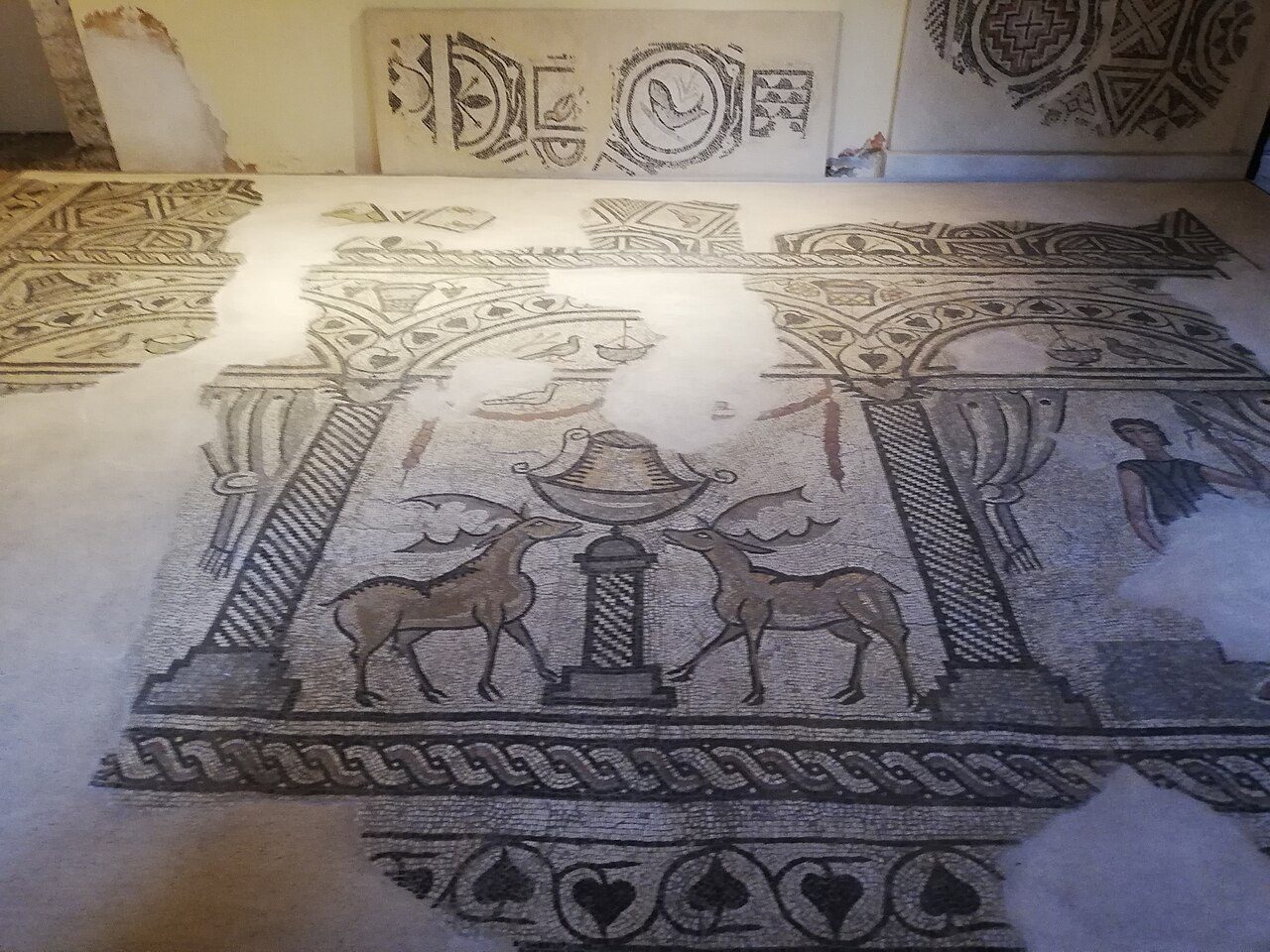
Coats of arms, plaques and inscriptions gathered from all over Como. The medieval and later ones are under the portico and on the grand staircase, the Roman ones in the rooms. In their midst is a large mosaic with two deer.
Spot the detail
Find the two deer in the mosaic: what stands between them?
The full story
A museum of inscribed stones sounds like a school punishment. Give it five minutes anyway, because here the stones do one specific thing: they keep alive a city that is no longer there.
Start under the portico and along the grand staircase. The coats of arms you see once sat on the keystones of Como's noble palaces, at the highest point of their doorways. The plaques come from churches and convents, from public buildings, from private houses.
Some of those buildings still stand, others do not: the stone ended up here. The museum has arranged everything by origin and by subject, and one whole group is devoted to the hosts, the Giovio family.
That is not just vanity, it is a family tradition. In the 1500s Benedetto Giovio, the historian of Como, was already studying the city's ancient inscriptions. By the time the city museum moved in, the habit had been at home here for centuries.
The Roman lapidarium
Then move on to the Roman . Just over eighty inscriptions are on display, chosen from the more than three hundred in the collection, and they are grouped by theme: power, memory, the sacred. The last group is my favorite: the inscriptions that do not come from Como, and the fake ones. A museum that puts its own fakes on show deserves to be trusted.
The mosaic with the deer
In the room devoted to power, look for the large late Roman mosaic. It shows a portico with three arches. Under the central arch two deer face each other on either side of a small column holding up a vase. Under one side arch there is a man, and another is thought to have kept him company under the arch opposite.
Reading everything is impossible, and there is no need. Pick one plaque, just one, and try to work out who wanted it and what it was meant to remember. Cities shed their skin every century. Inscribed stones are what is left in your hand when the palaces are gone.
Next stop
Look for the prehistory and protohistory section and head for the Iron Age display cases