Stop 5 of 7
The Altar of Sant'Abbondio
Where to stand
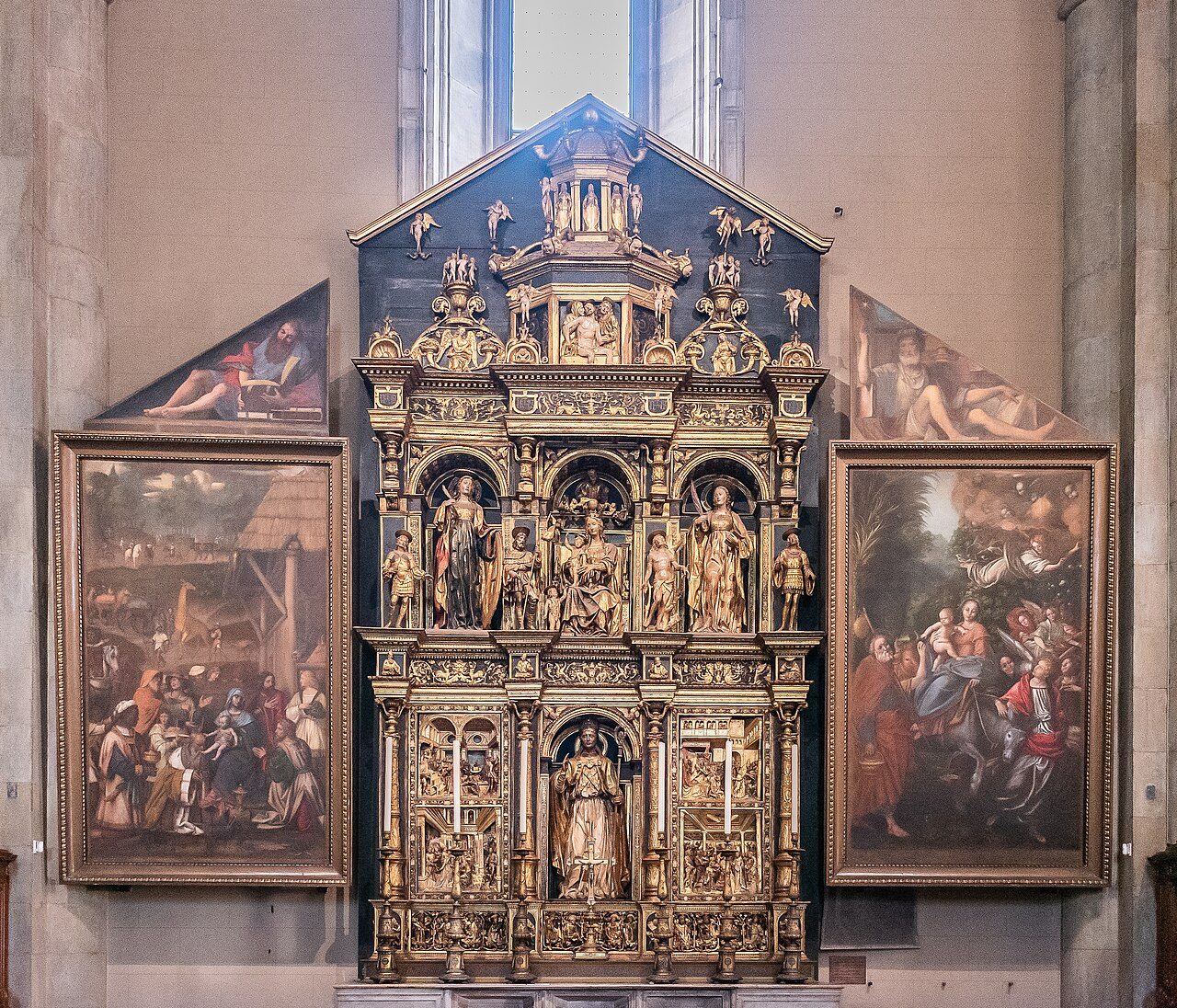
In the right aisle, in front of the large carved and gilded wooden altar, with two big canvases on either side
A gilded wooden altar as tall as a three-story house, carved in the early 1500s by Giovanni Angelo Del Maino. The canvases beside it, by Bernardino Luini and Gaudenzio Ferrari, were once its shutters.
Spot the detail
In the lowest band of the altar, find Christ among the twelve apostles and follow with your eyes what ties them together
The full story
If you have time for only one thing inside the Duomo, this is it. It is not marble and it is not painting: it is wood, carved, painted and covered in gold, about as tall as a three-story house. It is the work of Giovanni Angelo Del Maino, a sculptor from Pavia, who made it in the early 1500s for the confraternity named after the saint.
The saint's life in relief
In the center, standing, there he is: Abbondio, or Saint Abundius, bishop of Como in the fifth century and patron of the city. On either side of him four relief panels tell his life in episodes.
In one he preaches while the books of the heretics burn. In another a governor, with his wife, pleads with him; on the opposite side comes the sequel, with Abbondio bringing their son back to life. Higher up is a row of saints with the Virgin Mary in the middle, and at the top the Annunciation and a Pietà.
How the altar is built
Look at how it is built. The structure is orderly, with columns and cornices, like an ancient triumphal arch: Italian Renaissance. But the surface is swarming with figures, angels, fantastic creatures and gold, the way they liked it beyond the Alps.
Como sits on an ancient road that leads north, and this altar speaks both languages. One scholar wrote that even in the German lands, where wood sculpture produced masterpieces, it is hard to find anything to match it.
The canvases that served as shutters
And the shutters really did exist. The large canvases you see at the sides, and two more in the aisle across the way, were the doors that closed the altar and opened on feast days.
Here beside it are the Adoration of the Magi by Bernardino Luini and the Flight into Egypt by Gaudenzio Ferrari. On the other side of the church, flanking the altar of San Giuseppe, are Luini's Adoration of the Shepherds and Ferrari's Marriage of the Virgin. They are the two biggest names in painting that you will find in the Duomo, and here they work as a pair.
Today the altar is not in the spot it was made for. Over the centuries the great machine has been moved and taken apart, and the doors have ended up hanging like pictures. The rest is up to your imagination: four canvases shut like the doors of a wardrobe and, on feast days, all that gold swinging open.
About this stop
A bishop of Como in the fifth century, patron saint of the city and the diocese. Tradition remembers him as an opponent of heresies and credits him with a miracle: he is said to have brought a governor's son back to life. In the Duomo you find him everywhere: in a niche on the facade, near the Virgin Mary, in the stained glass beside the and above all in the large gilded wooden altar in the right aisle, where the reliefs tell his life. One of the city's Romanesque basilicas is dedicated to him as well.
Next stop
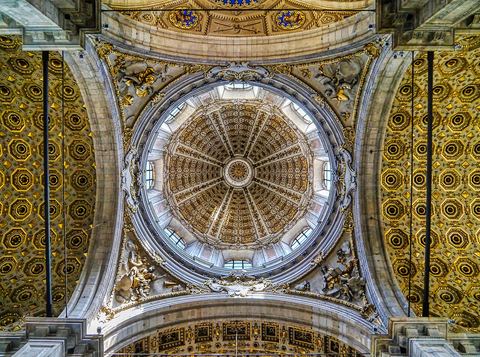
Carry on to the point where the nave meets the transept and stop under the dome