Stop 3 of 6Must-see
The steps and the glass doors
Where to stand
At the foot of the entrance steps, facing the row of glass doors
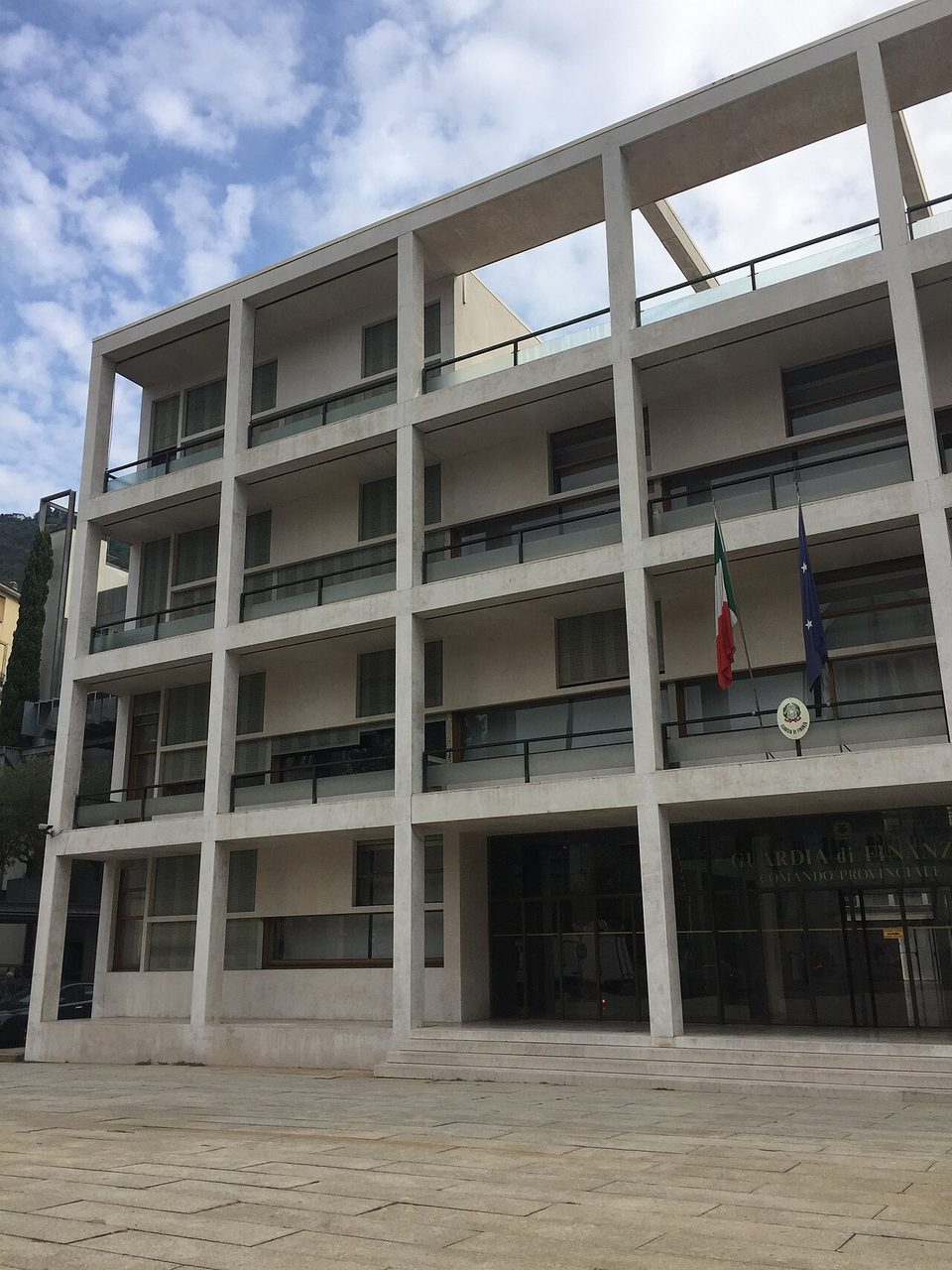
Four steps and a wall of glass: an entrance designed not to look like one. Terragni wanted the piazza to flow into the building, and everything to be visible from outside.
Spot the detail
Count the steps between the piazza and the threshold
The full story
Look for the main door. There isn't one. Instead of a solemn entrance you find four low steps and an unbroken row of glass doors.
For a party headquarters of the 1930s it is a surprising choice. And it is the most political one in the whole building.
A glass house
Terragni explained it with an idea he attributed to Mussolini: Fascism is a glass house into which everyone can look. In an often-quoted version of the line, everyone can and must look. He took it literally.
No wall between the piazza and the rooms of power, no antechamber. The space outside was meant to flow into the atrium and from there into the central hall, as if they were a single room with one stretch in the open air. The propaganda of the day added a detail: the doors could all open at once, and the crowd gathered inside would pour out into the piazza in a moment.
That "must" is worth pausing on. A glass house is welcoming only as long as you are free not to look. In a dictatorship transparency works both ways: you see the party, the party sees you.
The architecture here is beautiful, and the idea it serves is unsettling. There is no need to choose between the two feelings: both are true.
Atrium, staircase and shrine
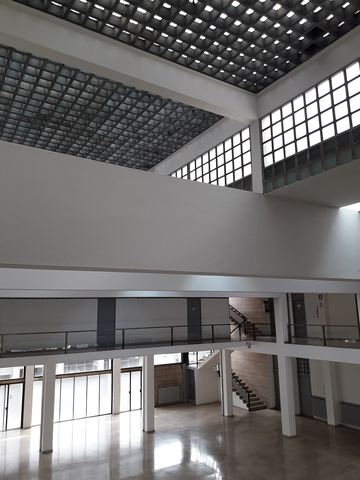
Now look through the glass. Right behind it is the atrium, with a black marble ceiling that sets off the light of the hall beyond. To the right of the entrance the main staircase begins.
To the left is the , a stern room of red granite, black stone and glass. It was dedicated to the Fascist dead. After the war it was transformed: today it honors the fallen of the Guardia di Finanza, Italy's financial police, which has a command in this building.
Ninety years on, the doors are still glass, and the piazza still flows in. What has changed is what lies behind them.
Next stop
Stay in front of the entrance and look past the glass, toward the interior