Stop 5 of 8Must-see
The Portraits of Paolo Giovio
Where to stand
One floor up, in the rooms of the Giovio portraits: stand in the middle and let your eyes run across the faces
In the sixteenth century the Como humanist Paolo Giovio collected more than four hundred portraits of famous men and showed them in a lakeside villa he called the Museo. The villa is gone. Thirty-eight originals remain here: the largest surviving group.
Spot the detail
Among kings, popes and warlords is a man who walked a tightrope for a living: find him
The full story
These faces are the reason the word museum means what it means.
Paolo Giovio was born in Como around 1483. He was a physician, a bishop, a historian, and above all a man who knew everyone: popes, princes, generals.
Around 1520 he began asking for portraits. Not beautiful ones: true ones. He wanted the authentic face of the people who had made history, and he checked where every image came from.
For his contemporaries he turned to the sitters themselves, to their lords, to his painter friends. For the ancients he had coins, medals and statues copied. In thirty years he put together more than four hundred portraits: emperors and sultans, poets and mercenary captains, popes and pirates.
The villa called the Museo
To house them he built a villa on the lakeshore, at Borgovico, finished in 1543. He called it the Museo, the place of the Muses. Each portrait came with a short text, the elogium, that told the person's story.
Nothing like it had ever existed, and half of Europe wanted to copy it. Cosimo de' Medici, duke of Florence, sent a painter to Como to reproduce the pictures: those copies are now in the Uffizi.
Kings, physicians and tightrope walkers
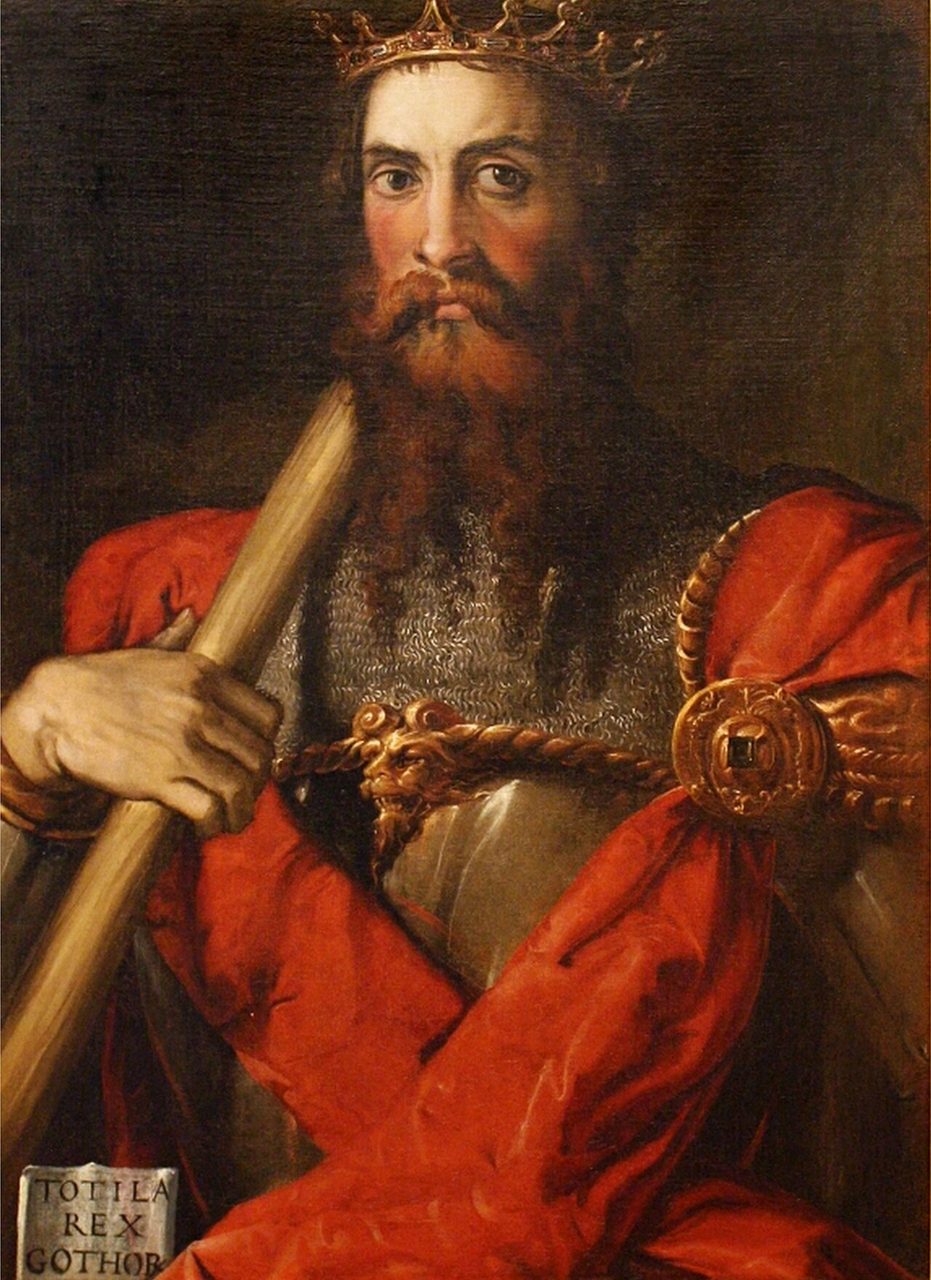
Look at them the way he did: as a gallery of characters. The collection includes Totila, king of the Goths. Francesco Salviati painted him a thousand years after the king's death.
There is the physician Nicolò Leoniceno, portrayed by Dosso Dossi. There is the writer Baldassarre Castiglione.
And there are the misfits, who are the most fun. A Turk named Halì, who walked the tightrope for a living. And Tristão da Cunha, a Portuguese navigator: he led the embassy that arrived in Rome with an elephant as a gift for the pope.
Look for Christopher Columbus too. The Giovio portrait is considered the most reliable of those that have come down to us.
Giovio died in 1552. His heirs divided up the pictures, the villa fell into ruin, and at the start of the seventeenth century it was pulled down.
Of the four hundred portraits, many are scattered or lost. Thirty-eight are here, restored in recent years. They are few, but they are the real ones.
About this stop
Anecdote
The White Elephant That Bowed to the Pope
Among the portraits collected in the 1500s by the Como humanist Paolo Giovio, one floor up in the Pinacoteca, is Tristão da Cunha, a Portuguese navigator. In March 1514 he entered Rome leading an embassy from the king of Portugal, and the gift for Pope Leo X walked in by itself: Annone, a young white elephant. It is said to have knelt three times before the pope, then with its trunk sprayed water over cardinals and crowd. It became the court's darling. When it died two years later, the pope dedicated an epitaph to it. Como's, it seems, is the only known sixteenth-century portrait of the man who brought it.
Anecdote
The Dinner That Gave Birth to Vasari's Lives
One floor up, the Pinacoteca holds the portraits of famous men collected in the 1500s by Paolo Giovio, a humanist and historian from Como. Rome, 1546, a dinner in the palace of Cardinal Alessandro Farnese. Among the guests are Giovio and the painter Giorgio Vasari. The talk turns to writing a history of artists. By Vasari's own account, that was the evening the undertaking passed to him, because he knew more about art than Giovio did. Four years later the Lives came out, the book where the history of Italian art begins. Giovio, meanwhile, had begun publishing the elogia, the short texts that accompanied his portraits.
Record
More Than 240 Portraits Copied for the Medici
In the 1500s the Como humanist Paolo Giovio gathered hundreds of portraits of famous men in a lakeside villa he called the Museo: thirty-eight are now one floor up in the Pinacoteca. It was imitated right away. In 1552, the year Giovio died, Cosimo de' Medici, duke of Florence, had the painter Cristofano dell'Altissimo copy the portraits. The painter moved to Como and reproduced more than 240, in a smaller format to travel better: they are the Giovio Series in the Uffizi. Other copies went to the Biblioteca Ambrosiana in Milan and to the Habsburg court. For many sixteenth-century figures, the face we know is the one Giovio chose.
Legend
Giovio's Museo on Pliny's Villa
The portraits of popes, kings and commanders one floor up in the Pinacoteca come from the Museo, the villa the Como humanist Paolo Giovio built in the 1500s at Borgovico, on the lakeshore. He was sure he was building on illustrious ground. By a tradition he himself fed, the spot had once held a villa of Pliny the Younger, the Latin writer born in Como, with a plane tree he loved. Modern studies cool the enthusiasm: the ruins there more likely belonged to the villa of another Como man, the poet Caninius Rufus. What remains is the idea, pure Renaissance, of a museum rising on top of the ancient world.
They are the portraits of famous men collected in the sixteenth century by Paolo Giovio, a humanist and bishop from Como. He put together more than four hundred and displayed them in his villa on the lake, which he called the Museo. Likeness mattered to him more than beauty: he wanted the true face of the leading figures of history, ancient and modern, friends and enemies. At his death the collection was divided among his heirs and largely scattered. The Pinacoteca holds thirty-eight original paintings, the main group that survives.
Next stop
Stay on this floor and head to the Salone d'Onore, the hall of honor, where two enormous half-moon canvases await